
June 8 brings Saint Medard into the Garden Almanac, one of Europe’s most memorable weather saints. His day is linked with rain lore, vineyards, hay meadows, early summer uncertainty and the old human desire to understand what the sky is about to do.
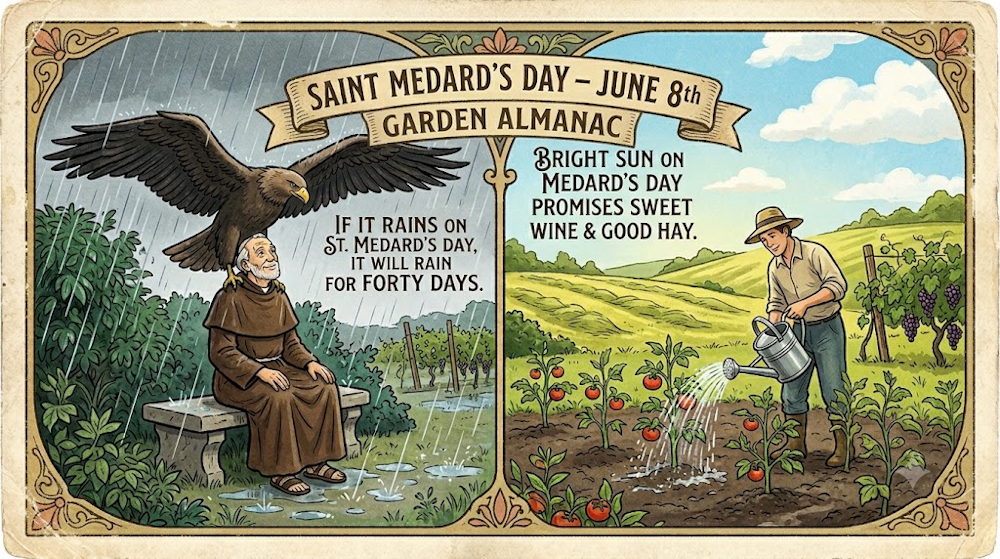
In several traditions, the saying is simple: if it rains on Saint Medard’s Day, rain may continue for forty days.
The number should not be read as a strict weather contract. But the idea behind it is easy for gardeners to understand. Early June weather can set the mood for weeks: wet, humid, disease-prone and lush, or dry, bright, thirsty and stressful.
The Saint Sheltered From Rain
One of the best-known legends of Saint Medard tells that, as a child, he was protected from rain by a great bird spreading its wings above him. The image is beautiful: a child under a living umbrella, the weather held back by nature itself.
It is easy to see why such a story attached Medard to weather lore. Farmers, gardeners and vineyard keepers all needed some way to think about rain, shelter, danger and blessing.
Rain is never only rain to those who work with plants. It is timing, abundance, rot, growth, disease, relief, delay and hope.
Forty Days of Rain
The forty-day saying belongs to the old calendar’s way of reading seasonal turning points. It does not mean that one shower on June 8 guarantees forty uninterrupted wet days. Rather, it suggests that the weather pattern around this date may reflect a longer early-summer tendency.
Gardeners still understand this.
A wet spell in June changes everything. Soil stays damp. Fungal disease pressure rises. Slugs and snails become more active. Weeds grow quickly. Haymaking becomes difficult. Harvested fruit and leafy crops spoil faster if left wet and warm.
A dry spell changes everything too. Watering becomes urgent. Mulch becomes more valuable. Young plants struggle. Containers heat up. Soil cracks. Shade becomes precious.
Saint Medard’s Day is therefore less about superstition than attention.
Vineyards, Hay, and Local Wisdom
Folk interpretations of Saint Medard varied by region. In some wine-growing areas, sunshine on Medard’s Day promised sweeter wine. Rain, by contrast, could be seen as a warning of poorer quality or sourer wine. In other places, wet weather might be bad news for grapes but good news for grass and hay meadows.
This is a wonderfully practical contradiction.
The same rain can help one crop and harm another. Meadows may welcome moisture while vineyards fear prolonged damp. A farmer cutting hay watches the sky differently from someone tending grapes.
The old calendar did not speak with one voice because landscapes do not ask one question.
If Saint Medard Brings Rain
If June 8 is wet, the garden asks for specific attention.
Increase airflow where plants are crowded. Watch tomatoes, potatoes, vines, roses, cucumbers and other susceptible plants for signs of fungal disease. Avoid leaving harvested produce damp in piles. Check for slugs and snails. Keep paths and beds workable. Be careful with mulch if conditions become too wet and airless around young stems.
Rain can be a blessing, but wetness without airflow can become a problem.
A wise gardener receives rain with gratitude and then walks the garden with open eyes.
If Saint Medard Brings Sun
If Medard’s Day is bright and dry, the old lore may smile toward sweet wine and an easier hay season. But the garden may still need help.
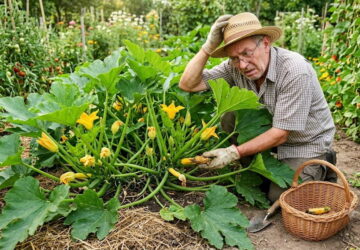
Dry weather in early June can stress young plants. Containers and raised beds dry quickly. Bare soil loses moisture. Newly planted crops may struggle before their roots reach deeper layers.
This is the time for deep watering, soil cover, shade where needed, and careful observation. Sunshine is welcome, but water remains the foundation of growth.
Weather Lore and Modern Forecasts
Today we have forecasts, radar, satellite images and weather apps. These are useful tools, and no gardener needs to choose between science and tradition.
The best approach is to combine them.
Use the forecast to prepare. Use the garden to verify. The app may tell you rain is coming, but the soil will tell you whether it soaked in. The radar may show storms, but the plants will show whether they suffered wind, hail or waterlogging.
Old weather lore teaches attention. Modern weather science gives detail. Together, they make better gardeners.
What June 8 Teaches
Saint Medard’s Day teaches that the sky is part of the garden.
Rain, sun, humidity, wind and temperature are not background conditions. They shape disease, flavor, yield, storage, hay, wine, soil and the daily rhythm of care.
In the Garden Almanac on this day, the old forty-day saying becomes a reminder to look carefully. Not to panic. Not to believe blindly. But to notice patterns.
If it rains, prepare for dampness.
If it shines, prepare for thirst.
If the weather turns, let the garden tell you what it needs.
The sky speaks.
The garden answers.