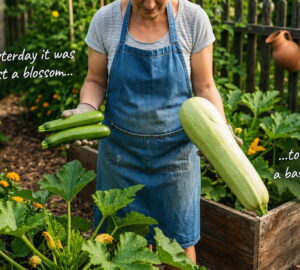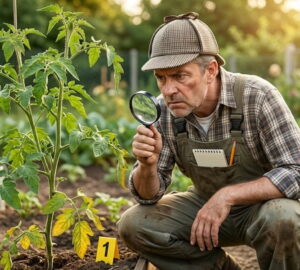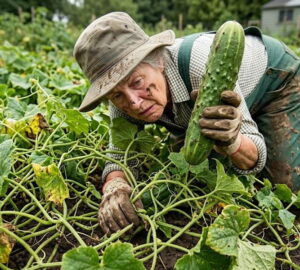
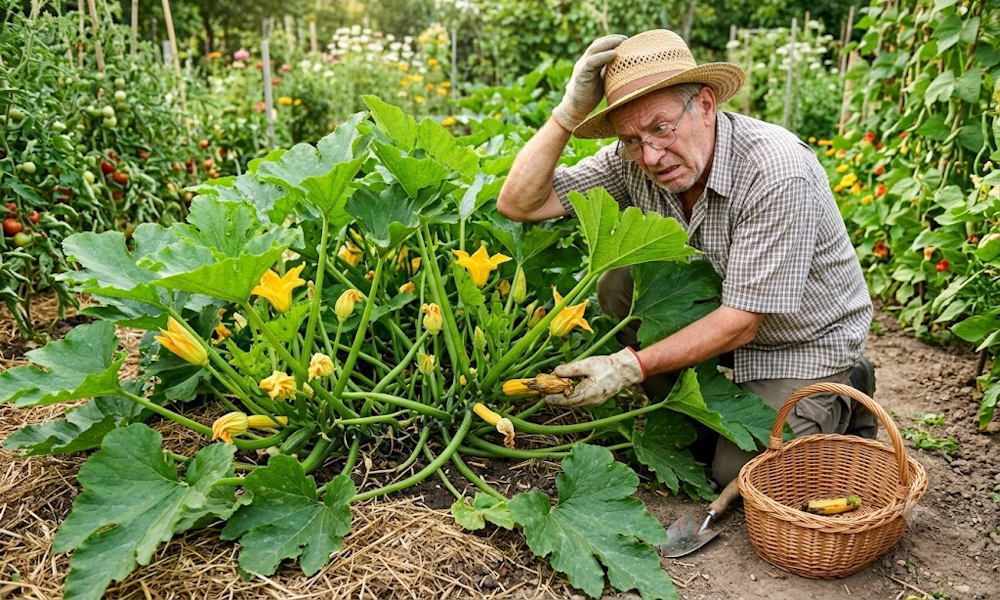

Early July is when zucchini, pumpkins and pattypan squash begin to look wonderfully promising. Their broad leaves spread across the garden, golden blossoms open one after another, and vigorous vines seem determined to take over every spare corner. It’s hard not to picture baskets full of homegrown vegetables.
Then… nothing much happens.
Perhaps a tiny zucchini appears, only to yellow, shrivel and disappear a few days later. Or maybe the plants keep producing flowers while the expected harvest seems permanently delayed. It can feel surprisingly disappointing, especially after such an enthusiastic start.
The good news is that this is one of the most common midsummer puzzles in the vegetable garden—and in many cases, it isn’t a sign that anything is seriously wrong.
Not Every Flower Is Meant to Become a Squash
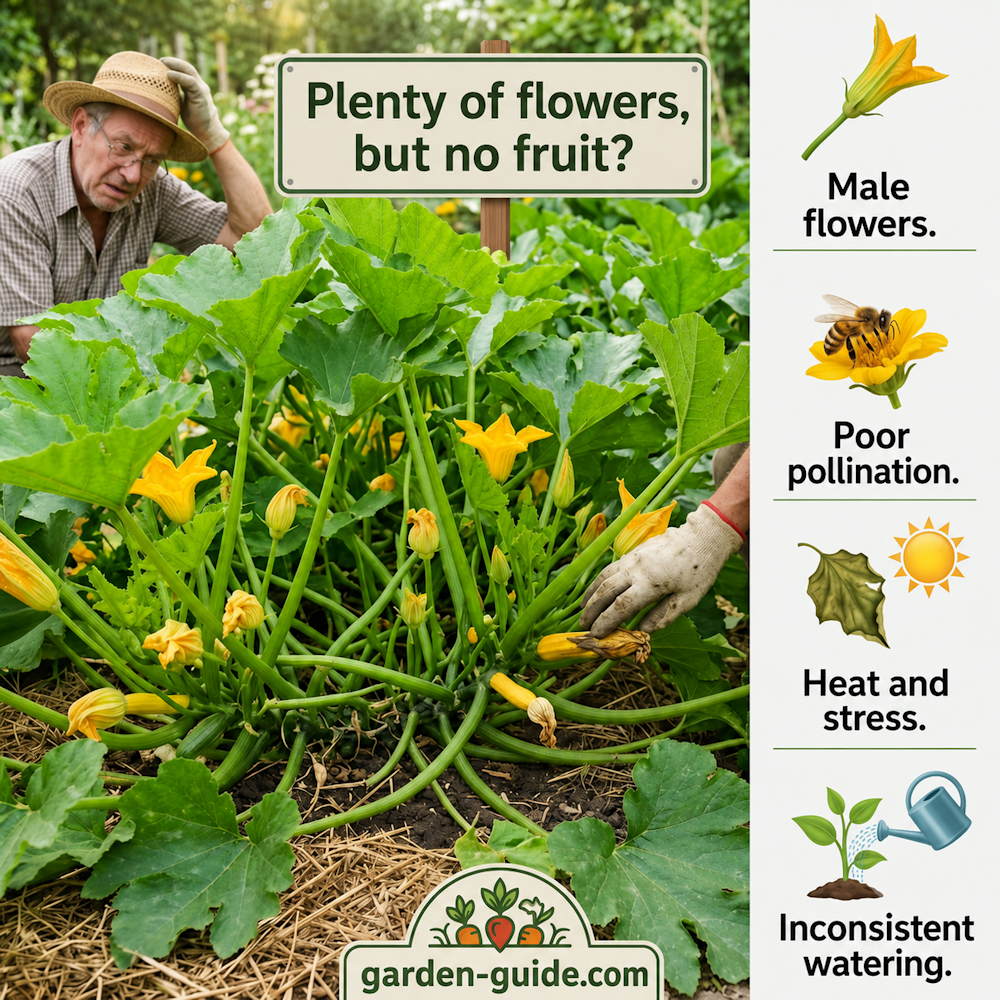
One of the biggest surprises for new gardeners is discovering that squash plants produce two different kinds of flowers.
Male flowers usually appear first, carried on long, slender stems. Female flowers are easy to recognise once you know the secret: behind each bloom sits a tiny swelling that already resembles a miniature zucchini or pumpkin. That little fruit is simply waiting for successful pollination before it can begin to grow.
Early in the season, it’s perfectly normal for a plant to produce mostly male flowers. It may seem as though it’s teasing you with endless blooms and no vegetables, but patience is often rewarded. As the plant matures, female flowers generally become more abundant.
Sometimes the first question isn’t “Why aren’t my fruits growing?” but simply “Do I have any female flowers yet?”
Pollination Makes All the Difference
If female flowers are present but the tiny fruits soon turn yellow, soften or fall away, poor pollination is often the culprit.
Squash relies heavily on bees, bumblebees and other visiting insects to carry pollen from male flowers to female ones. Unfortunately, their schedules don’t always align with ours. Cool mornings, heavy rain, strong winds—or intense summer heat—can all reduce insect activity, leaving flowers unpollinated.
In a small garden, hand pollination can be an easy solution. Using a freshly opened male flower—or a soft paintbrush—you can gently transfer pollen onto the stigma of a female flower.
It may feel slightly unusual the first time you try it, but your zucchini certainly won’t mind.
Summer Heat Can Interrupt Fruit Set
Although squash loves warm weather, extreme heat is another matter entirely.
Very high temperatures can shorten the life of flowers, reduce pollen viability and place the entire plant under stress. Even healthy-looking vines may struggle to develop fruit during prolonged hot spells.
If leaves droop during the hottest part of the afternoon but recover by evening, that’s often a normal response to temporary heat. Persistent wilting, however, usually signals that the plant is struggling with water stress.
Mulching the soil, watering consistently and giving plants enough space for good air circulation all help them cope with challenging weather.
Consistency Matters More Than Quantity
Squash plants have enormous leaves, and those leaves lose a surprising amount of moisture on warm summer days. Once fruit production begins, an even supply of water becomes especially important.
Long dry spells followed by heavy watering can encourage young fruits to abort before they have a chance to develop. On the other hand, constantly waterlogged soil creates a different set of problems by limiting oxygen around the roots and encouraging disease.
Aim to water deeply at the base of the plant rather than wetting the foliage, and try to keep soil moisture as steady as possible instead of alternating between drought and flooding.
Gardens are remarkably forgiving, but they do appreciate consistency.
Sometimes the Garden Is Simply Following Its Own Schedule
One of the quiet lessons of growing squash is learning not to panic too soon.
A plant covered with flowers isn’t necessarily failing. It may simply be waiting for more female blooms, a visiting bee, slightly cooler weather or a few days of steadier moisture before everything falls into place.
Gardening often reminds us that growth isn’t always visible the moment we expect it. Sometimes today’s spectacular display of flowers is simply tomorrow’s harvest gathering its confidence.