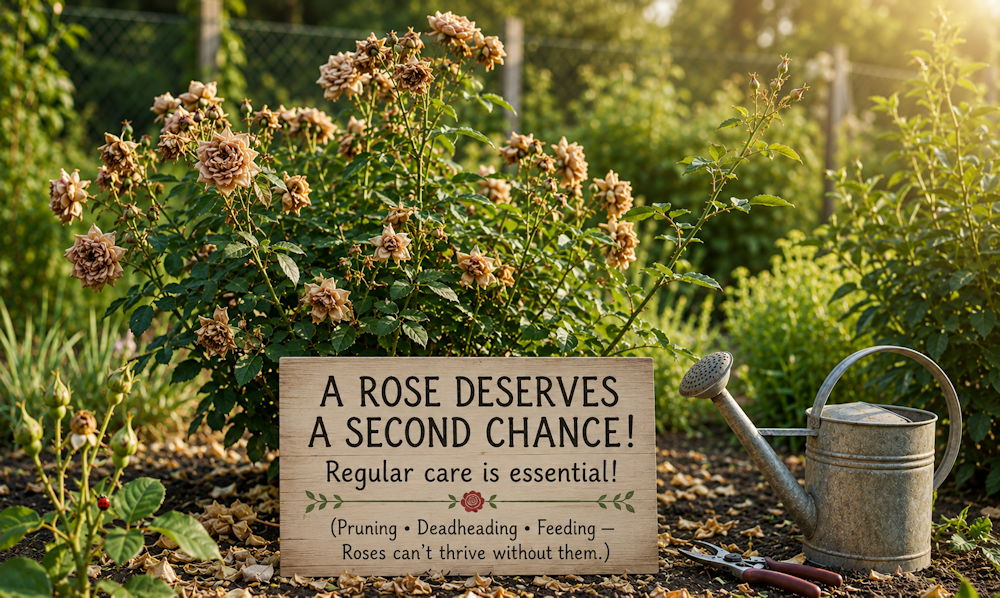

Roses do have a flair for drama.
One week they’re the undisputed stars of the garden, covered in glorious blooms and happily posing for every photo. The next, the petals are scattered across the path, the flowers look exhausted, and the whole shrub seems to be saying, “Well… that’s all for this year.”
Don’t believe it.
For most repeat-flowering roses, that spectacular first display is only Act One. With a few well-timed jobs, your rose can take a short breather, gather its strength and step back onto the garden stage for an impressive encore later in the summer.
Don’t Let Your Rose Start a Family Just Yet
Once faded flowers begin turning into rose hips, your plant quietly changes its priorities.
Instead of making more flowers, it starts investing its energy in producing seeds. Perfectly sensible from the rose’s point of view—but probably not what you had in mind.
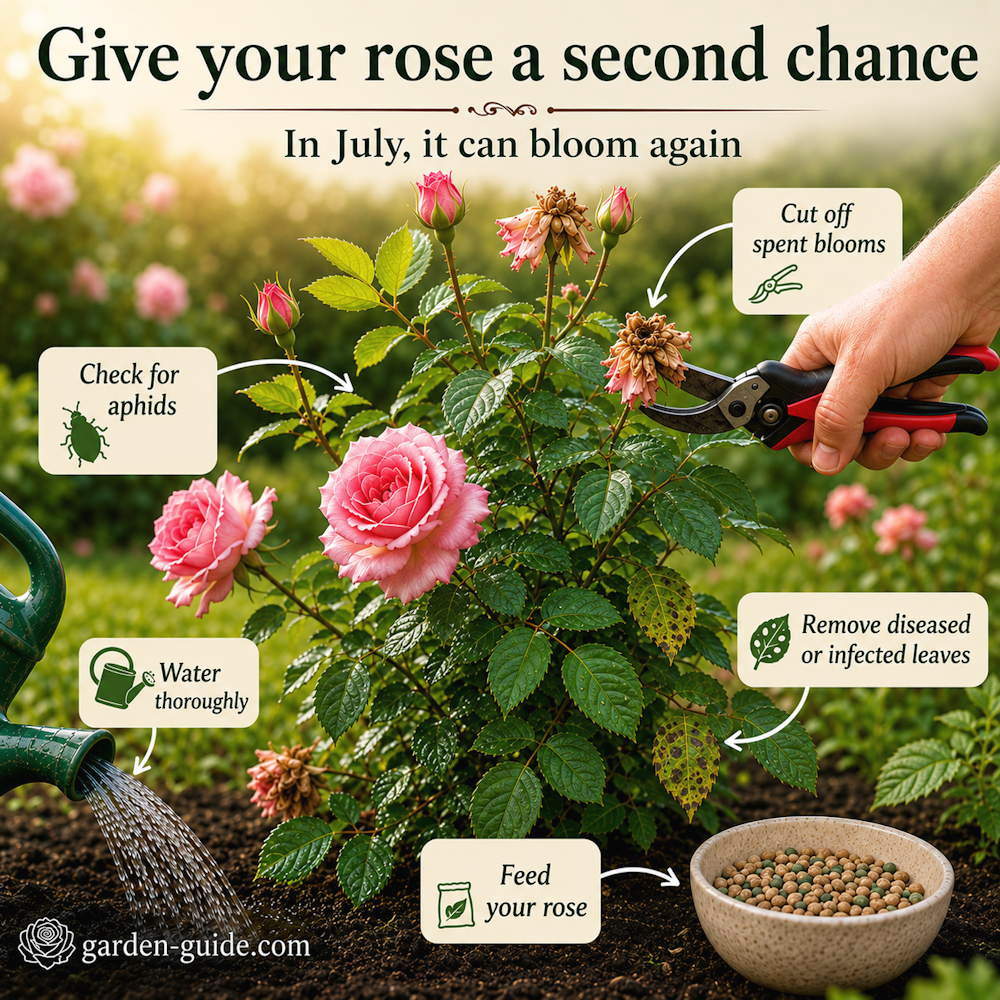
That’s why deadheading is one of the simplest and most rewarding summer jobs. Follow each faded flower down to the first strong outward-facing leaf with five leaflets and snip just above it. In many cases, that’s exactly where the next flowering shoot is waiting to emerge.
Think of it as politely telling your rose, “Lovely performance. One more, please.”
Give the Roots a Proper Drink
July sunshine can be surprisingly demanding, especially after a heavy flowering season.
Forget daily sprinkles. Roses prefer a long, satisfying drink that reaches deep into the soil, encouraging roots to grow down rather than linger near the surface. Watering at the base also helps keep the foliage dry, reducing the risk of fungal diseases.
A thirsty rose rarely puts on its best show.
Dinner, Not Dessert
Flowering takes energy, and your rose has just spent quite a lot of it.
A balanced rose fertiliser, some well-rotted compost or another suitable organic feed will help replenish its reserves. Just don’t overdo the nitrogen. Too much encourages a jungle of lush green shoots that may look vigorous but often produce disappointingly few flowers.
You’re feeding blooms, not trying to grow the world’s tallest hedge.
Summer Is for Encouragement, Not Renovation
This isn’t the moment for heavy pruning.
Simply remove faded flowers, cut away anything dead, damaged or diseased, and thin congested growth if air circulation needs improving. While you’re there, keep an eye out for aphids or early signs of fungal problems. Tiny issues are much easier to solve before they become major headaches.
The Best Surprise Is One You Help Create
There’s something wonderfully satisfying about walking past your roses a few weeks from now and spotting fresh buds where you thought the season had already peaked.
It isn’t magic.
It’s simply the reward for a handful of timely summer jobs that work with the natural rhythm of the plant.
Your rose was never finished.
It was just waiting for its second chance to shine.