
There’s something wonderfully optimistic about growing melons. In spring, they begin as modest little seedlings. A few weeks later they seem determined to occupy every spare corner of the vegetable garden, sending long stems in every direction as if they’ve decided that summer belongs to them.
By early July, however, many gardeners begin asking the same question. Will all this leafy enthusiasm actually produce sweet, juicy fruit, or have we simply cultivated an impressive green carpet? The good news is that, even now, there is still plenty you can do to help your melon plants reach their full potential.
Melons Love Sunshine—But They’re Not Desert Plants
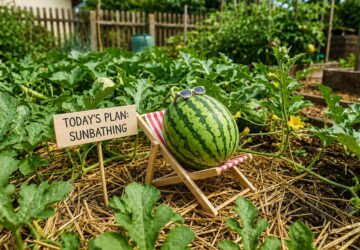
Both watermelons and muskmelons thrive on warmth and long hours of sunshine. A sunny, sheltered position encourages strong growth, reliable pollination and faster fruit development, while shade or overcrowding can slow everything down.
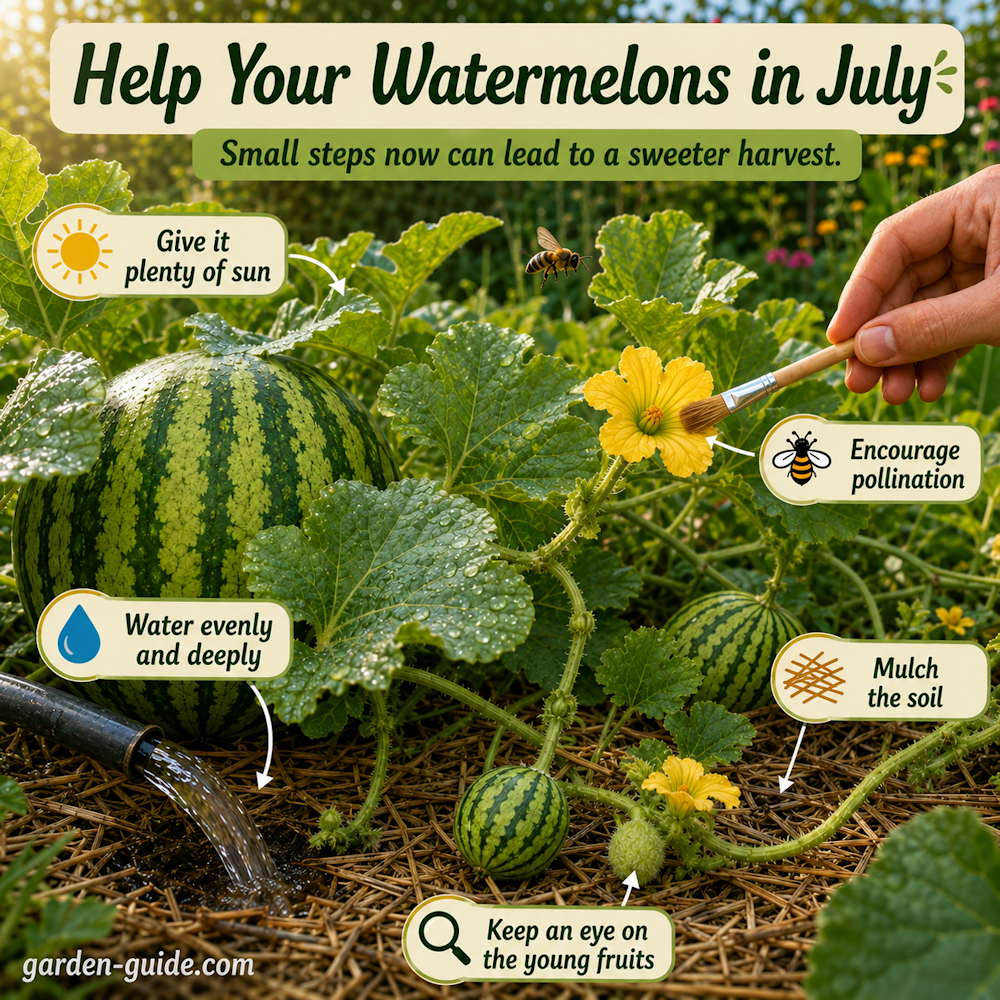
Yet loving heat doesn’t mean they enjoy drought. During July, when vines are growing vigorously and fruits are swelling, consistent soil moisture is one of the biggest factors in producing healthy plants. Repeated cycles of bone-dry soil followed by heavy watering can stress the plant, slowing fruit development and sometimes affecting quality.
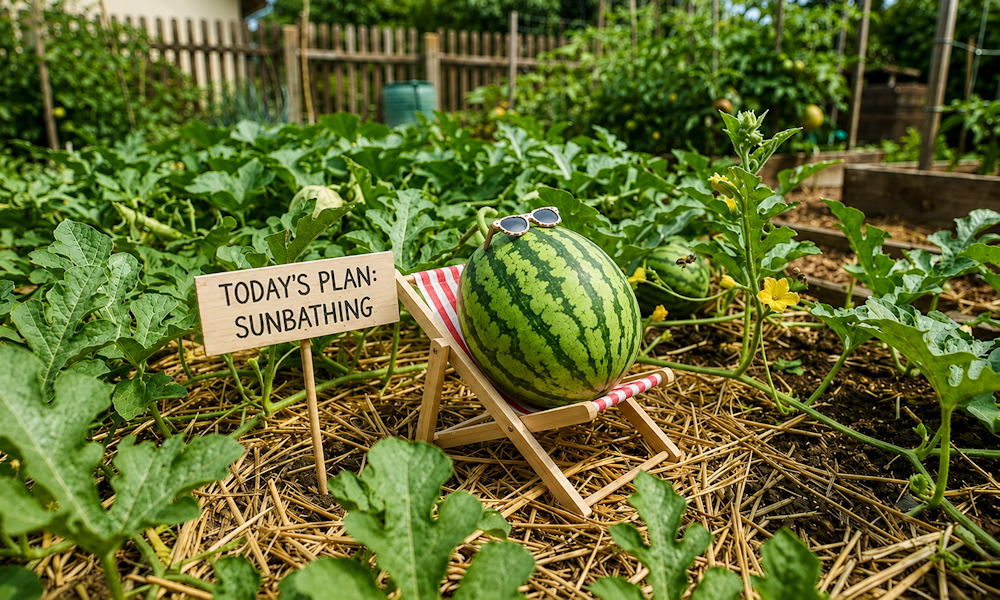
Think of melons as enthusiastic sunbathers rather than survival experts. They appreciate the sunshine—but they would still like a refreshing drink.
Pollination Is Often the Hidden Ingredient
One of the most common reasons for disappointing melon crops has nothing to do with watering or fertiliser.
Melons produce separate male and female flowers. The female flowers are easy to recognise because each one sits above a tiny swollen ovary that already resembles a miniature melon. Unless pollen reaches that flower—usually carried by bees and other insects—that tiny fruit simply stops developing, turns yellow and eventually drops away.
If pollinators seem scarce, avoid spraying insecticides while plants are flowering and encourage beneficial insects by growing nectar-rich flowers nearby. Even a small patch of flowering herbs or annuals can make the vegetable garden a far more welcoming place for bees.
When Nature Needs a Helping Hand
Sometimes the weather refuses to cooperate. Cool mornings, prolonged rain or a lack of pollinating insects can all reduce fruit set.
Fortunately, hand pollination is remarkably simple. Early in the morning, when the flowers have freshly opened, transfer pollen from a newly opened male flower onto the stigma in the centre of a female flower using either the male flower itself or a small soft paintbrush.
It sounds surprisingly technical, but after your first successful fruit begins to grow, you’ll probably find yourself checking on it every day. Many gardeners become unexpectedly attached to their first home-grown melon—and it’s easy to understand why.
A Little Mulch Goes a Long Way
July sunshine can quickly dry the soil around sprawling vines.
Applying a layer of organic mulch helps conserve moisture, suppress weeds and reduce temperature fluctuations around the roots. Straw, composted garden material or a light layer of dried grass clippings all work well, provided they aren’t piled on so thickly that they stay damp for long periods.
As the fruits enlarge, placing a little straw, a wooden board or even a flat stone underneath them keeps them off wet soil and helps reduce the risk of rot while improving air circulation.
Water Deeply, Not Constantly
Melons prefer deep watering that encourages roots to grow down into the soil rather than frequent light sprinkling.
Water the soil around the base of the plants rather than wetting the foliage whenever possible, and aim to irrigate in the morning so excess moisture has time to evaporate during the day.
Later in the season, once fruits begin reaching full size and ripening, reducing irrigation slightly can help concentrate sugars. In early July, however, the priority is still steady growth, so consistent watering remains far more important than trying to increase sweetness too soon.
Feeding for Fruit, Not Just Foliage
Melons are hungry plants and perform best in fertile, well-drained soil enriched with compost.
If the vines appear weak or pale, a balanced fertiliser can provide a welcome boost. What they don’t appreciate is an excess of nitrogen. Too much encourages spectacular leaves and vigorous stems, while fruit production quietly slips into the background.
A melon plant covered in lush foliage but carrying very few fruits can be rather like a beautifully wrapped present that turns out to be empty. Healthy growth is important—but the real reward is what’s developing beneath those broad leaves.
Should You Prune the Vines?
Unlike formal hedges, melon plants don’t need strict discipline.
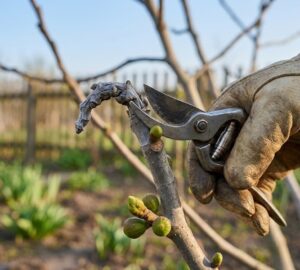
In most home gardens, heavy pruning isn’t necessary, but if the vines become extremely dense and continue producing long shoots with few fruits, lightly pinching back excessive new growth can help direct more energy towards developing melons.
At the same time, remove any damaged, diseased or dying stems to improve airflow and keep the plant healthy. Gentle guidance usually works better than aggressive pruning.
When Should You Be Concerned?
If flowers appear in abundance but no fruits continue to grow, poor pollination is often the first thing to investigate. Heat stress, nutrient imbalance or overcrowding may also play a role.
If young fruits begin rotting, check whether they’re sitting directly on damp soil, whether watering is uneven, or whether the plants show signs of disease. And if your vines seem determined to produce leaves rather than melons, too much nitrogen, insufficient sunlight or inadequate pollination are all worth considering.
The encouraging news is that early July is still a turning point rather than a deadline. A few thoughtful adjustments now can make a noticeable difference later in the season.
The Sweetest Harvest Is Often the One You Grew Yourself
Home-grown melons are not always perfectly round, uniformly sized or supermarket-polished. Some develop unexpected shapes, others stay smaller than expected, and a few may never make the cover of a seed catalogue.
Yet when you finally cut open a melon that has ripened under your own care, appearance quickly becomes irrelevant. Few garden harvests capture the feeling of midsummer quite so completely.
Perhaps that’s the quiet charm of growing melons. They ask for warmth, patience, attentive watering and a little help from pollinators—but when everything comes together, they offer something no market stall can quite match: the unmistakable taste of a summer you helped create.