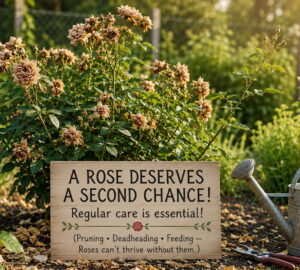


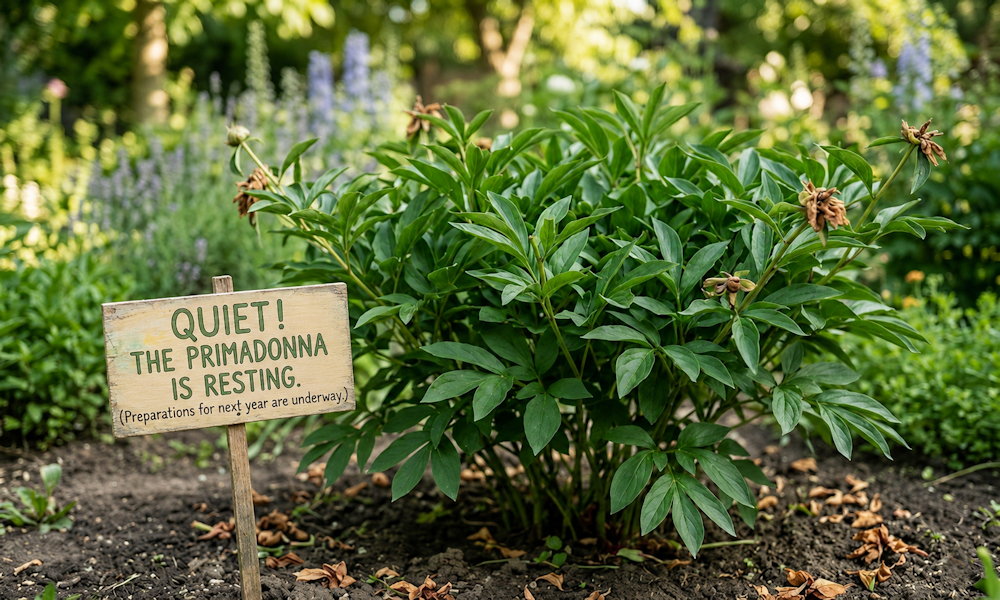

When the last petals fall, a peony can look as if the party is over. In reality, this is when next year’s show quietly begins. Here’s what to cut, what to leave alone, and why your peony’s post-bloom foliage deserves more respect than it usually gets.
Peonies belong to the genus Paeonia, and garden varieties are usually grouped into three broad types: herbaceous peonies, tree peonies and intersectional, or Itoh, peonies. This article mainly focuses on the classic herbaceous garden peony – most often Paeonia lactiflora cultivars and their hybrids – the familiar border plant that dies back in autumn and returns from the crown in spring.
Peony flowering is a little like a garden opera. There are huge ruffled petals, fragrance, dramatic nodding after rain, and at least one gardener standing nearby in full admiration. Then, almost overnight, the curtain falls. The flowers brown, the petals scatter, and the once-regal plant begins to look less like a diva and more like a tired performer leaving the stage in yesterday’s costume.
This is the moment when many gardeners reach for the secateurs a little too enthusiastically. But after flowering, a peony is not finished. It is simply changing jobs.
The blooms may be over, but the leaves are still working hard. They are not useless green clutter. They are the plant’s solar panels, feeding the crown and helping to build the buds and shoots that will become next year’s performance. Cut them off too early, and you may be removing the very energy the plant needs for its future flowers.
Deadhead the Spent Flowers
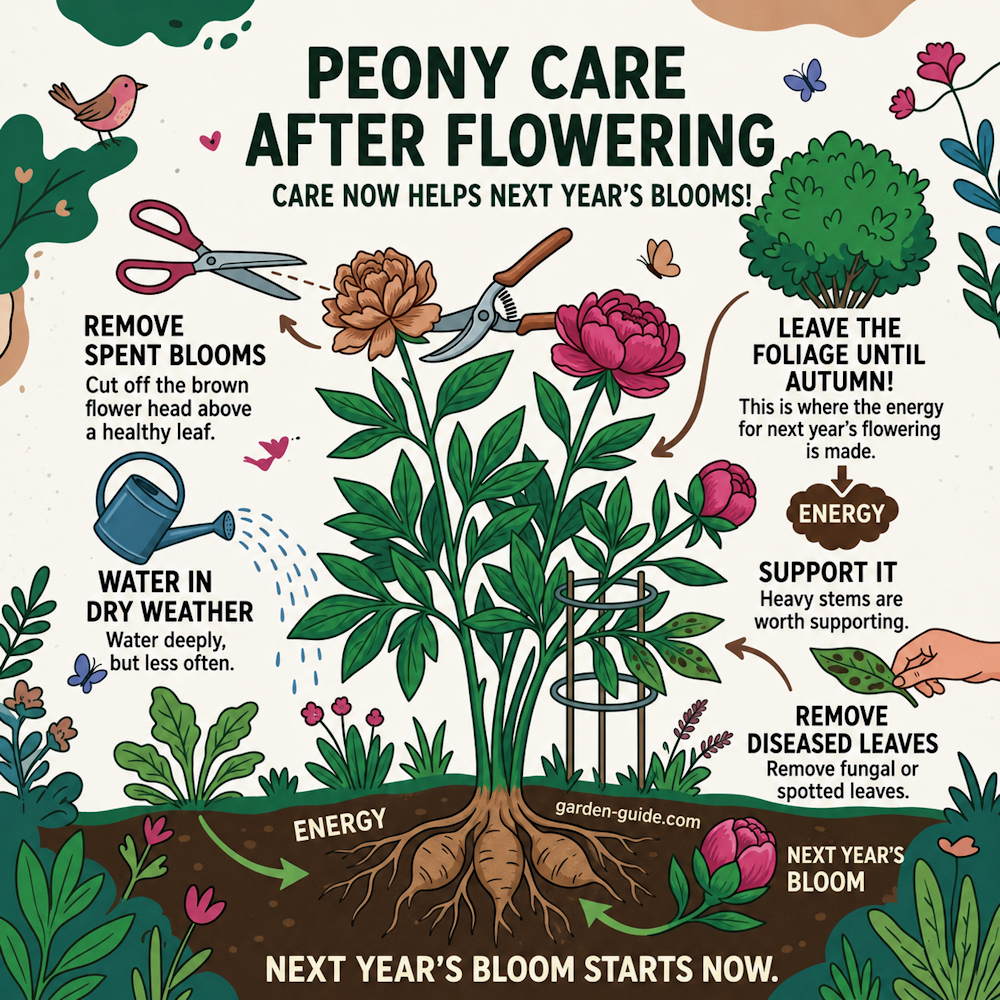
The faded flower heads can and should be removed. Brown, collapsing blooms are not doing much for the look of the border, and if you are not trying to collect seed, there is no need to let the plant spend energy on seed production.
Cut just below the old flower head, above a healthy leaf. The aim is to tidy the plant, not to launch a full summer decapitation. You are removing the finished flower, not cutting the whole stem down to the ground.
Think of it as taking away the empty champagne glasses after the party, not demolishing the ballroom.
Leave the Foliage Alone
The foliage is where many peony mistakes begin. Once the flowers have gone, the leaves can feel anticlimactic, especially if the plant has flopped, spotted, or lost its grand spring glamour. But those leaves are still feeding the underground crown.
Through summer, the plant uses its foliage to photosynthesise and store energy. That stored energy supports strong shoots and flower buds for the following year. If the leaves are cut back too early, the plant loses a major part of its food-making system.
It may not complain immediately. Peonies are dignified like that. But next spring, the protest may arrive in the form of fewer flowers.
When Should You Cut Peonies Back Completely?
For herbaceous peonies, wait until autumn, when the foliage has yellowed, browned, or clearly begun to die back. By then, the plant has largely finished storing energy and is preparing for dormancy.
At that point, cut the stems down close to the ground and remove the old foliage from the garden. This is especially important if there have been signs of disease, such as blackened, spotted, or mouldy leaves.
Diseased leaves can be removed during the growing season as needed, of course. That is sensible hygiene. But removing a few unhealthy leaves is very different from stripping the entire plant in early summer because it no longer looks theatrical enough.
One important note: tree peonies are different. They have permanent woody stems and should not be cut to the ground like herbaceous peonies. If your peony is a woody tree peony rather than a herbaceous Paeonia lactiflora type, prune much more selectively.
Give Floppy Stems a Little Support
Large-flowered peonies are famous for their tendency to collapse after rain. One heavy shower, and the border suddenly looks as if a small floral orchestra has fainted.
Even after flowering, it is worth checking whether the stems are lying on the soil. Leaves that rest on damp ground are more likely to suffer from disease, and the whole plant can become messy and crowded.
A peony ring, a simple support, or a few discreet canes can help lift the plant without making it look as if it has been marched into military formation. The goal is not stiffness. The goal is dignity.
Water and Feed – But Do Not Spoil It
After flowering, peonies do not need dramatic pampering. They are long-lived plants and generally prefer steady, sensible care over fuss.
In dry weather, water deeply but less frequently rather than giving small, daily splashes. Peonies dislike sitting in waterlogged soil, so good drainage is important.
A little compost or well-rotted organic matter can be helpful, especially in poorer soil. What you should avoid is pushing too much nitrogen. Too much nitrogen can encourage leafy growth at the expense of flowers.
A peony is not lettuce. The aim is not to produce the biggest green mass possible. The main attraction is still next year’s bloom.
If It Flowered Poorly, Look for the Reason Now
Once flowering is over, it is a good time to ask why the show may have been disappointing. A peony with only a few flowers is not always being difficult for the sake of it, although it may give that impression.
Common reasons for poor flowering include planting too deeply, too much shade, a young plant that has not settled in, frequent disturbance, or overfeeding with nitrogen-rich fertiliser.
Herbaceous peonies are especially fussy about planting depth. If the crown sits too deep below the soil surface, the plant may grow leaves quite happily but refuse to bloom properly. They also dislike being moved too often. Once a peony is happy, it can stay in the same spot for many years, even decades, becoming more impressive with age.
In other words, peonies are not restless houseguests. They prefer a good address and a long lease.
Post-Flowering Peony Checklist
After your peony has finished blooming:
- Remove the faded flower heads.
- Cut above a healthy leaf, not down to the ground.
- Leave the foliage in place through summer.
- Remove diseased or badly spotted leaves when needed.
- Support stems if they are collapsing.
- Water deeply in dry spells.
- Avoid heavy nitrogen feeding.
- Do not move the plant unless there is a real reason.
- Cut herbaceous peonies back only in autumn, once the foliage has died down.
Next Year’s Flowers Start Now
A peony is not only working when it is in full, spectacular bloom. After the petals fall, it enters a quieter but very important phase: feeding, storing, strengthening, and preparing.
So yes, cut off the faded flowers. Tidy the plant. Give it support if it has flopped after rain. But do not punish the leaves just because the grand performance is over.
Your peony is not standing there looking untidy for no reason. It is rehearsing for next year’s opera.