
Late June is one of the year’s most generous moments. Vegetable beds are filling with colour, pollinators are at their busiest, and gardens seem to grow almost faster than we can keep pace with them. Yet June 26 reminds us that gardening is about far more than tending plants – it is also about caring for communities, protecting natural resources, and passing knowledge from one generation to the next.
Several remarkable events associated with this date tell a surprisingly connected story. From the birth of international cooperation after the Second World War to modern efforts to reduce food waste and protect human health, June 26 encourages us to see the garden not only as a personal sanctuary but also as part of a much larger living world.
Whether you’re harvesting your first tomatoes, watching bees explore lavender flowers, or simply enjoying a quiet evening outdoors, today offers a chance to appreciate how even the smallest garden contributes to something much greater.
A Charter for Cooperation – Growing Together Since 1945
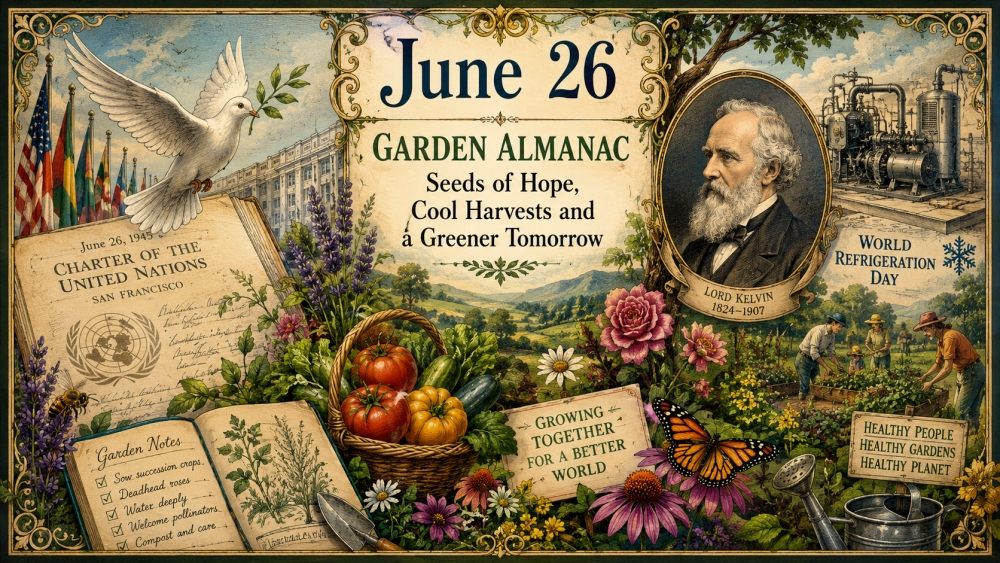
On June 26, 1945, representatives of fifty nations signed the Charter of the United Nations in San Francisco, establishing an organisation dedicated to peace and international cooperation after one of history’s darkest conflicts.
Although the Charter was primarily about diplomacy and security, its legacy soon extended into agriculture, environmental protection, biodiversity and sustainable development. Today, many of the world’s most influential conservation initiatives, seed preservation projects and climate programmes are coordinated through international partnerships inspired by this spirit of cooperation.
Gardeners understand this principle instinctively. Healthy gardens depend on collaboration – between soil organisms, insects, birds, fungi and people. No single species thrives alone.
Every compost heap, wildlife border or pollinator-friendly planting scheme reflects the same idea on a smaller scale: resilience grows through diversity.
Garden Inspiration
Create a small “cooperation corner” by combining flowering herbs, native perennials and insect-friendly shrubs. The richer the variety of plants, the richer the web of life they support.
World Refrigeration Day – The Hidden Technology Behind Every Harvest
June 26 is also celebrated as World Refrigeration Day, chosen to honour the birthday of physicist Lord Kelvin, whose scientific work helped lay the foundations of modern refrigeration.
While refrigerators may seem far removed from gardening, they quietly play an essential role in reducing food waste. Fresh vegetables, berries, herbs and harvested flowers all benefit from careful cooling after picking, preserving both flavour and nutritional value.
For gardeners, this is an important reminder that growing food is only half the journey. Proper storage ensures that the effort invested in sowing, watering and harvesting is not lost before the produce reaches the table.
Modern refrigeration has also transformed global agriculture by making seed storage, plant research and food distribution far more reliable than ever before.
Seasonal Tip
- Harvest leafy vegetables during the cool morning hours.
- Remove damaged leaves before storage.
- Keep herbs wrapped in a slightly damp towel.
- Store fruits and vegetables separately where appropriate, as many fruits release ethylene gas that speeds up ripening.
- Reducing food waste is one of the easiest ways any gardener can lessen their environmental footprint.
Healthy Gardens, Healthy Communities
The International Day Against Drug Abuse and Illicit Trafficking, observed every June 26, highlights the importance of healthy communities and positive environments.
Gardens cannot solve every social challenge, but countless community gardening projects around the world demonstrate how shared green spaces strengthen neighbourhoods, reduce stress and encourage healthier lifestyles.
Working with soil has been shown to improve mental well-being, while community allotments provide opportunities for exercise, education and social connection. Children who help grow vegetables often develop healthier eating habits, and older gardeners pass valuable practical skills to younger generations.
In this way, gardens become places of prevention as much as production – spaces where wellbeing is cultivated alongside flowers and vegetables.
Nature Watch
Look beyond your own plot today. Is there a community garden, school garden or local conservation project nearby? Even a few volunteer hours can help both people and wildlife flourish.
The Long Days of Late June
Astronomically, June 26 still enjoys the lingering gift of the summer solstice in the Northern Hemisphere. The days remain wonderfully long, giving plants many hours of sunlight for rapid growth.
This is one of the busiest periods in the vegetable garden. Beans begin climbing vigorously, tomatoes set fruit, cucumbers race skyward, and the first apples slowly begin to swell on their branches.
Wildflower meadows reach peak bloom, attracting butterflies, hoverflies and countless native bees. Birds continue feeding their young, while hedgehogs search for insects during the warm evenings.
Everything in the garden feels energetic – but it is also a reminder that midsummer is a turning point. From now on, daylight slowly begins to shorten, even though summer itself has only just begun.
What to Observe Right Now
- Watch which flowers attract the greatest diversity of pollinators.
- Check tomatoes for their first developing fruits.
- Water deeply rather than frequently during dry weather.
- Leave a shallow dish of fresh water for birds, bees and beneficial insects.
- Small observations made now often become valuable lessons for next year’s garden.
Garden Reminder
Late June is an ideal time to think beyond today’s harvest.
- Succession-sow lettuce, beetroot and carrots.
- Deadhead roses to encourage repeat flowering.
- Feed container plants regularly during periods of rapid growth.
- Monitor for pests, but allow beneficial insects time to restore natural balance before reaching for treatments.
- Continue adding fresh material to the compost heap while maintaining a good balance between green and brown ingredients.
Steady, consistent care now will reward you throughout late summer.
Looking Ahead
June 26 reminds us that every thriving garden depends on connections – between people, plants, science and nature itself. The international cooperation symbolised by the UN Charter, the food-saving benefits of refrigeration, and the community spirit encouraged by healthy green spaces all point toward the same lesson: sustainable gardening is never just about individual plants.
As the growing season gathers momentum, every compost pile turned, every pollinator welcomed and every vegetable harvested thoughtfully becomes part of a much larger story. Gardens may begin at our own doorstep, but their influence reaches far beyond the garden gate, helping create healthier landscapes, stronger communities and a more resilient future for generations yet to come.