


The marigold may not have the most glamorous reputation, but it has a talent for turning up exactly where gardeners need it. Bright, sunny, easy to grow, and surprisingly useful, this old-fashioned flower brings color, movement, and a little quiet garden magic to the vegetable patch.
The Flower That Always Shows Up
Marigolds (Tagetes spp.) are the kind of flowers many of us remember from childhood gardens, cottage borders, balcony pots, and vegetable beds buzzing with summer life. They are cheerful, sturdy, and wonderfully unfussy—the floral equivalent of someone who arrives with lemonade, a sunhat, and a practical plan.
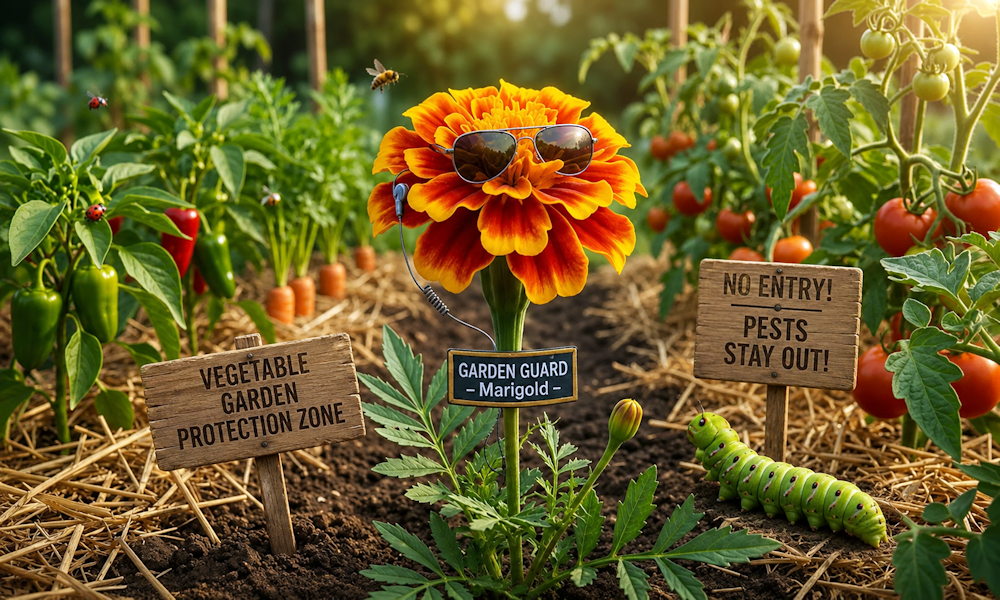
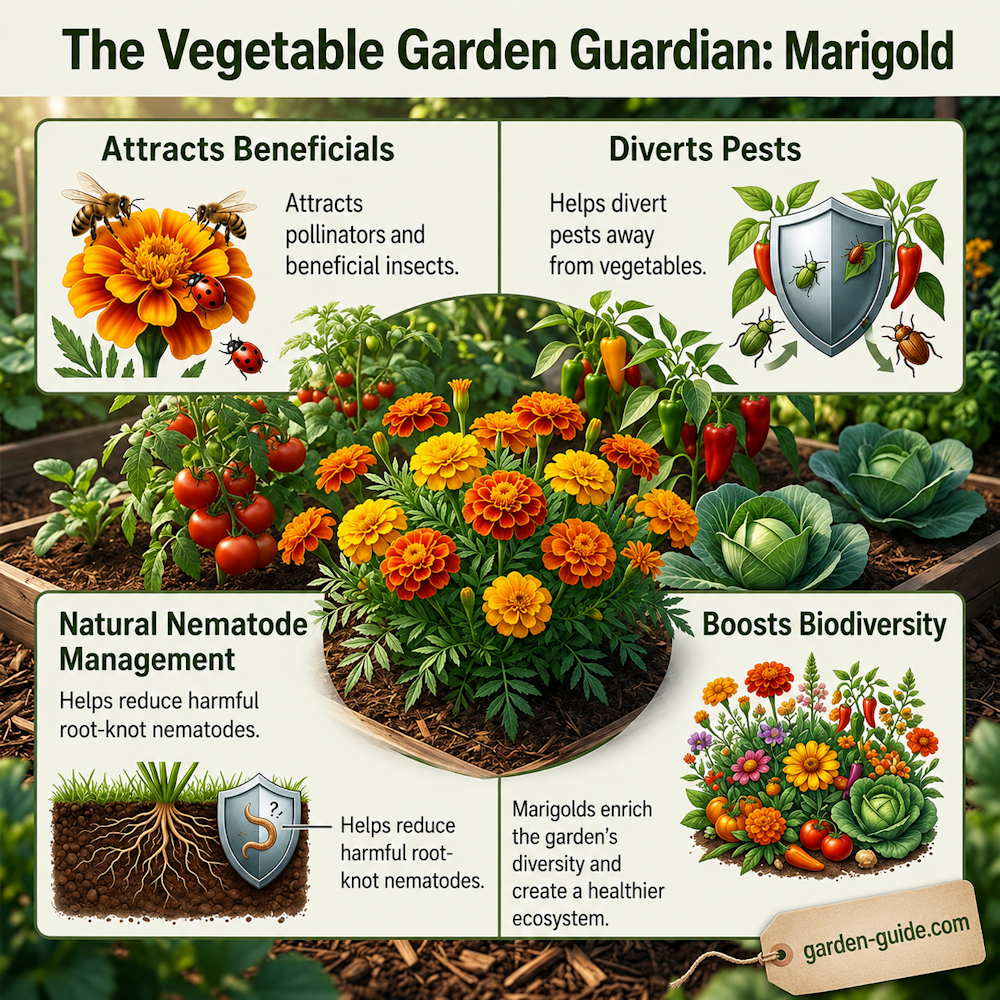
For generations, gardeners have planted marigolds beside vegetables because they bloom for months, tolerate heat well, and bring a strong, distinctive scent to the garden. Some gardeners believe that scent helps confuse or discourage certain pests, while the flowers themselves can attract pollinators and other beneficial insects.
Are marigolds a miracle shield for your tomatoes? Not quite. But they are far more than a pretty face.
A Bright Border with Benefits
In the vegetable garden, marigolds work beautifully as edging plants. Their warm yellow, orange, and reddish tones frame beds, soften straight rows, and make even the most practical tomato patch feel a little more joyful.
They also add diversity. A vegetable bed filled only with one crop is a very clear invitation to the insects that like that crop. Add flowers, herbs, different heights, scents, and textures, and suddenly the garden becomes a more interesting, layered place—less like a buffet table for pests and more like a lively summer neighborhood.
What About Nematodes?
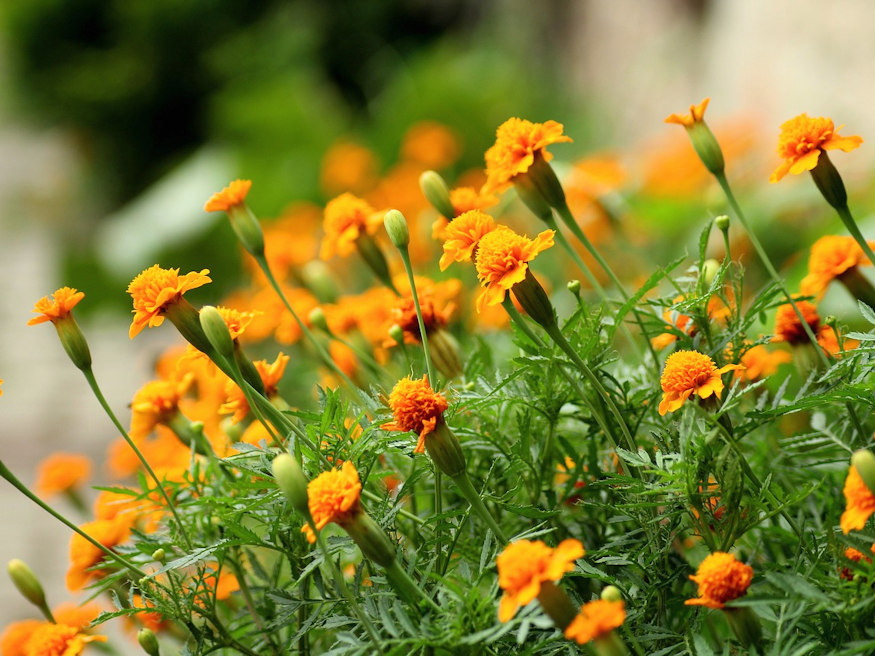
Marigolds are often mentioned in connection with soil-dwelling nematodes, especially root-knot nematodes. This is where the story gets interesting—but also where it needs a little caution.
Some Tagetes species can help suppress certain plant-parasitic nematodes through compounds associated with their roots. However, the effect depends on the marigold species, the nematode species, the soil, and how the plants are grown.
In other words: planting three marigolds and expecting instant underground peace is optimistic. Think of marigolds as one helpful character in the garden story, not the superhero who solves the whole plot alone.
Best Friends for Tomatoes, Peppers, and Cabbages
Marigolds are often planted near tomatoes, peppers, cabbages, onions, and other kitchen garden favorites. They slip easily into the ends of beds, between rows, or along the edges of raised planters.
Compact varieties are usually the easiest choice for vegetable gardens because they stay neat and do not overshadow nearby crops. Taller varieties can be spectacular, but they need a little more room—and a place where they will not flop dramatically onto your lettuces.
The best companion plant is still a polite one.
Which Marigold Should You Choose?
Not all marigolds behave in the same way, so it is worth choosing with the vegetable garden in mind.
- French marigold (Tagetes patula) is compact, bushy, and ideal for edging beds or tucking between vegetables.
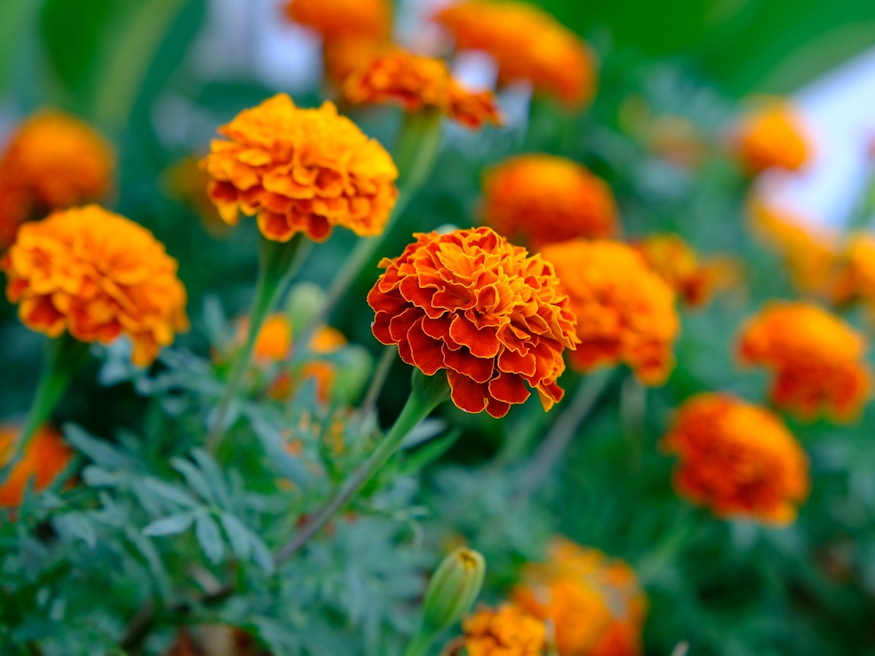
- African marigold (Tagetes erecta) produces bigger, showier flowers and taller plants, so it is best where there is enough space.
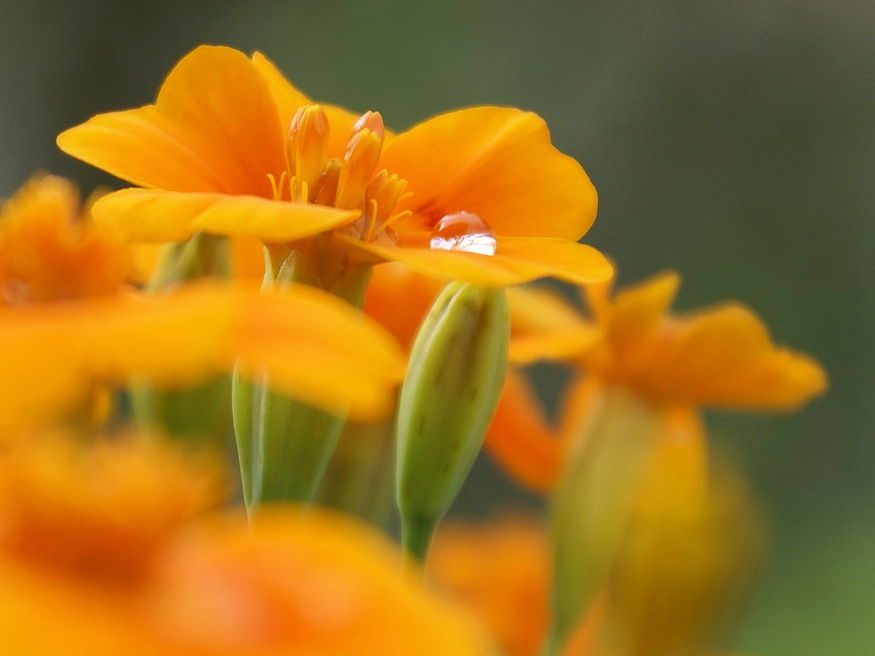
- Signet marigold (Tagetes tenuifolia) has fine, delicate foliage and masses of small flowers that are especially lovely for pollinators.
If your goal is a useful, tidy vegetable garden, look beyond flower color. Height, habit, and flowering time matter just as much.
Easy to Grow, but Not Completely Carefree
Marigolds love sunshine. Give them a bright spot, well-drained soil, and moderate fertility, and they will usually reward you with flowers from early summer until the first frosts.
They do not enjoy sitting in wet soil, but they also appreciate watering during long, dry spells. Deadheading spent flowers helps keep the show going, while leaving a few blooms to mature allows you to collect seed—or lets the plants self-seed for next year.
This is one of their charms: buy or sow them once, and they may keep popping up like cheerful little reminders that the garden remembers.
When Marigolds Become Too Much of a Good Thing
Even easy plants need a little common sense. If marigolds are planted too densely, air circulation can suffer and fungal problems may appear. If very tall varieties are squeezed into small beds, they can shade vegetables or lean where they are not wanted.
And if every spent flower is allowed to set seed, next year’s garden may contain marigolds in places you did not exactly plan.
That is not a disaster—there are far worse garden surprises—but it is still worth using them thoughtfully. Edges, row ends, gaps, and sunny corners are usually better than scattering them everywhere and hoping for the best.
The Old-Fashioned Flower That Still Knows What It’s Doing
Marigolds have survived changing garden fashions because they are charming, practical, and wonderfully generous. They brighten vegetable beds, support garden biodiversity, attract useful insects, and may play a role in managing certain soil problems when used correctly.
They are not a miracle cure. They are better than that: reliable, cheerful, inexpensive, and easy enough for beginners to grow with confidence.
Sometimes the so-called old-fashioned flowers stay with us for the best possible reason. They still know exactly how to earn their place in the garden.