

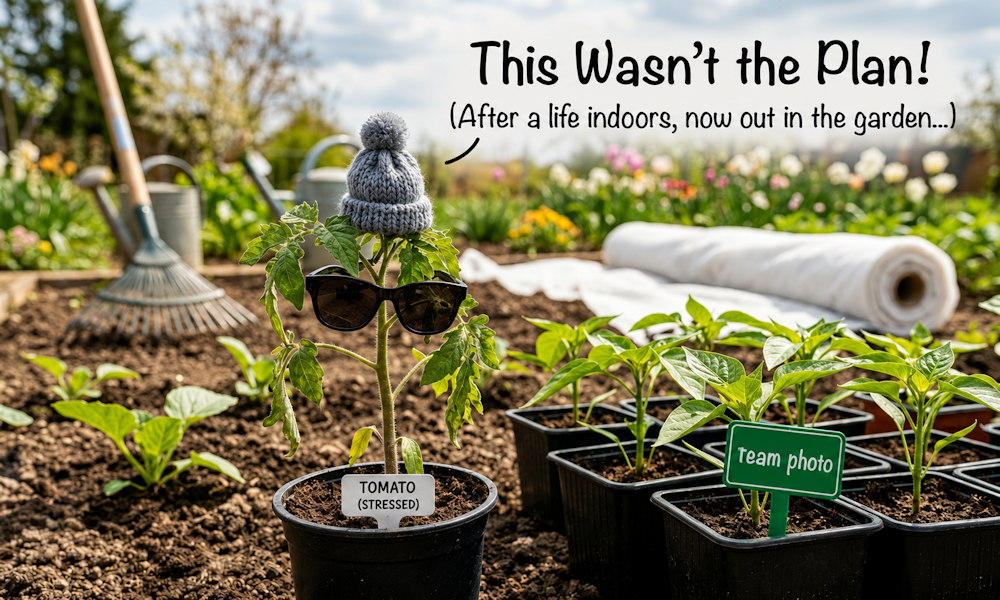

Planting out young vegetables is one of spring’s most satisfying garden rituals – until a few of them start wilting, yellowing or looking deeply unimpressed with their new home. In many cases, the problem is not a poor-quality seedling, but the way it was moved from sheltered comfort into the real outdoor world.
Planting Out Is More Than Moving a Plant
By the second half of May in many temperate gardens, heat-loving vegetable seedlings can often start moving outdoors. Tomatoes, peppers, cucumbers, courgettes and basil finally line up like the promising young team every gardener has been waiting for.
But planting out is not simply a matter of taking a plant from a pot and placing it in the soil. For the seedling, it is a major change in light, temperature, wind exposure, soil conditions and moisture. If that transition is too sudden, the plant may pause, droop or even lose colour for a few days.
That does not always mean disease. Very often, it is transplant stress.
Why Seedlings Struggle After Transplanting
A young plant raised indoors, in a greenhouse or in another protected space has usually lived a relatively gentle life. Temperatures have been more even, the wind has been limited, sunlight has been filtered and nights have not been as cold.
Then, almost overnight, it is placed in open garden soil, where the sun is stronger, the breeze is real, rainfall is unpredictable and temperatures can swing sharply between day and night.
The roots need time to make contact with the surrounding soil. The leaves need time to adjust to brighter light. The whole plant needs time to understand that life has changed.
The First Mistake: Skipping the Hardening-Off Stage
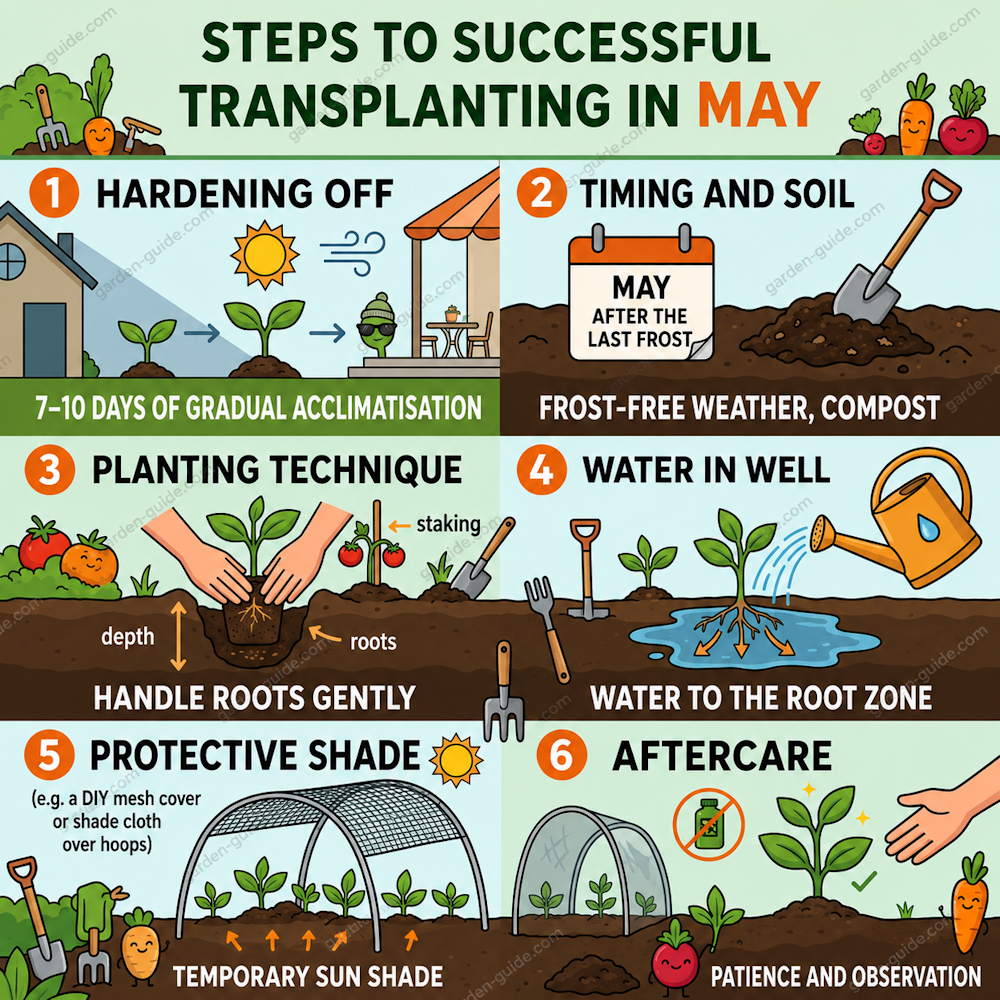
Hardening off means gradually acclimatising seedlings to outdoor conditions before planting them permanently into the garden.
Start by placing them outside for a few hours in a shaded, sheltered spot. Over several days, slowly increase their time outdoors and their exposure to light. Avoid strong wind, cold nights and harsh midday sun at the beginning.
If this step is skipped, seedlings can suffer from sunscald, wind damage or cold stress. Leaves may bleach, scorch or collapse, and the plant may look as if it has completely lost its enthusiasm for life.
It has not necessarily failed. It may simply have been pushed into the deep end too quickly.
The Second Mistake: Planting in Full Midday Sun
The best time to plant out seedlings is usually late afternoon, early evening or a cloudy, mild day. Midday sun is hard on a plant that has just had its roots disturbed.
A freshly planted seedling cannot immediately take up water at full strength, while its leaves continue to lose moisture through transpiration. Add strong sun and warm air, and wilting can happen quickly.
A calmer planting window gives the plant a chance to settle before facing the strongest light of the day.
The Third Mistake: Watering Only the Surface
Good watering at planting time is essential. A quick sprinkle over the top of the soil is not enough.
Water needs to reach the root zone so the young plant is surrounded by moist soil, not just a damp-looking surface. Thorough watering helps close air pockets around the roots, improves root-to-soil contact and reduces early stress.
After that, however, more is not always better. Constantly waterlogged soil can become short of oxygen, and roots do not thrive in a permanently soggy environment. The goal is even moisture, not a swamp.
The Fourth Mistake: Feeding Too Much, Too Soon
This mistake often comes from good intentions. A gardener wants to help the new plant grow strongly, so it receives fertiliser or liquid feed immediately after planting.
But in the first few days after transplanting, a seedling often needs stability more than a feast.
Strong feeding can place extra pressure on young roots. It is usually better to prepare the soil in advance with compost or well-rotted organic matter, then allow the plant to root into its new position. Once fresh growth begins, feeding can be introduced more confidently if needed.
Which Seedlings Need Extra Care?
Not all seedlings react in the same way.
Tomatoes (Solanum lycopersicum) are relatively forgiving and can recover well, although they still dislike cold soil and sudden changes in light. Peppers (Capsicum annuum) often start more slowly and may stall if planted into chilly ground.
Cucumbers (Cucumis sativus), courgettes or zucchini (Cucurbita pepo), squashes (Cucurbita spp.) and melons, including muskmelons (Cucumis melo) and watermelons (Citrullus lanatus), are more sensitive to root disturbance. Move them gently, keep the root ball intact and avoid unnecessary handling.
Basil (Ocimum basilicum) is another warmth-loving plant that can sulk after cold nights. It is better planted out when the weather has genuinely settled.
Temporary Shade Is First Aid, Not Luxury
For the first few days after planting, temporary shade can make a real difference. This does not mean keeping seedlings in darkness. It simply means softening the harshest sun while they adjust.
A piece of horticultural fleece, shade netting, an upturned crate or a simple improvised screen can all help, as long as the plant is not crushed and air can still circulate.
The aim is to reduce stress, not to wrap the seedling in a sealed shelter.
A Simple Planting-Out Checklist
Before planting out young vegetables and herbs, check the basics:
- Harden seedlings off gradually over several days.
- Avoid planting in strong midday sun.
- Water thoroughly at planting time.
- Protect young plants from wind where possible.
- Use temporary shade during the first few days if the sun is strong.
- Do not overfeed immediately after transplanting.
- Watch for the first signs of fresh growth.
Seedlings Are Not Dramatic – They Are Alive
Transplant stress is not a failure, and it does not automatically mean the plant was weak. A seedling has simply entered a much more demanding environment.
If you harden it off gradually, plant it at the right time of day, water it properly and give it a little protection during the first few days, it has a far better chance of settling in and growing strongly.
In the garden, patience is often more powerful than anything in a bottle.