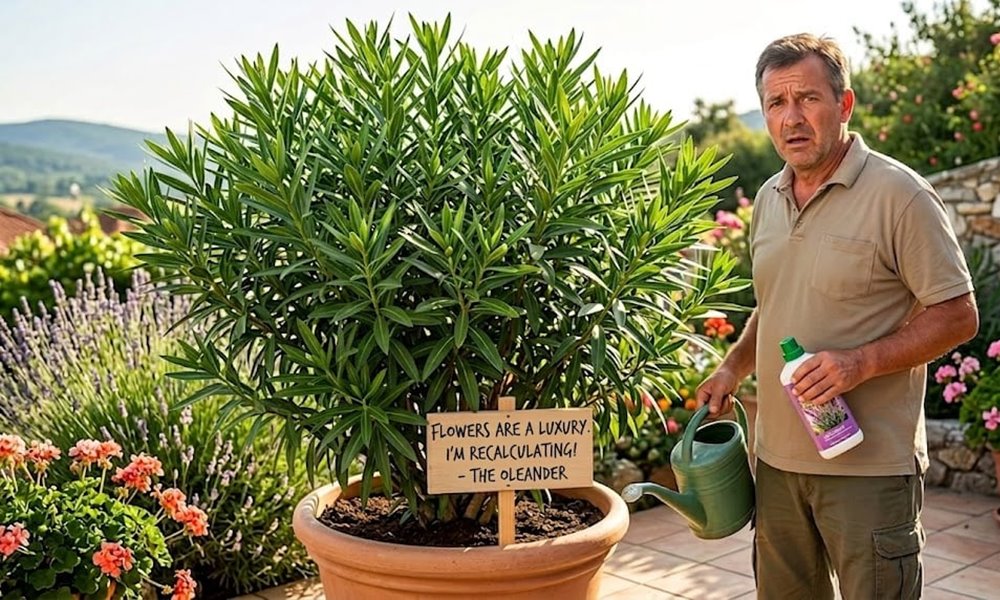

Oleander is one of those plants that can look perfectly healthy and still disappoint its gardener. The leaves are green, the shoots are growing, the plant appears alive and vigorous — yet flowering never really begins. That makes the problem especially frustrating. A struggling plant is easier to understand. But when an apparently healthy oleander produces almost no flowers, the real issue is usually not disease. More often, the plant simply does not have the right conditions for flower bud formation.
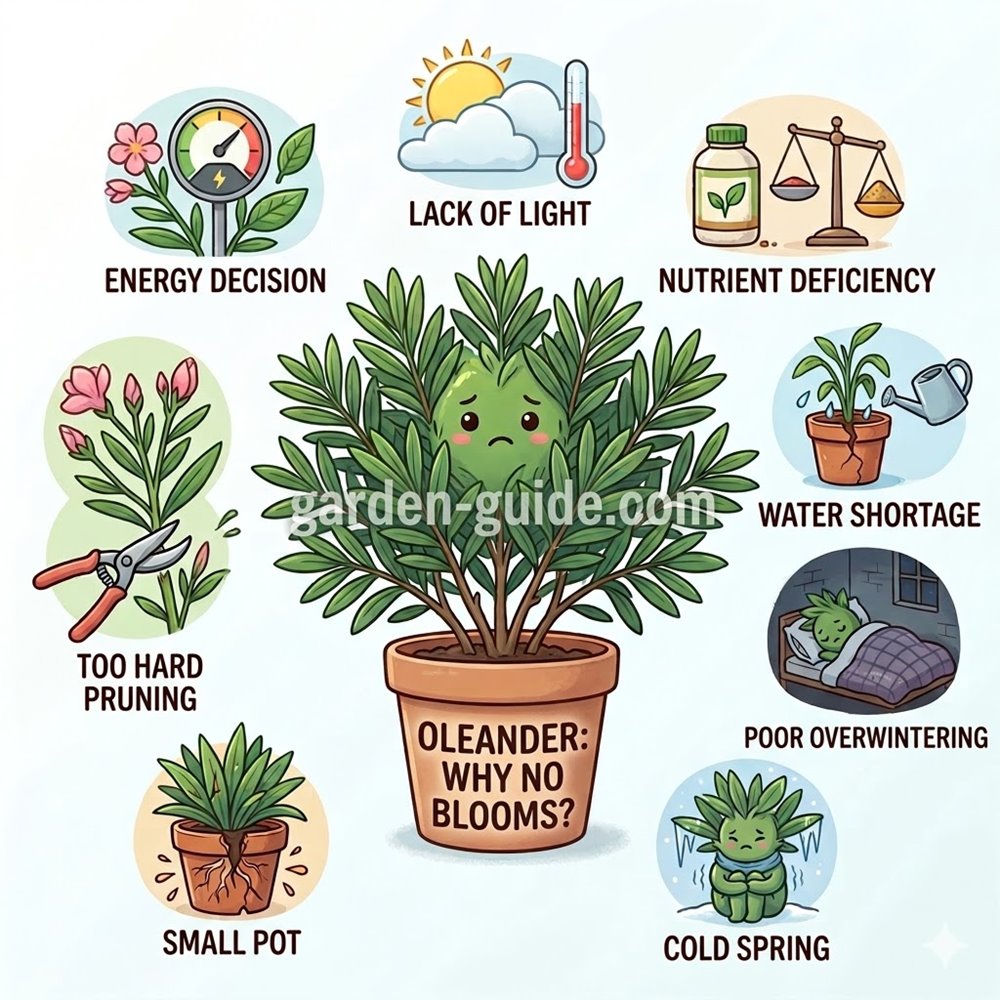
Oleander, Nerium oleander, is generous with blooms only when several important needs are met at the same time: strong light, steady moisture, sufficient nutrients, good overwintering, and careful pruning.
Not Enough Sunlight
Oleander is not satisfied with brightness alone. It needs long hours of direct sun. In partial shade it may continue producing leaves and shoots, but flowering often becomes sparse or disappears. Many gardeners assume that if the foliage looks healthy, the plant is happy. But vegetative growth and flowering are not the same thing. Oleander can survive with less sun than it needs to bloom well.
Not Enough Nutrients
As a container plant, oleander quickly exhausts the nutrients in its potting mix. If it receives only occasional feeding, it may still maintain green foliage while lacking the reserves needed for flowering. Too much nitrogen can also be part of the problem. In that case the plant produces lush growth but fewer flower buds.
Too Little Water
Oleander tolerates drought better than many ornamentals, but tolerance is not the same as thriving. Repeated dry periods, especially in containers during warm weather, reduce flower production. The plant may not immediately look wilted. Instead, it often reduces flowering first.
Poor Overwintering Conditions
If oleander spends winter in a place that is too dark, too warm, or too dry, it may begin spring in weakened condition. It may leaf out slowly and focus on rebuilding basic growth instead of flowering. Cool, bright, frost-free winter conditions usually support stronger flowering later.
A Cold Spring Slows Everything Down
Oleander is warmth-loving. A prolonged cool spring can delay shoot development and flower bud formation. Plants moved outside too early often remain sluggish if cold nights persist.
Pot Size Matters
Oleander develops a strong root system. When kept too long in a small container, roots become crowded, water balance becomes unstable, and nutrient supply drops quickly. The plant may stay alive and leafy, but flowering often weakens.
Pruning Too Hard
Strong pruning at the wrong time may remove potential flower buds. Oleander often responds by producing vigorous new shoots instead of flowers.
What To Check
If an oleander refuses to bloom, it is worth reviewing the whole care pattern:
- Is it getting enough direct sunlight?
- Is watering consistent during active growth?
- Is feeding regular and balanced?
- Does the root system have enough space?
- Was overwintering appropriate?
- Was pruning too severe?
Oleander usually has a clear reason for withholding flowers. It is not being stubborn — it is simply reallocating energy.
Oleander Is Not Lazy – It Is Calculating
When oleander does not bloom, it is not in a bad mood. It is making a survival decision.
Flowers are expensive. Leaves are easier. That is why bloom quality often tells the truth about oleander care more honestly than foliage ever will.