
Early July has a distinctive rhythm in the garden. The first flush of spring flowers has faded, vegetables are gathering momentum, and trees cast the deep shade that makes a warm afternoon outdoors so inviting. It is a season of abundance, but also one that quietly reminds us how quickly landscapes can change.
July 3 is a surprisingly rich date for anyone who loves nature. It brings together stories of exploration, vanished wildlife, seasonal folklore and the importance of caring for the living world. Looking closely at these moments reveals a common thread – every generation shapes the landscapes it inherits, whether by planting forests, protecting wildlife or simply tending a small garden with greater awareness.
The events linked to this day invite us to look beyond our own fences and remember that every thriving garden is part of a much larger story.
1608 – Québec and the Birth of a New Landscape
On July 3, 1608, French explorer Samuel de Champlain established the settlement of Québec, creating one of North America’s oldest continuously inhabited European cities.
Although history often remembers this as a political milestone, it was equally the beginning of a remarkable botanical exchange. European settlers encountered immense forests unlike anything they had known at home – towering white pines, sugar maples, spruces and vast wetlands rich in unfamiliar plants.
Over time, knowledge flowed in both directions. Indigenous peoples shared generations of understanding about native trees, medicinal plants and seasonal rhythms, while European horticultural traditions gradually adapted to an entirely different climate.
Many garden favourites now grown around the world – from maples admired for autumn colour to woodland perennials inspired by North American forests – owe their popularity to this long history of exploration and plant discovery.
Garden Inspiration
Take a walk beneath mature trees today.
Notice how layered woodland planting works naturally:
- tall canopy trees
- shrubs beneath them
- flowering perennials
- mosses and groundcovers
Nature has been designing beautiful gardens long before people began drawing plans.
The Great Auk – A Reminder That Extinction Can Happen
One of the saddest stories connected with July 3 reaches back to 1844, when the last confirmed pair of Great Auks were killed off the coast of Iceland. The flightless seabird disappeared forever after centuries of hunting for feathers, meat and museum collections.
The Great Auk has become one of conservation’s strongest symbols because its extinction happened within recorded history. People witnessed the species decline – yet failed to stop it.
Gardeners may wonder what this has to do with their own patch of ground.
Quite a lot.
Modern gardens increasingly serve as tiny nature reserves. A flowering border can support pollinating insects. A native hedge offers nesting places for birds. A small pond may become home to frogs, dragonflies and drinking wildlife during dry summers.
While no individual garden can prevent global extinctions, millions of wildlife-friendly gardens together create connected habitats across towns and countryside.
Nature Watch
Spend five quiet minutes watching your garden.
How many visitors arrive without your help?
- Bees moving between flowers
- Hoverflies hunting aphids
- Butterflies basking in the sunshine
- Blackbirds searching for worms
- Sparrows dust-bathing beneath shrubs
These everyday encounters are small reminders that biodiversity begins close to home.
The Dog Days Begin – Heat Changes the Garden
According to the traditional Old Farmer’s Almanac, July 3 marks the beginning of the Dog Days of Summer – the period historically associated with the rising of Sirius, the brightest star in the night sky, and long linked with the hottest weeks of the year. Modern astronomy places the celestial timing differently, but the old seasonal tradition remains a familiar part of gardening folklore.
Whether or not temperatures immediately soar depends on where you live, yet early July often brings the first sustained spells of summer heat across much of the Northern Hemisphere.
Plants begin responding long before gardeners notice.
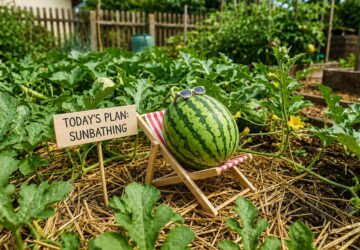
Leaves may curl slightly to conserve moisture. Freshly planted shrubs demand deeper watering. Containers dry astonishingly quickly, while lawns naturally slow their growth to cope with the stress.
Rather than fighting every sign of summer, experienced gardeners often work with the season instead of against it.
Seasonal Tip
During hot weather:
- Water deeply rather than little and often.
- Water early in the morning whenever possible.
- Refresh mulch around vegetables and shrubs.
- Leave seed heads on some flowers for birds and beneficial insects later in the season.
- Resist mowing lawns too short – longer grass shades the soil and conserves moisture.
Landscapes Grow Through Leadership
Another July 3 milestone comes from 1775, when George Washington formally took command of the Continental Army.
While this is remembered primarily as a political and military event, it also offers an unexpected gardening lesson.
Healthy landscapes rarely appear by accident.
Community orchards, public parks, restored rivers, urban forests and pollinator projects all begin with someone willing to take responsibility, make careful plans and inspire others to help.
Gardens teach the same principle on a smaller scale. Every compost heap started, every tree planted and every patch of flowers left for pollinators reflects a simple act of stewardship.
Nature flourishes best when someone chooses to care.
Garden Reminder
If you’ve been thinking about starting a small wildlife project, today is a good day to begin.
It doesn’t have to be ambitious.
One flowering shrub, one bird bath or one square metre left slightly wilder can make a meaningful difference over time.
What to Observe Right Now
Early July rewards careful observation.
Look for:
- Tomatoes beginning to swell after flowering.
- Young apples and pears naturally thinning themselves.
- Bees working lavender, thyme and oregano.
- Swallows and swifts feeding their young overhead.
- Butterflies becoming more active during warm afternoons.
- The first signs of drought stress in shallow-rooted plants.
These small seasonal clues tell us just as much about the progress of summer as any calendar.
Looking Ahead
July 3 reminds us that landscapes are never static. New settlements grow into great cities. Forests become gardens. Species can disappear forever if neglected, while thoughtful stewardship can restore habitats that once seemed lost.
The choices gardeners make today – planting diverse flowers, conserving water, protecting wildlife and caring for healthy soil – may appear modest, yet they contribute to a much larger story. Every garden becomes part of a living network that connects people with nature across generations.
As summer deepens, perhaps the greatest lesson of this day is that caring for the land is never a single grand gesture. It is a collection of small, consistent acts that allow both gardens and the wider world to flourish long into the future.