

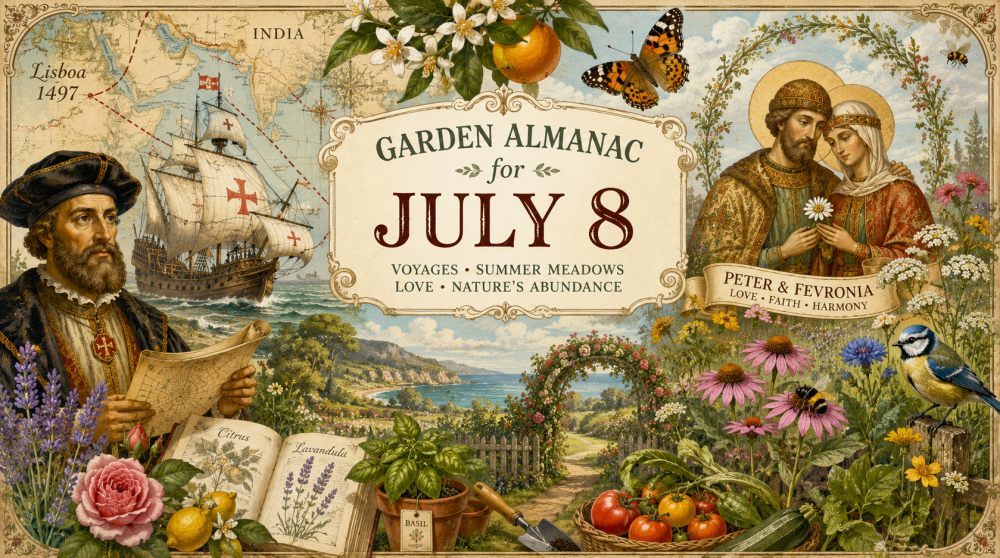

Early July is the season when gardens seem to reach their fullest expression. Roses are still flowering, vegetables are growing almost visibly from one day to the next, butterflies drift across sunny borders, and every walk outdoors reveals new colours, scents and sounds. It is also a time when people have traditionally looked beyond their own gardens – exploring new landscapes, discovering unfamiliar plants and learning how closely human history is intertwined with the natural world.
July 8 is one of those remarkable dates where exploration, observation and the changing summer landscape meet. From one of history’s greatest voyages of discovery to seasonal folklore celebrating love and flourishing nature, the day reminds us that gardens have always been places of curiosity as much as beauty.
July 8, 1497 – Vasco da Gama and the Plants That Changed the World
On July 8, 1497, Portuguese explorer Vasco da Gama departed Lisbon on the first direct European sea voyage to India. His expedition permanently changed global trade, introducing Europe to easier access to spices such as pepper, cinnamon and cloves, while accelerating the exchange of crops, fruits and ornamental plants between continents.
Many of the plants we now consider ordinary garden favourites owe their widespread cultivation to centuries of botanical exploration that followed voyages like da Gama’s. Citrus trees spread more widely, exotic lilies and tropical ornamentals entered European collections, and botanical gardens became centres for studying newly discovered species.
For today’s gardeners, this history is a reminder that biodiversity has always crossed borders. Our vegetable patches and flower beds often contain plants whose ancestors travelled thousands of kilometres before becoming part of local traditions.
Garden Science – Why Do Plants Thrive After Long Journeys?
Plants that survive introduction to new regions often succeed because gardeners unknowingly recreate the environmental conditions of their native habitats. Understanding a plant’s natural climate – whether it evolved in dry Mediterranean hillsides or humid tropical forests – is usually more important than following rigid watering schedules.
Rather than watering by the calendar, observe soil moisture, sunlight and leaf condition. Plants respond to their environment, not to dates.
Peter and Fevronia – A Celebration of Faithful Partnerships in Nature
July 8 is also celebrated in the Russian Orthodox tradition as the Feast of Saints Peter and Fevronia, widely regarded as symbols of lasting love and family life. Their feast coincides with midsummer landscapes filled with wildflowers, flowering meadows and active pollinators, making the celebration closely associated with harmony between people and nature.
Many traditional summer celebrations across Europe share a common theme – flowers gathered from meadows, herbs believed to possess special fragrance, and communal appreciation of the abundance of the growing season.
In the garden, this serves as a gentle reminder that successful cultivation depends on partnerships as well. Flowers rely on bees, hoverflies and butterflies. Fruit trees depend on pollinating insects. Soil organisms work constantly beneath our feet, forming invisible alliances that support every healthy plant.
A thriving garden is never the work of one species alone.
Wildlife Note – Which Pollinators Are Most Active Now?
During warm July mornings you may notice:
- Bumblebees visiting lavender and catmint before temperatures peak.
- Hoverflies feeding on open flowers while helping control aphids.
- Butterflies searching for nectar-rich blooms such as verbena, echinacea and buddleia.
- Young birds learning to forage among shrubs where insects remain abundant.
- Leaving even a small patch of flowering herbs can support dozens of beneficial insect species throughout midsummer.
The Height of Northern Summer – Reading Nature’s Calendar
Although calendars divide time into equal days, gardens follow a different schedule. Around July 8, much of the Northern Hemisphere enters one of its richest periods of biological activity.
Many spring flowers have already set seed. Tomatoes begin producing heavily. Beans climb rapidly. Apples and pears swell on their branches, while many perennial flowers reach their longest flowering period.
Experienced gardeners often describe this as the moment when observation becomes more valuable than intervention.
Instead of constantly planting new crops, July encourages careful monitoring:
- Which flowers attract the greatest diversity of insects?
- Which parts of the garden dry out first during hot afternoons?
- Which vegetables continue growing despite summer heat?
- These observations help shape better gardening decisions for future seasons.
What to Observe Right Now
Take a slow walk through your garden and notice:
- Seed heads beginning to form on early perennials.
- Bees choosing certain flowers repeatedly while ignoring others.
- Dragonflies hunting above ponds or damp areas.
- Birds collecting insects to feed recently fledged young.
- Differences in soil moisture between shaded and sunny beds.
- Nature often reveals patterns long before we notice problems.
Garden Reminder – Essential Tasks for Early July
The busiest part of summer is not always the hardest work, but it does reward consistency.
- Water deeply rather than frequently to encourage stronger root systems.
- Harvest courgettes, beans and cucumbers regularly to stimulate continued production.
- Remove faded blooms from roses and many annual flowers to promote repeat flowering.
- Check tomatoes for adequate support as fruit becomes heavier.
- Refill shallow water dishes for birds, bees and hedgehogs during hot weather.
- Avoid heavy pruning during periods of extreme heat, when plants are already under stress.
- Small, regular tasks often produce healthier gardens than occasional intensive work.
Gardens as Living Museums of Exploration
Every garden tells a story of human curiosity.
The lavender outside a cottage may trace its origins to the Mediterranean. Runner beans arrived from the Americas. Dahlias travelled from Mexico, while tulips became icons of Dutch gardening after journeys from Central Asia.
Looking around the average garden reveals centuries of exploration, scientific exchange and careful cultivation. Plants have quietly connected cultures long before modern travel made the world feel smaller.
That living history is especially fitting on July 8 – a day linked with journeys that reshaped not only commerce, but also the plants that enrich our gardens today.
Looking Ahead
July reminds us that every thriving garden is built on observation, adaptation and respect for nature’s partnerships. Historic voyages expanded the diversity of plants we can grow, while seasonal traditions continue to celebrate the beauty of midsummer landscapes.
As the season progresses, the most rewarding gardening often comes from paying closer attention rather than doing more. Watch which flowers hum with pollinators, notice how shade changes the soil, and appreciate the remarkable global journeys hidden within familiar plants. Every careful observation today becomes experience that will help create a healthier, more resilient garden tomorrow.