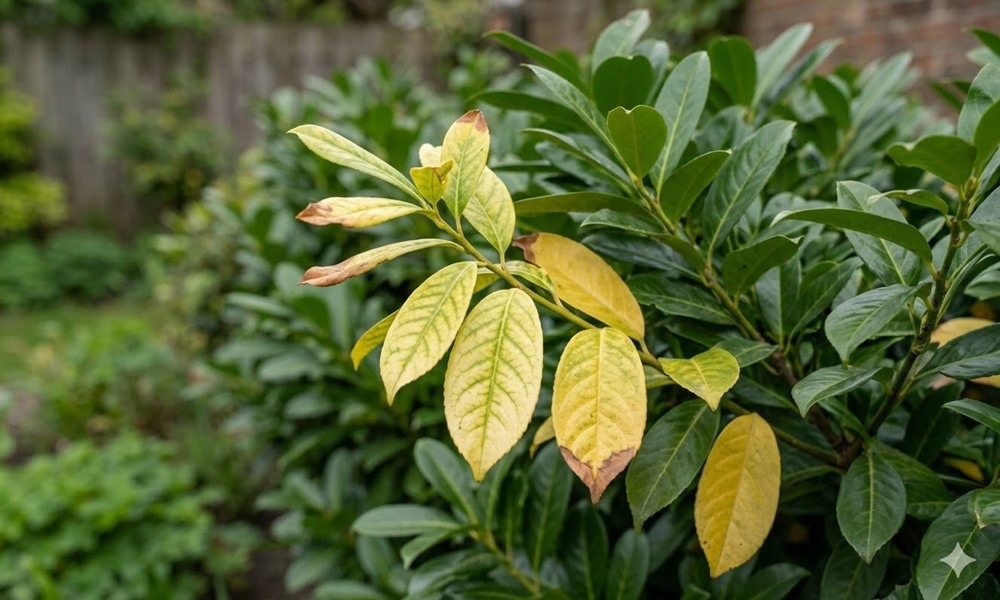

Cherry laurel (Prunus laurocerasus) is valued for its evergreen foliage, which makes yellowing leaves especially noticeable and concerning. In most cases, yellowing is not caused by a single issue, but by environmental stress affecting roots, water balance, or nutrient availability.
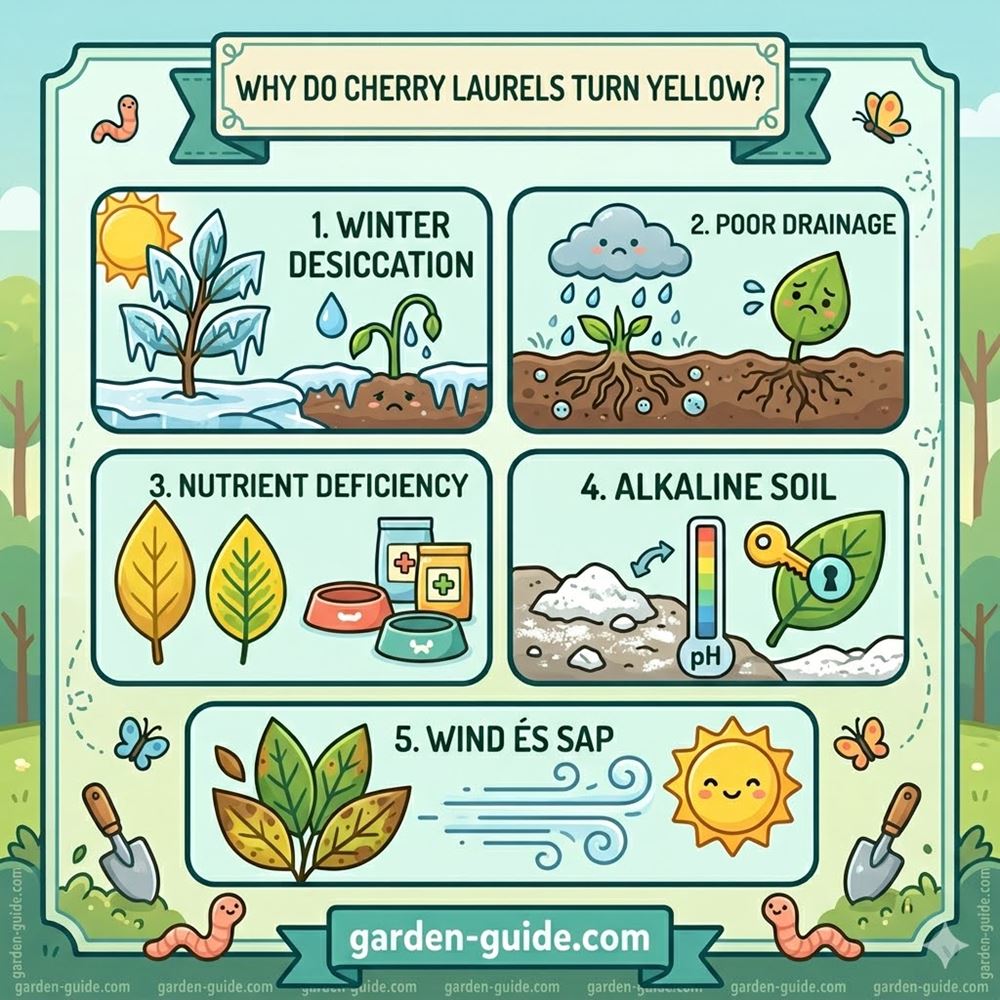
Winter Stress and Desiccation
Because cherry laurel keeps its leaves in winter, it continues to lose water. If the soil is frozen, roots cannot replace this moisture, leading to stress that becomes visible in spring.
Excess Moisture and Poor Drainage
Waterlogged soil reduces oxygen in the root zone, limiting root function and causing yellowing.
Nutrient Deficiency
Nitrogen or iron deficiency can cause pale or yellow leaves. Iron deficiency often shows as yellow leaves with green veins.
Soil pH Issues
Cherry laurel prefers slightly acidic soil. In alkaline soil, nutrients may become unavailable.
Wind and Sun Damage
Winter sun and wind can damage leaves, leading to discoloration in spring.
What To Do
Improving drainage, adding organic matter, and correcting nutrient balance usually help the plant recover.
A Signal, Not a Mystery
Yellowing in cherry laurel is rarely random. It is the plant’s way of showing that conditions are not optimal – and that adjustment is needed.