
June is a funny month in the garden. Everything is growing at full speed, flowers are blooming, vegetables are racing toward harvest, and for a brief moment it feels like nature has everything under control. That feeling is usually a trap.
While most gardeners focus on the obvious jobs—watering, mowing, weeding—it’s often the small things we forget that come back to haunt us later. A few minutes spent now can save hours of frustration in July and August.
Here are ten quick June checks that your future self will thank you for.
1. Check Ties Before Plants Outgrow Them
Climbing roses, tomatoes, clematis, beans, and many other plants can put on astonishing growth in June.
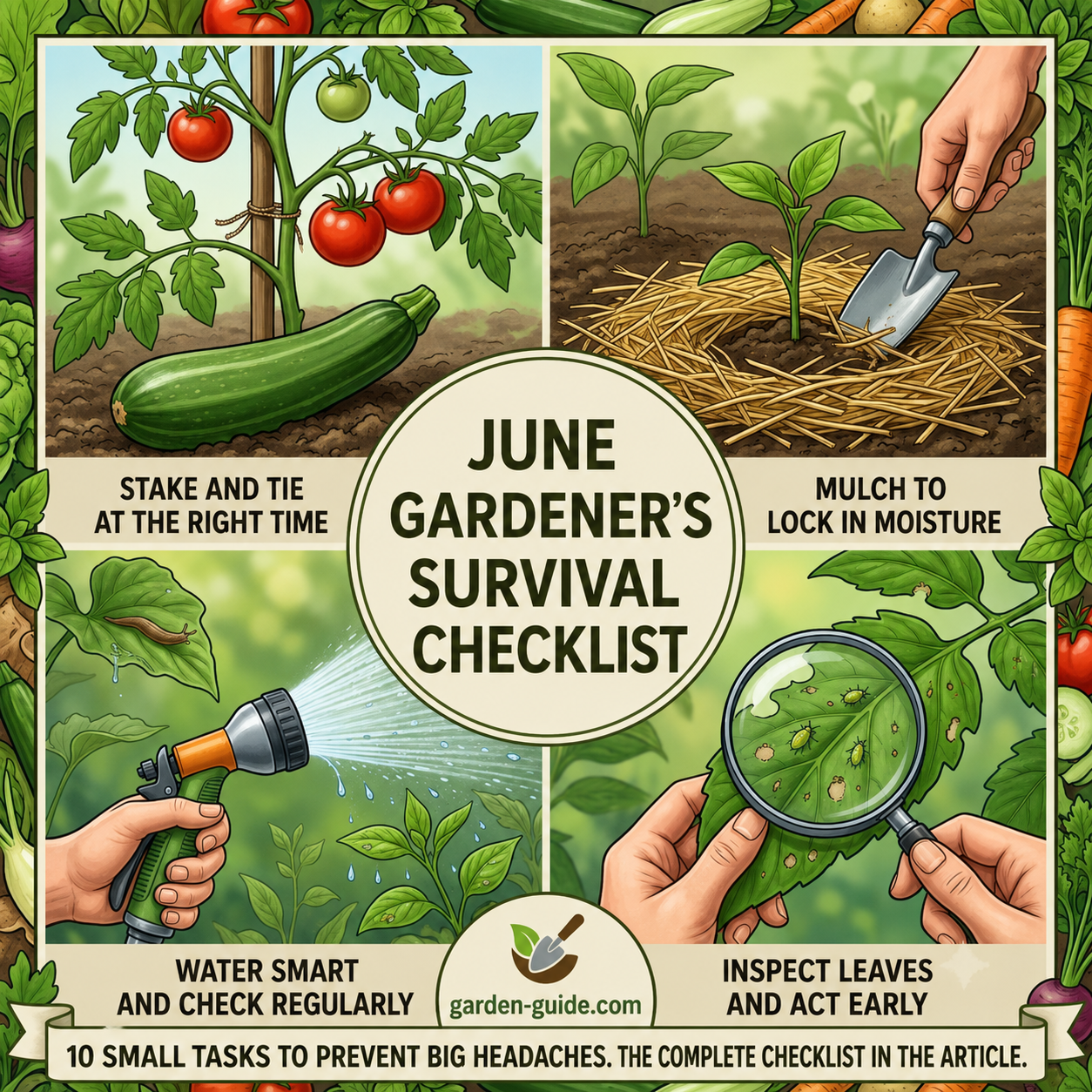
Take a quick walk around the garden and inspect plant ties, stakes, and supports. A tie that was perfect three weeks ago may now be cutting into a stem. Loosen, adjust, or replace anything that looks tight.
Plants grow surprisingly fast. Gardeners often forget that.
2. Deadhead Before Seed Production Begins
Many flowering plants have a simple goal after blooming: produce seeds.
If you remove faded flowers regularly, the plant often redirects its energy into producing more blooms instead. Roses, petunias, geraniums, cosmos, and many annuals will reward a little attention with weeks of extra color.
Think of deadheading as politely convincing a plant that summer isn’t over yet.
3. Look Under the Leaves
Most gardeners inspect the tops of their plants.
Pests know this.
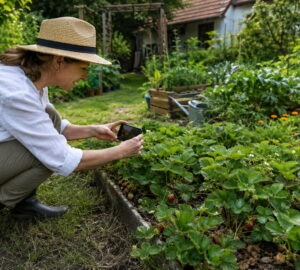
Aphids, whiteflies, spider mites, eggs, and young larvae often gather on the undersides of leaves, where they can go unnoticed until populations explode.
A two-minute inspection each week can catch problems while they’re still easy to manage.
4. Pull Weeds While They’re Small
Nobody enjoys weeding, but June offers a rare opportunity.
Young weeds are easy to remove. Mature weeds with deep roots, flowers, and seed heads are another story entirely.
A few minutes of “micro-weeding” every few days is usually far less painful than dedicating an entire weekend to the job later.
5. Refresh Mulch Before Summer Heat Arrives
Mulch is one of the hardest-working materials in the garden.
A fresh layer helps retain moisture, suppress weeds, and keep soil temperatures more stable as summer heat builds.
If your mulch has thinned out since spring, now is a great time to top it up around ornamental beds, vegetables, shrubs, and trees.
6. Inspect Containers More Often Than You Think
Container plants can go from thriving to stressed remarkably quickly.
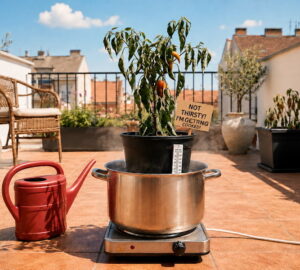
Warm June weather means pots dry out faster than many gardeners expect. Check soil moisture regularly, especially in hanging baskets and smaller containers.
A plant growing in a container lives in a much harsher environment than one growing in open ground.
7. Give Hedges a Quick Shape-Up
Many hedges produce a strong flush of growth in early summer.
A light trim in June can help maintain neat lines and encourage dense growth. Just be sure to check carefully for nesting birds before reaching for the hedge trimmer.
Sometimes the hedge is busier than it looks.
8. Don’t Forget the Compost Pile
The compost heap often gets ignored once the growing season is in full swing.
Yet warm temperatures mean decomposition is working at top speed. If conditions are dry, add a little water. If the pile is compacted, give it some air by turning it.
Healthy compost today means better soil tomorrow.
9. Check Tools Before You Need Them
Gardeners are experts at discovering problems exactly when they need a tool most.
June is a good time to clean pruners, sharpen blades, tighten loose screws, and inspect hoses and watering equipment.
Five minutes in the shed can prevent a lot of muttering later.
10. Watch the Weather, Not the Calendar
June may feel like summer, but weather can still be unpredictable.
Heat waves, heavy rain, strong winds, and sudden dry spells can all arrive with little warning. Keeping an eye on forecasts allows you to water, stake, mulch, protect, or harvest before conditions become a problem.
The calendar says June. The garden only listens to the weather.
A Few Minutes Now, Fewer Problems Later
Successful gardening isn’t always about big projects or expensive solutions. More often, it’s about noticing small things before they become large ones.
A loosened tie, a removed weed, a quick pest check, or a freshly sharpened pruner may seem insignificant today. By midsummer, those tiny tasks can be the difference between a garden that feels manageable and one that’s constantly demanding attention.
In June, a little prevention goes a surprisingly long way.