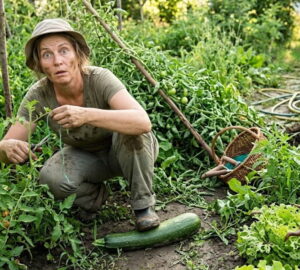
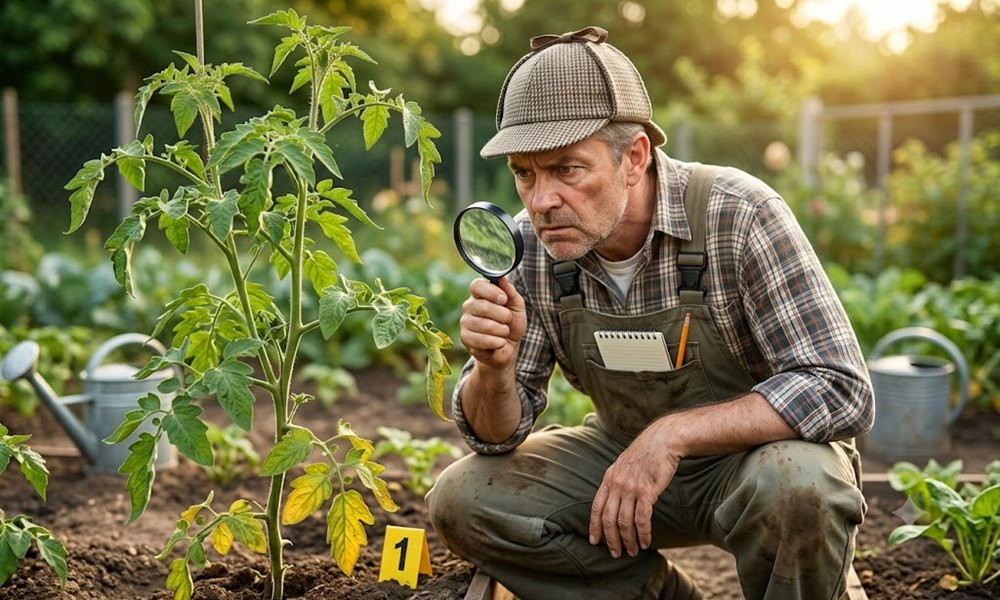

There comes a moment every June when you step into the garden “just for a minute” and, twenty minutes later, find yourself crouching beside a tomato plant, studying its leaves like a detective examining clues at a crime scene.
Tomatoes rarely announce their problems politely. They don’t knock on the door or send notifications. Instead, they curl, yellow, spot, wilt, or simply look as though they’ve already given up on this year’s growing season.
7 Warning Signs Your Tomatoes May Be Sending
The first half of June is a particularly important period for tomato plants. By now, they are growing vigorously, yet many problems can still be corrected before they become serious.
Spotting the signs early can save a great deal of frustration, diseased foliage, and disappointed tomato inspections later in the season.
Why Are Tomato Leaves So Important in June?
Tomato leaves often reveal problems before the fruit does. Yellowing, curling, spotting, wilting, or unusually lush growth can all be messages from the plant.
There is no need to panic at the first sign of trouble, but learning how to read these signals is one of the most valuable gardening skills.
In June, tomatoes may be dealing with:
- fluctuating temperatures,
- overwatering or drought stress,
- nutrient deficiencies,
- excess nitrogen,
- fungal diseases,
- pests,
- poor air circulation.
That may sound like a long list, but gardens do not come with a simplified customer service department. The plant sends signals, and we try not to pretend we missed them.
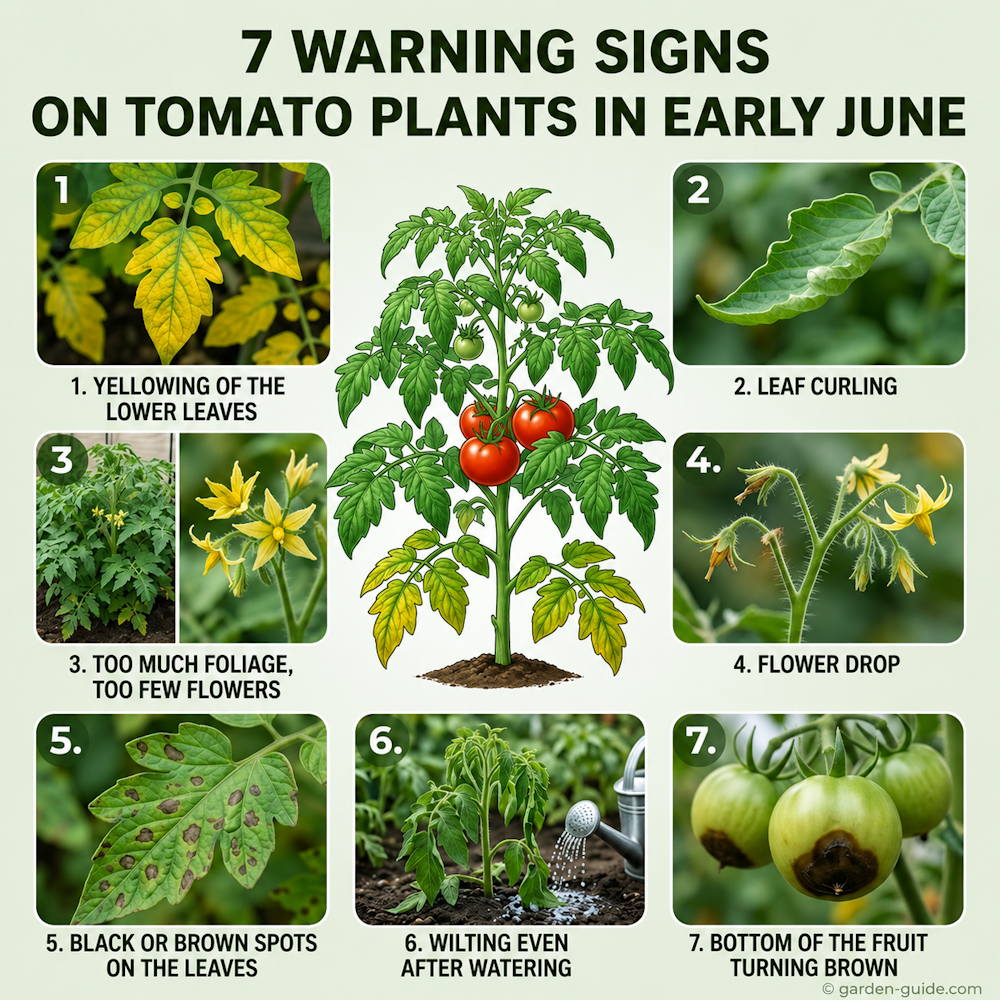
Sign #1: Lower Leaves Are Turning Yellow
When the lower leaves of a tomato plant begin to yellow, several factors could be responsible.
It may simply be natural aging, especially if only a few leaves near the base are affected. However, yellowing can also indicate overwatering, nutrient deficiencies, or poor airflow around the plant.
The key question is simple: is the yellowing moving upward?
If it is spreading through the plant, it is worth taking a closer look.
What You Can Do
- Remove yellowing leaves close to the soil.
- Avoid overwatering.
- Ensure good air circulation around the plants.
- Avoid regularly wetting the foliage when watering.
The lower leaves of a tomato plant are often like a gardener’s conscience—they eventually reveal everything.
Sign #2: Leaves Are Curling
Leaf curl is a common sight in June.
It can be triggered by heat, sudden temperature changes, inconsistent watering, heavy pruning, or general plant stress. If the plant remains green, healthy, and actively growing, the situation is often not serious.
However, if curling is accompanied by yellowing, distortion, spotting, or poor growth, it may indicate pests, viral problems, or more severe stress.
Your First Steps
- Check the undersides of leaves.
- Review your watering routine.
- See whether one plant or several are affected.
- Avoid immediately throwing every possible treatment at the problem.
Sometimes tomatoes are simply being dramatic. Sometimes they are genuinely struggling. Knowing the difference is part of the art of gardening.
Sign #3: Lots of Leaves, Very Few Flowers
If your tomato plant is lush, green, and impressively large but producing very few flowers, excess nitrogen may be the culprit.
The plant has decided that building a jungle is more important than producing fruit.
This often happens when plants receive too much fertilizer, nitrogen-rich feed, or are growing in overly fertile soil.
What You Can Do
- Stop applying nitrogen-heavy fertilizers.
- Switch to a more balanced feed that supports flowering and fruiting.
- Make sure the plant receives plenty of sunlight.
- Keep excessively dense growth under control.
A tomato plant’s job is not to become a sculpture made of leaves—although it is often remarkably talented at it.
Sign #4: Flowers Are Dropping
Flower drop is one of the most frustrating tomato problems in early summer.
The flowers appear, hopes rise, recipes start forming in your head—and then the plant simply lets them fall.
Possible causes include:
- excessive heat,
- cold nights,
- drought stress,
- inconsistent watering,
- poor pollination,
- nutrient imbalances.
If many flowers are dropping, try to stabilize growing conditions.
Tomatoes dislike extremes. They enjoy warm weather, but they do not appreciate it when the garden suddenly turns into a sauna.
Sign #5: Black or Brown Spots Are Appearing on the Leaves
Leaf spots should always be taken seriously.
In June, particularly after humid or rainy weather, tomato plants become more vulnerable to fungal diseases. Brown, black, or irregular spots on the leaves can be early warning signs of trouble.
Important Actions
- Remove affected leaves.
- Avoid overcrowding plants.
- Water at the base of the plant.
- Do not work among wet foliage.
- Monitor whether symptoms are spreading.
Good air circulation around tomatoes is not a luxury—it is a form of insurance.
Sign #6: The Plant Is Wilting Even Though You Watered It
When tomatoes wilt, many gardeners automatically respond by adding more water. Sometimes that helps. Sometimes it makes matters worse.
Wilting may be caused by drought stress, overwatering, root problems, or sudden heat.
What You Can Do
Check the soil before reaching for the watering can.
If the soil is dry deeper down, water thoroughly. If it is still moist, resist the urge to add another dose of well-meaning gardener guilt.
Tomatoes are not aquarium plants, no matter how enthusiastically we may want to care for them.
Sign #7: The Bottom of the Fruit Is Turning Brown
Blossom end rot is often linked to calcium uptake problems. However, the underlying issue is frequently inconsistent watering rather than a simple calcium deficiency.
When the soil repeatedly swings between dry and overly wet conditions, the plant struggles to move nutrients effectively.
What You Can Do
- Keep soil consistently moist.
- Apply mulch around the plants.
- Avoid excessive nitrogen fertilization.
- Prevent the soil from drying out completely.
- Pay extra attention to watering consistency when growing tomatoes in containers.
Tomatoes appreciate consistency. The “I’ll water them when I remember” approach is considerably less popular.
What Should You Be Doing for Tomatoes in June?
The most important June tasks include:
- regular tying and support,
- removing suckers where appropriate for the variety,
- thinning lower foliage to improve airflow,
- consistent watering,
- mulching,
- frequent leaf inspections,
- removing diseased plant material.
Tomatoes do not ask for complicated life advice. They ask for water, air, sunlight, support, and attention. That is more than enough to keep a gardener occupied.
The 5-Minute June Tomato Checklist
If you only have a few minutes, check the following:
- Are there new stems that need tying?
- Are the lower leaves yellowing?
- Do you see any spots on the foliage?
- Is the soil evenly moist?
- Are flowers dropping?
- Are there pests hiding on the undersides of leaves?
This quick inspection is worth far more than a desperate rescue mission three weeks later.
Tomatoes Aren’t Secretive—They Just Don’t Speak Our Language
At first, tomato signals can seem confusing.
But the more regularly you observe your plants, the easier it becomes to understand what they are telling you. Yellowing, curling, spotting, wilting, and flower drop are all signs that something may need adjustment.
The first half of June is the season of prevention.
Many mistakes can still be corrected. Many diseases can still be stopped. Many future frustrations can still be avoided.
Tomatoes reward attention—although they sometimes choose to sulk a little first.
FAQ: Caring for Tomatoes in June
Why are my tomato plant’s lower leaves turning yellow?
Possible causes include natural aging, overwatering, nutrient deficiencies, poor airflow, or the early stages of disease. If only a few lower leaves are affected, it may not be a problem. If yellowing spreads upward, investigate further.
When should I tie up tomato plants?
Check plants every few days during June. Fast-growing stems should be secured before they bend, topple over, or break.
Why are my tomato flowers falling off?
Heat stress, drought, overwatering, cold nights, poor pollination, and nutrient imbalances are the most common causes. Consistent watering and balanced nutrition often help.
Should I remove the lower leaves from tomato plants?
Leaves that touch the soil, are yellowing, or show signs of disease should generally be removed. This improves airflow and may help reduce disease pressure.