
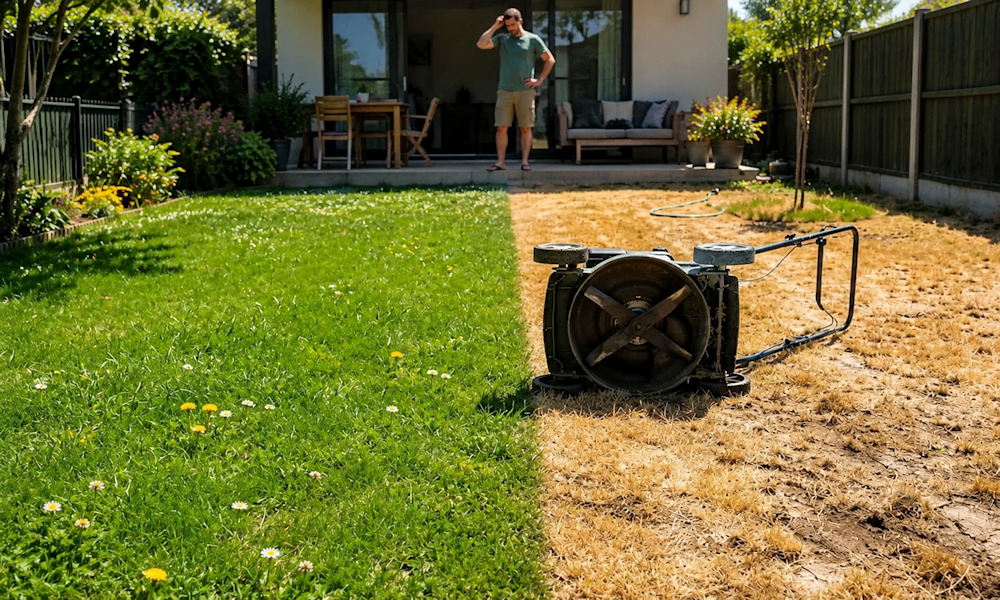

A freshly mowed lawn looks neat, tidy, and satisfying. But in summer, one of the most common lawn-care mistakes is mowing too low. What looks like a perfectly groomed lawn today can quickly turn into a patchy, stressed, yellowing lawn after a few hot days.
Many gardeners assume shorter grass means less mowing and a cleaner appearance. In reality, during hot weather, the opposite is often true. A slightly taller lawn is usually healthier, more resilient, and better equipped to cope with summer stress.
Why Short Grass Struggles in Summer
Grass blades do much more than make a lawn look green. They help shade the soil, reduce moisture loss, and support the plant’s ability to produce energy through photosynthesis.
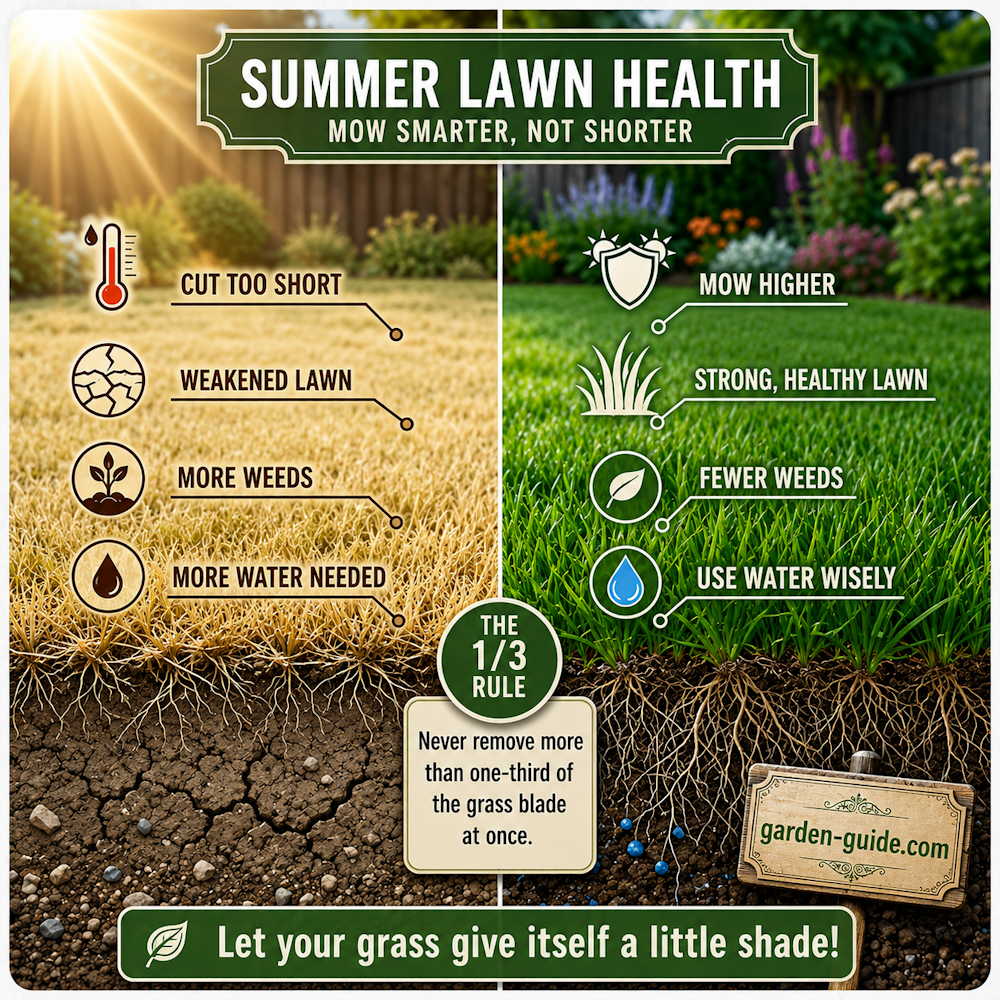
When grass is cut too short during periods of heat and drought, the soil is exposed to direct sunlight. It warms up faster, dries out more quickly, and places additional stress on the roots. As a result, lawns can become brown, thin, and uneven much sooner than expected.
A taller lawn acts like its own natural sunshade, helping retain moisture and maintain a cooler microclimate around the roots.
Your Lawn Doesn’t Need a Summer Buzz Cut
Many homeowners aim for a golf-course look throughout the season. While closely cropped turf may appear attractive at first, it is often far less tolerant of heat waves.
During summer, increasing the mowing height slightly can make a noticeable difference. Longer grass develops a stronger root system, stores more energy reserves, and generally recovers better from environmental stress.
The goal is not to let the lawn become overgrown, but to avoid unnecessarily scalping it during the hottest months.
The One-Third Rule Matters
A simple guideline used by lawn professionals is the one-third rule: never remove more than one-third of the grass blade in a single mowing session.
Cutting off too much at once shocks the plant and forces it to divert energy into replacing lost leaf tissue rather than strengthening roots. This becomes particularly problematic during hot, dry weather, when recovery is already slower.
If your lawn has grown too long after rain, vacation, or a busy period, it is often better to reduce the height gradually over two mowing sessions rather than cutting it drastically all at once.
Sun and Shade Need Different Approaches
Not every part of the garden behaves the same way.
Areas exposed to full sun typically dry out faster and benefit most from a higher mowing height. Shadier sections may grow more slowly, remain damp longer, or even become prone to moss. Yet even there, mowing extremely short rarely improves lawn health.
A lawn is a living plant community, not a manufactured carpet. Different parts of the yard may thrive at slightly different heights.
Short Grass Creates Opportunities for Weeds
A dense, vigorous lawn is one of the best defenses against weeds.
When grass becomes thin due to heat stress and excessive mowing, gaps appear in the turf. These bare patches create ideal conditions for opportunistic weeds to establish themselves. In many cases, the battle against weeds starts with mowing habits rather than weed-control products.
Sometimes Less Is More
Many gardeners eventually learn that the healthiest summer lawn is not necessarily the shortest one.
A lawn does not need to look like a putting green to be attractive. During hot weather, allowing the grass a little extra height can help preserve its color, density, and resilience. The result may be slightly less formal, but it is often far healthier.
In summer, the goal isn’t to mow the lawn as low as possible. The goal is to keep it healthy. Sometimes the best thing you can do is let the grass provide a little shade for itself.