
After rain, warmth and humidity can turn a healthy-looking grapevine into the perfect host for fungal disease. Downy mildew, powdery mildew and Botrytis do not behave in the same way, but they all thrive when vines are dense, damp and poorly ventilated. A quick inspection now can save a great deal of fruit later.
Grapevines have a way of looking reassuringly healthy until trouble is already under way. The leaves are green, the shoots are growing, the first clusters are forming, and it is easy to imagine a shady summer pergola heavy with grapes.
Then come a few rainy days, followed by warm, humid weather and slow-drying foliage. Suddenly, three familiar names become much more than textbook plant diseases: downy mildew, powdery mildew and Botrytis.
They are not the same disease, and they do not need exactly the same conditions. But they share one important feature: once the microclimate inside the vine canopy becomes warm, moist and still, they can spread quickly.
Why Rainy, Humid Weather Raises the Risk
Rain itself is not the enemy. After a dry spring, grapevines may even benefit from it. The problem begins when the leaves stay wet for a long time, the air remains humid, the canopy is too dense, and temperatures start to rise.
Fungal diseases need only a few things to get going: moisture or humidity, suitable temperatures, susceptible young plant tissue and poor air movement.
Downy mildew favours warm, wet, humid conditions. Powdery mildew can be more deceptive, because it does not always need visibly wet leaves – warm days, high humidity, morning dew and a dense canopy may be enough. Botrytis, also known as grey mould, becomes especially dangerous when it finds damaged, compact or poorly ventilated clusters.
That is why the period after rain is worth taking seriously. Not with panic, but with close observation.
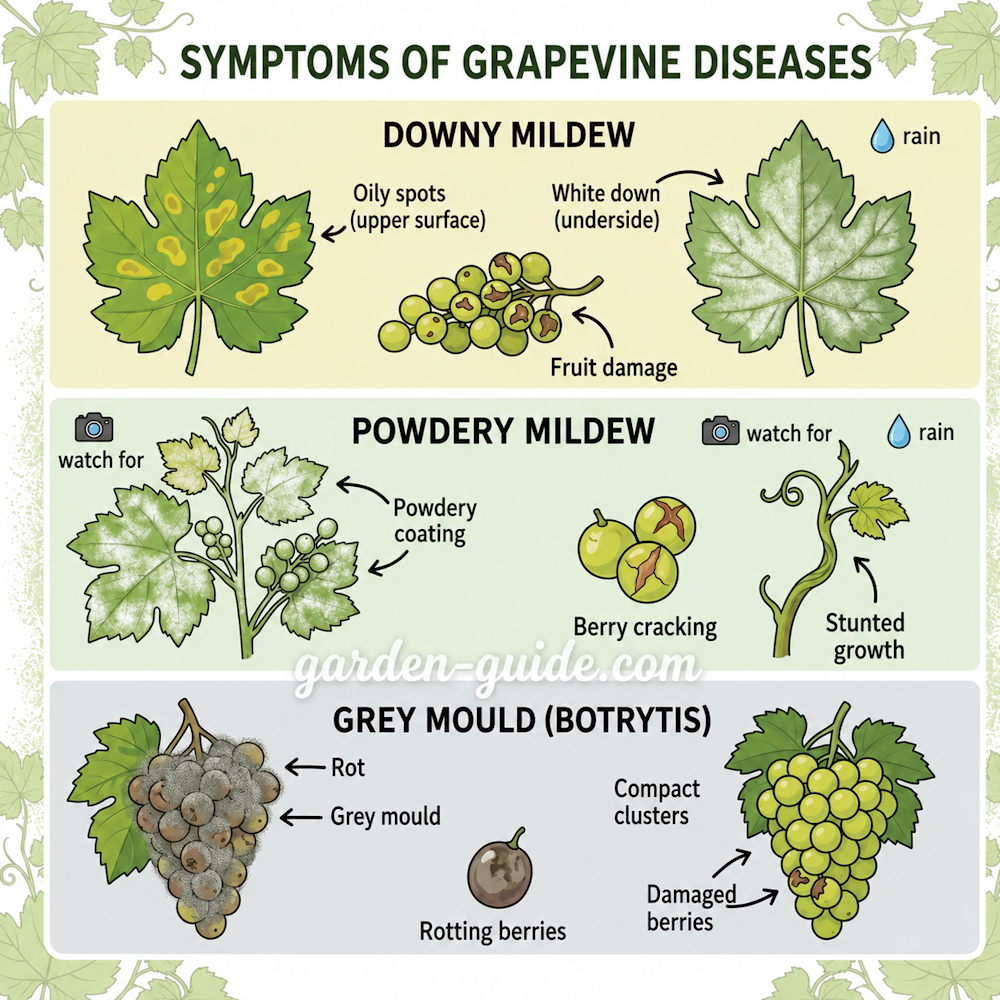
Downy Mildew: Check the Underside of the Leaves
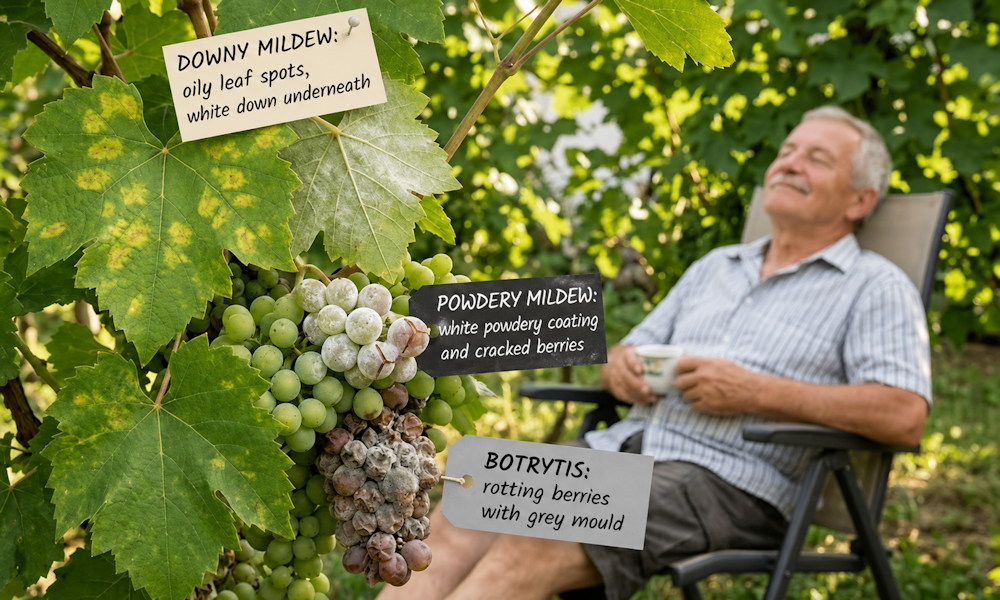
Grapevine downy mildew (Plasmopara viticola) is one of the most important diseases of grapes, especially in wet, humid weather. Early symptoms often appear as yellowish, oily-looking spots on the upper surface of the leaves.
The real clue, however, may be on the underside. In humid conditions, a whitish downy growth can appear beneath the affected patches.
This is where many beginner growers make a simple mistake: they only look at the vine from above. But with downy mildew, turning the leaf over can make all the difference.
The disease can affect not only leaves but also young clusters and developing berries. Severe infection weakens the canopy, damages the fruit and can reduce both yield and quality. Once symptoms are obvious across the vine, control is usually much harder. Prevention and early action matter most.
Powdery Mildew: The White Dusting That Should Not Be Ignored
Grapevine powdery mildew (Erysiphe necator) behaves differently from downy mildew. It does not necessarily need long-lasting leaf wetness, which makes it particularly troublesome in warm, humid periods that may not seem very wet at first glance.
Its symptoms are distinctive: a whitish, flour-like coating may appear on leaves, shoots and, later, berries. Infected berries can become more vulnerable to cracking, and cracked or damaged skins may then open the door to other diseases.
This is one of the unpleasant domino effects in grapevines: one pathogen weakens the fruit, and another takes advantage.
Powdery mildew is best managed before the vine looks as though it has been dusted with flour. Good canopy management, regular inspection and well-timed protection are far more effective than late rescue attempts.
Botrytis: Grey Mould Is a Warning Sign, Not Decoration
Botrytis bunch rot or grey mould (Botrytis cinerea) is best known for its greyish mould and rotting berries. It thrives in damp, still air, especially inside compact clusters or dense canopies.
Botrytis often takes advantage of damage. Hail, insect feeding, cracked berries, powdery mildew injury, tight bunches and lingering moisture can all create ideal entry points.
By the time berries are visibly rotting and covered in grey mould, the problem is already well advanced. At that stage, the aim is often to slow the spread rather than fully reverse the damage.
The first line of defence is not always the sprayer. A more open fruit zone, fewer overcrowded shoots, good tying, removal of badly damaged material and faster drying after rain can all reduce the risk.
A Quick Guide to the Three Main Problems
If you see yellowish, oily-looking patches on grape leaves and whitish growth on the underside in humid weather, suspect downy mildew.
If you see a white, powdery coating on leaves, shoots or young berries, powdery mildew may be the issue.
If clusters show grey mould, rotting berries or berries sticking together in damp, poorly ventilated areas, Botrytis needs attention.
In real gardens, symptoms are not always as neat as in guidebooks. More than one disease can appear at the same time, and a weakened vine is more vulnerable overall. Look at the whole plant: leaves, leaf undersides, shoots, clusters, air movement and the dampest parts of the canopy.
What To Do After Rain
Start with a close inspection. Do not just admire the vine from the terrace. Go right up to it. Turn over leaves, check young clusters, look for oily patches, white coating, damaged berries and areas where the canopy stays damp.
Next, improve air movement. Grapevines should not become a jungle. Dense shoots dry slowly, hold humidity and make it harder for any treatment to reach the right places. Shoot thinning, tying in, removing badly placed growth and gently opening the fruit zone are not just cosmetic jobs – they are part of plant protection.
Remove clearly diseased or rotting material where practical. Do not strip the vine aggressively, but do not leave badly infected material sitting inside the canopy as a source of further spread. Avoid putting infected plant debris straight onto the compost unless you are confident your composting system will deal with it properly.
Then think carefully about your protection strategy. In home gardens, too, any plant protection product should be used preventively where needed and always according to the label. Timing is especially important after rain, during rapid shoot growth and when new, unprotected leaf surfaces are appearing.
Can You Reduce Chemical Use?
Yes, but low-input grape care still requires active management. Choose more resistant varieties when planting new vines. Avoid overcrowding. Keep the canopy open. Do not wet the foliage unnecessarily when watering. Remove badly diseased plant parts and help the vine dry quickly after rain.
Copper- and sulphur-based products are widely used in many gardens, including lower-input systems, but they are not harmless magic powders. Copper can accumulate in soil, and sulphur may cause scorching in hot weather. The same rules apply: read the label, respect the dose, watch the weather and use products only when appropriate.
A more natural approach does not mean doing nothing. It means making the vine less inviting to disease before reaching for stronger interventions.
The Most Common Mistake: Waiting Too Long
In small gardens, problems are often caused not by one bad day but by weeks of postponement. “I’ll tie it in next week.” “I’ll thin it later.” “I’ll check that spot tomorrow.” Meanwhile, the vine keeps growing, the canopy becomes denser, humidity builds, and the disease pressure rises.
The opposite mistake is a drastic late reaction: cutting too much away at once, spraying without a clear target or exposing clusters suddenly to strong sun. Heavy leaf removal can cause sunburn, especially in hot weather.
The better approach is regular, smaller, preventive work. It is less dramatic, but far more effective.
What To Check Today
Turn over a few leaves. Look for oily patches, white coating, distorted growth and early signs of damage on young clusters. Check whether the fruit zone has air around it. Notice where the vine stays wet longest after rain – near a wall, fence, dense shoot mass or shaded corner.
If you are considering treatment, do not act out of routine. Match the decision to the symptoms, the weather, the vine’s growth stage and the product label.
Grapevines do not need panic, but they do need attention. If you check them now, open up the canopy carefully and respond before downy mildew, powdery mildew or Botrytis become obvious, your summer grapes have a much better chance.
The clusters will not thank you yet. But later, they may show it.