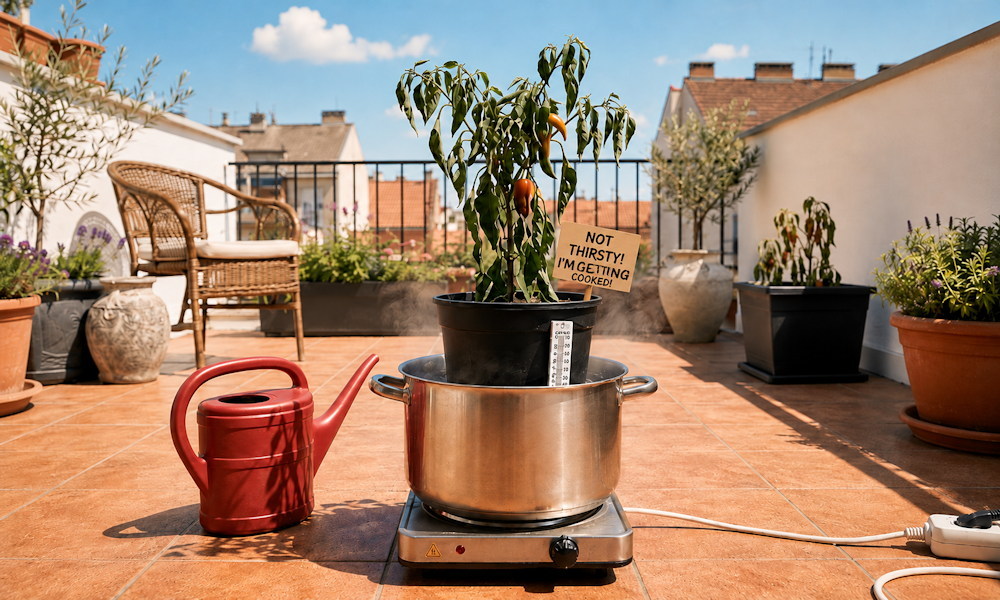

On a hot summer afternoon, a wilting potted plant often looks simply thirsty – so the watering can comes out again. But if the potting mix is still moist, the real problem may be hidden in the root zone, inside an overheated container where stressed roots can no longer take up water properly.
The culprit may be the pot itself – especially if it is dark, plastic and standing in full sun.
Why Pot Colour Matters in Summer
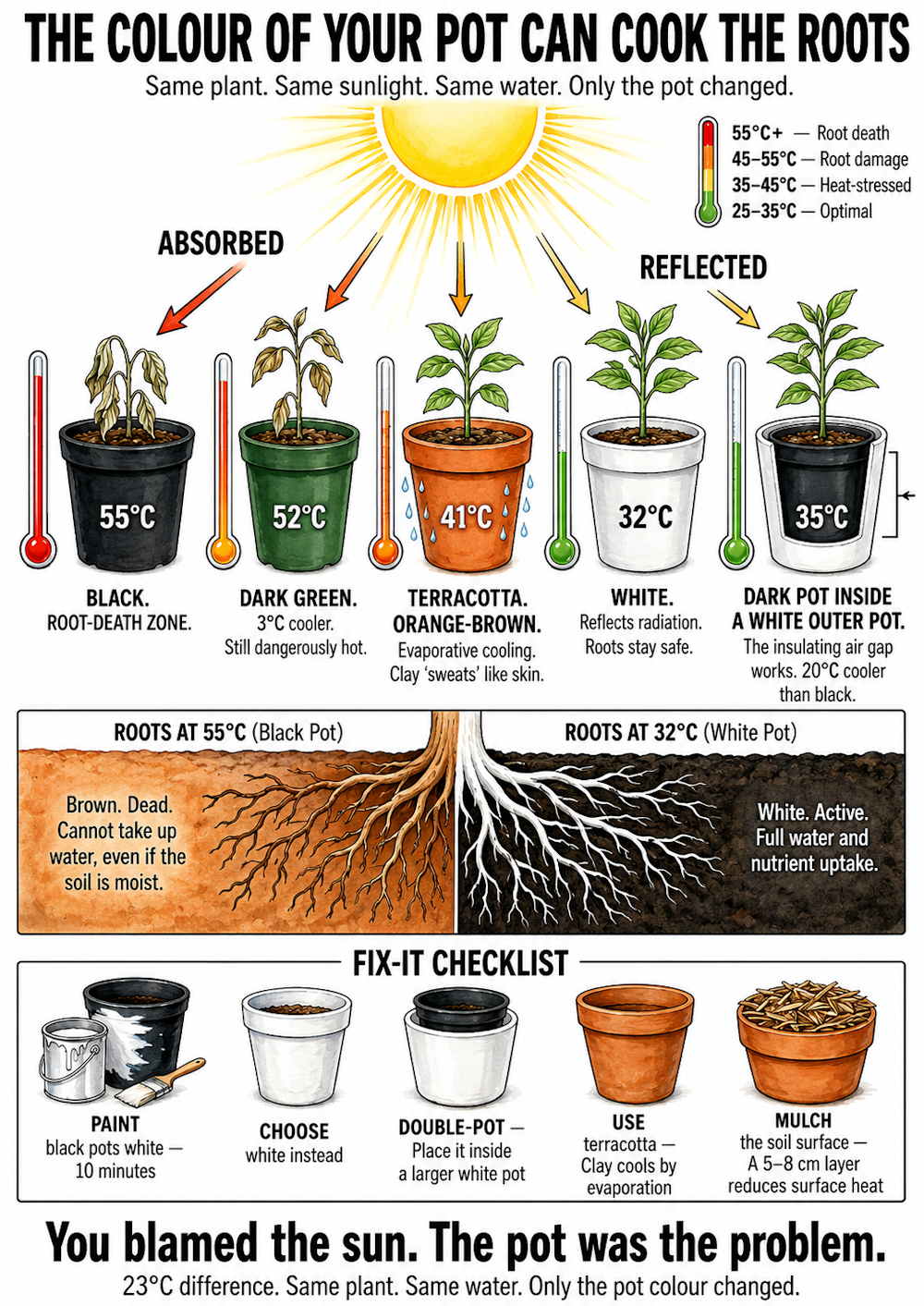
Dark surfaces absorb more solar radiation than light ones. That is basic physics, but in container gardening it can make a very real difference. A black or dark green plastic pot left in full sun can heat up much more than a white, cream or pale-coloured container.
The problem is that the pot wall transfers that heat directly into the potting mix. Thin black nursery pots are especially vulnerable: they are dark, lightweight, and have very little thermal buffering. In strong sun, the root zone inside them can become far hotter than the surrounding air.
For the plant, that can mean the difference between “it is warm today” and “my roots are under serious stress.”
What Heat Does to the Roots
Roots do not simply sit in the soil. The finest root hairs are responsible for much of the plant’s water and nutrient uptake. When the root zone becomes too hot, these delicate structures may become less efficient, damaged or, in severe cases, die back.
That is why heat stress in a pot can look so much like drought stress. The plant wilts, the leaves lose firmness, and the gardener naturally assumes it needs more water. But if the potting mix is already moist, more watering may not solve the real problem.
The plant is not necessarily short of water. It may be unable to use the water properly because the root zone is too hot.
Black Plastic Pots Are the Main Culprit
Black plastic nursery pots are widely used because they are cheap, light and practical. They are not, however, ideal for plants sitting in direct summer sun.
In hot conditions, black containers can raise potting mix temperatures enough to stress or injure tender roots. This is especially likely in full sun and on heat-reflecting surfaces such as paving, concrete or gravel.
This is why two identical plants, watered the same way and grown in the same location, can perform very differently if one is in a black plastic pot and the other is in a lighter-coloured or better-insulated container.
Are Brown or Dark Green Pots Better?
Sometimes, but not always enough.
A brown or dark green pot may stay slightly cooler than a black one, depending on the material and finish. But in strong summer sun, any dark container can still absorb a lot of heat.
Light-coloured pots reflect more sunlight and generally keep the root zone cooler. That does not mean every pot has to be white. But if a plant is going to spend the summer in full sun, pot colour is not a decorative detail. It is part of the growing environment.
Why Terracotta Can Be a Good Summer Choice
Terracotta is not the lightest material, but it often behaves better in summer than thin black plastic.
The reason is its porous structure. Unglazed clay can allow some moisture movement through the pot wall, followed by evaporation from the outer surface. This can create a mild cooling effect. Terracotta also has more substance than a thin plastic nursery pot, so it does not heat and cool in quite the same way.
There is a trade-off: terracotta pots can dry out faster, so they may need more attentive watering. But for many Mediterranean herbs, drought-tolerant ornamentals and sun-loving patio plants, terracotta can be a very good summer compromise.
The Double-Pot Trick
One of the easiest ways to protect a plant in a dark container is not to repot it at all.
Simply place the dark plastic pot inside a larger, light-coloured outer pot or planter. The air gap between the two walls acts as insulation, reducing direct heat transfer. If the outer container is pale, it will also absorb less heat in the first place.
This “pot-in-pot” method is especially useful for balconies, paved terraces and south-facing patios. It is quick, inexpensive and avoids disturbing the roots.
Just make sure water can still drain freely. The inner pot should never be left standing in stagnant water unless the plant specifically tolerates those conditions.
Do Not Forget the Top of the Pot
Heat does not only enter from the sides. The exposed surface of the potting mix can also heat up quickly in summer, losing moisture and stressing the upper root zone.
A simple mulch layer can help. A few centimetres of straw, bark, wood chips, cocoa shells, gravel or another suitable loose material can reduce surface evaporation and moderate soil temperature. Mulch is not only useful in garden beds; it can be very helpful in containers too.
For potted plants, keep the layer modest and avoid piling mulch directly against soft stems. The goal is to shade and buffer the surface, not trap excess moisture around the crown of the plant.
Four Simple Fixes for Hot Dark Pots
1. Paint the Outside a Lighter Colour
If you already have black or very dark plastic pots, painting the outside with a pale, outdoor-safe paint can reduce heat absorption. It does not have to be beautiful. It only has to reflect more sunlight.
2. Use a Larger Light-Coloured Outer Pot
This is often the most practical solution. Place the existing pot inside a larger pale container, leaving an insulating air gap between the two. It gives the roots more protection without repotting.
3. Choose Terracotta Where It Makes Sense
Terracotta is breathable, stable and often better suited to hot sunny positions than thin black plastic. It can dry out faster, so it is not ideal for every plant, but it is a strong option for many patio and balcony gardens.
4. Add Mulch to the Pot Surface
A light mulch layer helps slow evaporation and reduce surface overheating. This is particularly useful during heatwaves or on balconies where sun, wind and hard surfaces all increase stress.
How to Tell if the Problem Is Heat, Not Water
Suspect root-zone overheating if the plant wilts regularly in the afternoon but partly recovers overnight; the potting mix is still moist, but the plant looks thirsty; the container is black or dark-coloured; the pot sits in full sun, especially on paving, concrete or a south-facing balcony; or watering more does not bring lasting improvement.
In this situation, do not automatically keep adding more water. First, check the potting mix with your finger, lift the pot to feel its weight, and think about where the heat is coming from.
Sometimes the best “watering advice” is actually to cool the root zone.
The Takeaway
In container gardening, the pot is not just a decorative shell. Its colour, material and position can strongly affect the conditions around the roots.
A black plastic pot in full summer sun can become a surprisingly hostile place for a plant, even when the potting mix is not dry. Light-coloured containers, terracotta, double-potting and mulch are simple ways to reduce heat stress and help plants use water more effectively.
So next time a potted plant droops on a hot afternoon, do not blame yourself immediately for forgetting to water.
It may not be thirsty. Its roots may simply be too hot.