
Leeks bring more to the vegetable garden than a mild onion flavour and a good winter soup. With their upright growth, strong scent and long season in the ground, they can be useful partners in mixed beds – as long as they are placed with a little thought.
Why Leeks Work Well in Mixed Plantings
Leeks (Allium porrum) are tall, narrow and relatively well behaved. Unlike sprawling crops, they do not take over the bed, which makes them easy to fit between rows or along the edge of a planting scheme.
Their strong allium scent is one reason gardeners often use them in companion planting. In a mixed vegetable bed, a variety of smells, leaf shapes and growth habits can make it harder for some pests to locate their favourite crop. Leeks will not turn a garden into a pest-free paradise, but they can be a useful part of a more diverse, resilient planting plan.
The one thing to remember is timing. Leeks have a long growing season and usually stay in the bed for months, so they need to be planned around rather than squeezed in as an afterthought.
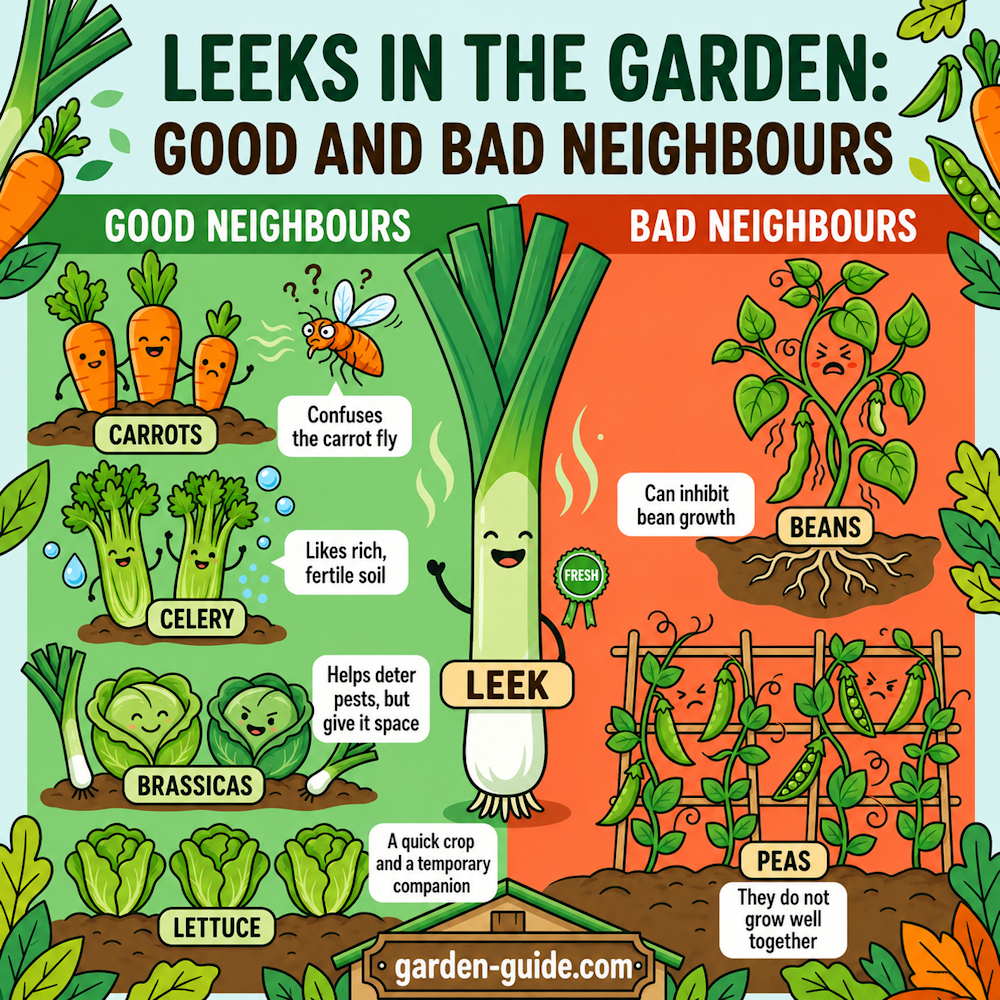
Carrots: A Classic Companion
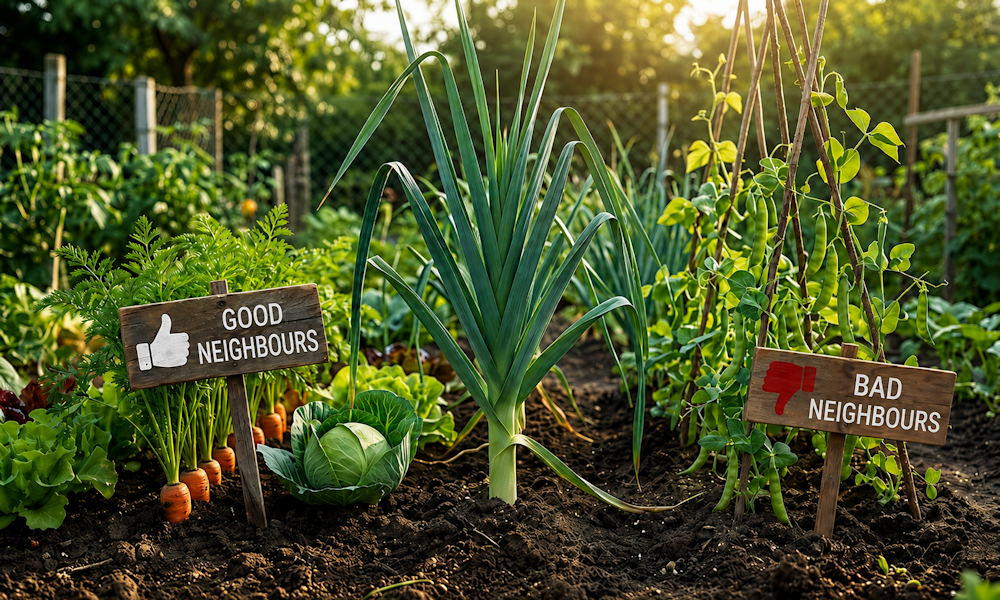
Carrots and leeks are one of the best-known pairings in the vegetable garden. The idea is simple: the scent of the leek may help confuse pests searching for carrots, while the two crops use space in different ways.
This combination also looks neat and works well in rows. Try alternating a row of carrots with a row of leeks, leaving enough space for weeding, watering and harvesting. The carrots occupy the soil with their long roots, while the leeks grow upright above ground.
It is not magic, but it is a practical, space-saving partnership that many gardeners return to year after year.
Celery: A Good Match If the Bed Stays Moist
Leeks can also grow well near celery. Both crops appreciate fertile soil and regular moisture, so they make sense in the same well-watered bed.
This pairing is best for gardeners who can keep the soil evenly damp, especially during dry spells. If your garden soil is very sandy, or watering tends to happen only when you remember it, celery and leeks together may struggle. They are not the right pair for a neglected, bone-dry corner of the plot.
Where moisture is reliable, however, their upright shapes and strong aromas can make a productive and attractive combination.
Brassicas: Useful, but Give Them Space
Leeks can be grown near cabbage, broccoli, cauliflower, kale or kohlrabi. Their narrow habit means they do not take up much room, and their allium scent adds another layer of diversity to a brassica bed.
Spacing matters here. Brassicas are vigorous plants with large leaves, and they can easily shade out smaller neighbours. If leeks are planted too close to cabbage or broccoli, they may end up hidden under a canopy of leaves.
Use leeks as a border, between young brassicas, or in nearby rows rather than cramming them into every gap. They like light and air, not a life spent under a cabbage leaf.
Lettuce: A Short-Term Partner
Lettuce is a good temporary companion for leeks, especially in spring and early summer. It grows quickly, can be harvested early, and makes good use of the space while leeks are still slim.
By the time the leeks need more room to thicken, the lettuce is often already gone. This makes the pairing useful for gardeners who want to keep the bed productive without overcrowding it.
Loose-leaf lettuce, baby salad leaves and other quick crops are especially good choices between young leek rows.
Strawberries: Possible, but Do Not Overcrowd Them
Leeks can be grown near strawberries, but this is a pairing that needs restraint. Because leeks grow upright, they do not smother the plants in the same way as a sprawling crop might. Their strong scent may also add useful diversity to a mixed planting.
However, strawberries need good air movement around their leaves and fruit. If leeks are packed too tightly between strawberry plants, the bed can become crowded and damp, which is not ideal.
A better approach is to use leeks sparingly nearby, perhaps along the edge of a strawberry bed, rather than turning the whole patch into a leek forest.
What Not to Plant Near Leeks
Leeks are usually not recommended close to beans and peas. As members of the allium family, leeks may interfere with the growth of legumes, so it is safer to keep them in separate parts of the vegetable garden.
This does not mean one leek will ruin an entire bean crop, but if you are hoping for a strong harvest of peas or beans, give them their own space.
It is also worth avoiding too many alliums in the same spot year after year. Onions, garlic, shallots and leeks can share some pests and diseases, so crop rotation is important. Do not grow them in the same bed every season.
How to Use Leeks in Companion Planting
The easiest way to use leeks is in rows, borders or small groups. They can be grown beside carrots, near celery, around brassicas, or with fast-growing salad crops early in the season.
Because they stay in place for a long time, plan the bed before planting. Think about what will be harvested quickly and what will remain until autumn or winter. Leeks are patient plants, but they do not enjoy being constantly moved, shaded or squeezed.
A simple plan might look like this:
- Carrots in one row, leeks in the next.
- Young leeks with lettuce between them.
- Leeks along the edge of a brassica bed.
- Celery and leeks together in a rich, moist patch.
- Beans and peas kept in a different area.
Leeks Are More Than Soup Ingredients
Good companions for leeks include carrots, celery, lettuce and several brassicas, as long as spacing and water needs are respected. Beans and peas are best kept further away, and alliums should be rotated from year to year.
Used thoughtfully, leeks can help make a vegetable garden more varied, better structured and easier to manage. And when they finally end up in a winter soup, it is satisfying to know they spent the growing season doing more than simply standing there looking elegant.