
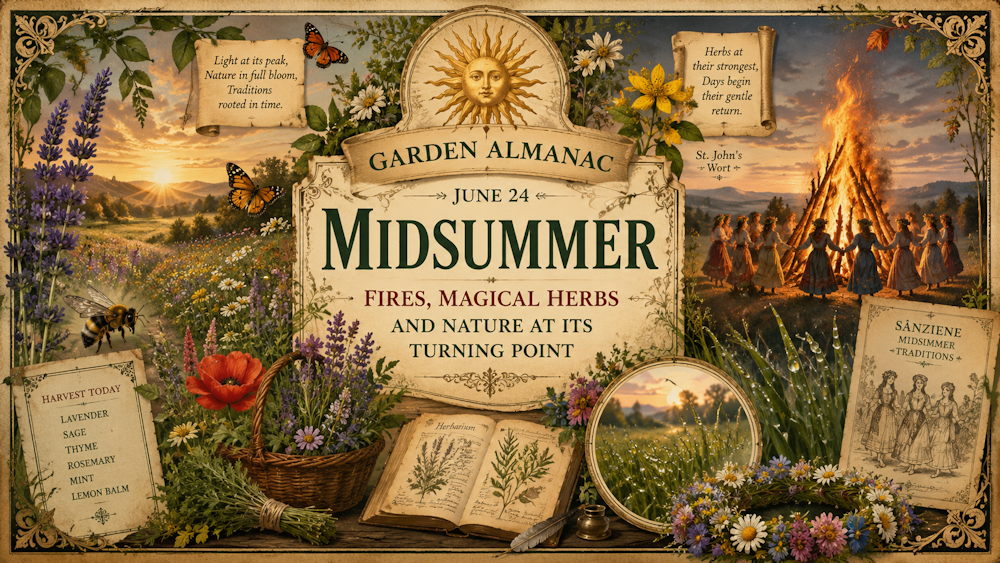

As June reaches its luminous peak, June 24 arrives with a special place in the seasonal calendar. Across Europe and many other parts of the world, this day has long been celebrated as Midsummer – a moment when gardens are overflowing, meadows are alive with flowers, and the growing season stands at a fascinating crossroads.
Although the astronomical summer solstice has already passed, traditional farming communities often regarded June 24 as the true heart of summer. Crops were established, haymaking season was approaching, and the first harvests were beginning to appear. It was a time to celebrate abundance while also recognizing a subtle truth of nature – from this point onward, the days gradually begin to shorten.
For gardeners, June 24 offers a reminder that every season contains both fulfillment and transition. It is a day woven from folklore, agricultural wisdom, flowering herbs, and centuries of observation about the relationship between people and the natural world.
Midsummer Day – The Traditional Midpoint of the Growing Season
For many northern cultures, June 24 was never simply another summer day. Long before modern calendars and weather forecasts, farmers used the rhythms of the sun and the condition of their fields to measure the year.
Midsummer celebrations developed as a joyful pause between planting and harvest. Fields were green, fruit trees were developing their crops, and the promise of abundance seemed almost guaranteed. Communities gathered around bonfires, decorated homes with greenery, and celebrated the season’s vitality.
What makes this tradition particularly meaningful today is its connection to observation. Farmers understood that success depended not only on hard work but also on careful attention to weather, soil moisture, pollinators, and plant health.
Modern gardeners can learn from the same principle.
Garden Reminder
Take a slow walk through your garden today and assess:
- Which plants are thriving?
- Which areas are drying out too quickly?
- Where are pollinators most active?
- What crops may need support before summer storms arrive?
- Midsummer is an ideal moment for observation before the busiest harvest period begins.
The Feast of St. John – When Herbs Were Believed to Hold Their Greatest Power
June 24 is traditionally celebrated as the Nativity of St. John the Baptist, and over centuries this feast became closely intertwined with older midsummer customs. Across Europe, people believed that herbs gathered on St. John’s Day possessed extraordinary strength and healing qualities.
Among the most famous plants associated with the day is St. John’s Wort. Its bright yellow flowers typically bloom around late June, earning it a special place in midsummer folklore. The plant was gathered for medicinal use, hung in homes, and carried as a symbol of protection.
Interestingly, modern horticultural knowledge provides a practical explanation for some of these traditions. Many aromatic herbs reach peak concentrations of essential oils around late June, just before flowering or seed production redirects the plant’s energy. Garden experts still consider this period one of the best times to harvest herbs such as lavender, sage, rosemary, mint, and St. John’s Wort.
Seasonal Tip
Harvest culinary and medicinal herbs in the early morning when essential oils are most concentrated.
Excellent candidates include:
- Lavender
- Sage
- Thyme
- Rosemary
- Mint
- Lemon balm
Dry them in a shaded, airy location to preserve their fragrance.
Bonfires, Dew and Flower Crowns – Nature Folklore Across Europe
Few dates have inspired more seasonal traditions than June 24.
From the Baltic countries to the Carpathian Mountains, midsummer celebrations combined sunlight, flowers, water, and fire into elaborate rituals. Bonfires were lit on hilltops, flower crowns were woven from meadow blooms, and people stayed awake to watch the shortest night of the year unfold.
Many customs focused on plants. In Romania’s Sânziene celebrations, flowers were gathered at dawn and woven into wreaths. In Bulgaria’s Enyovden traditions, herbs collected on this day were believed to possess exceptional healing power. Morning dew itself was considered beneficial, and people walked barefoot through wet grass as part of seasonal rituals.
While modern science may not support every legendary claim, these traditions reveal something valuable: generations of people paid close attention to seasonal changes. They knew when plants flowered, when herbs were most aromatic, and when landscapes were at their most biologically vibrant.
Nature Watch
Early summer meadows are often at their peak right now.
Look for:
- Wildflower diversity
- Butterflies and moths
- Native bees
- Seed formation on spring-flowering plants
- The first signs of summer berries ripening
These observations can help guide future planting decisions in your own garden.
A Day When Light Begins Its Slow Return to Darkness
One reason June 24 has remained so meaningful is its position just after the summer solstice.
The longest day of the year has passed, yet the change is almost imperceptible. Gardens still seem to be accelerating. Tomatoes grow taller each week. Roses continue flowering. Bees remain busy from morning until evening.
Yet nature has quietly shifted direction.
Ancient cultures noticed this subtle turning point and built traditions around it. The great midsummer festivals were not merely celebrations of abundance – they were acknowledgements that every season is temporary. The work of tending, harvesting, saving seed, and preparing for future seasons begins long before autumn arrives.
For gardeners, this remains a powerful lesson. Healthy landscapes are created not by reacting to change at the last moment but by recognizing small seasonal signals as they emerge.
Garden Inspiration
Use June 24 as a planning day.
Consider:
- Which spring flowers deserve a larger place next year?
- Which vegetables have performed best?
- Where could more pollinator-friendly plants be added?
- What seeds might be worth collecting later this summer?
- The most successful gardens are built through observation across many seasons.
The Magic of Midsummer and the Imagination of Nature
It is no coincidence that folklore often associates June 24 with fairies, magical flowers, and hidden wonders. Across Europe, stories told of enchanted plants, mysterious forest lights, and blossoms that appeared only on midsummer night. Even modern observances such as International Fairy Day deliberately connect imagination with the natural world and its seasonal beauty.
These legends may not be literal, but they serve an important purpose. They encourage people to spend time outdoors, notice details, and appreciate the extraordinary richness of summer landscapes.
A child searching for a mythical flower is, after all, also learning to recognize real flowers.
And a gardener who pauses to admire a midsummer sunset is participating in a tradition that stretches back thousands of years.
Looking Ahead
June 24 reminds us that gardening is about more than cultivation. It is about paying attention to seasonal rhythms, understanding the cycles of growth and decline, and finding joy in moments of abundance.
The midsummer traditions of herb gathering, flower crowns, bonfires, and dawn walks through dew-covered grass all reflect a timeless truth: people thrive when they remain connected to the natural world.
As summer advances, the garden will continue to change. Fruits will ripen, seeds will form, and harvests will gradually replace blossoms. By observing these transitions carefully and working with nature rather than against it, gardeners can create landscapes that are not only productive but also resilient, biodiverse, and deeply rewarding.
The light may already be beginning its slow return toward autumn, but for now, the garden remains at its glorious midsummer peak.