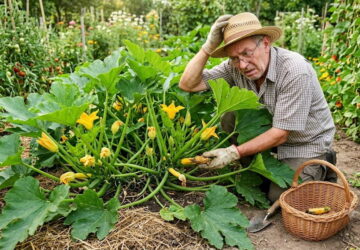

May 20 is one of the clearest ecological dates in the spring almanac. It is World Bee Day, and in the garden that means one very practical thing: bloom is no longer only about beauty. It is about exchange. Flowers are being worked, pollination is underway, and the season’s future abundance depends in part on what visits the garden now.
That is why the date feels so immediate. By late May, the presence or absence of pollinator activity is no abstract environmental topic. It is a living measure of whether the garden is functioning as more than a display.
Anton Janša and the Working Garden
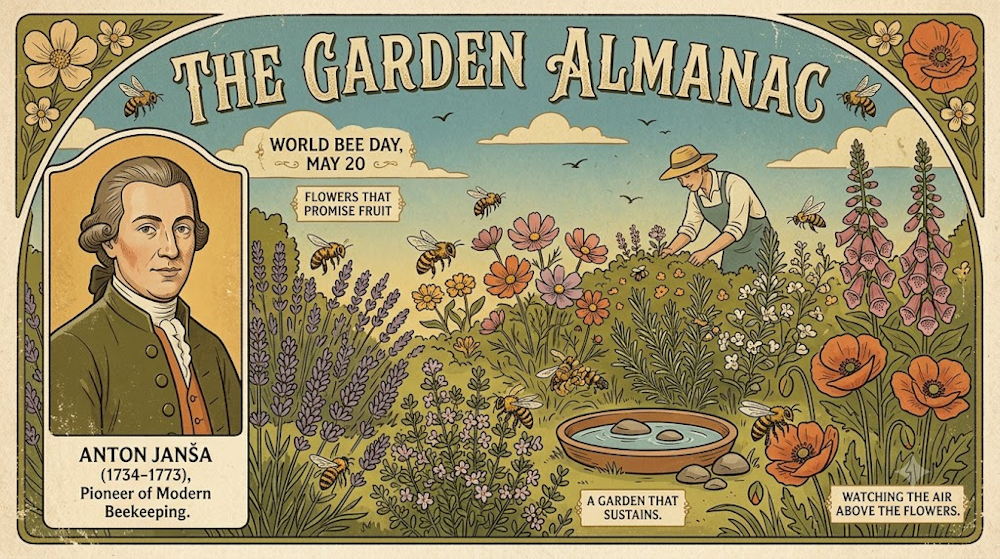
World Bee Day is linked to Anton Janša, a pioneer of modern beekeeping, and this gives the day a useful focus. In almanac terms, he stands not only for bees themselves, but for the understanding that the garden’s productivity is inseparable from the wider life moving through it.
This is a beautiful seasonal truth. Fruit, seed, and continuity often begin in the invisible labor of pollinators.
Flowers That Feed as Well as Please
By this point in May, the gardener can see more clearly which flowers are decorative and which are truly useful to bees and other pollinators. The best gardens often combine both. They offer fragrance, color, and atmosphere while also providing a succession of nectar and pollen sources through the season.
This is what makes May 20 so instructive. It asks us not only what is blooming, but what that bloom is doing.
The Garden as Pollinator Habitat
A pollinator-friendly garden is rarely defined by one plant alone. It works because there is continuity, variety, shelter, and a certain tolerance for life’s untidier patterns. Herbs allowed to flower, shrubs that bridge the seasons, containers planted with useful bloom, and chemical restraint all contribute to the garden’s deeper fertility.
In the Garden Almanac, this gives the day a practical generosity. A gardener does not need to transform everything at once. A few well-chosen actions can already make the garden more alive.
A Day for Watching the Air Above the Flowers
May 20 is also a wonderful date for a particular kind of attention. Stand still for a moment near the flowering parts of the garden and notice what moves through them. Which plants hum with activity? Which remain untouched? Where is the garden offering real nourishment, and where only appearance?
This kind of observation is among the oldest forms of garden knowledge.
What This Day Suggests in Practice
May 20 is a good day to add or note pollinator-friendly plants, let useful herbs come into flower, provide shallow water safely, and think in terms of continuity rather than isolated bloom. The aim is not only to make the garden attractive, but to make it sustaining.
In the Garden Almanac, this is the day when the promise of fruit can already be heard in the air.