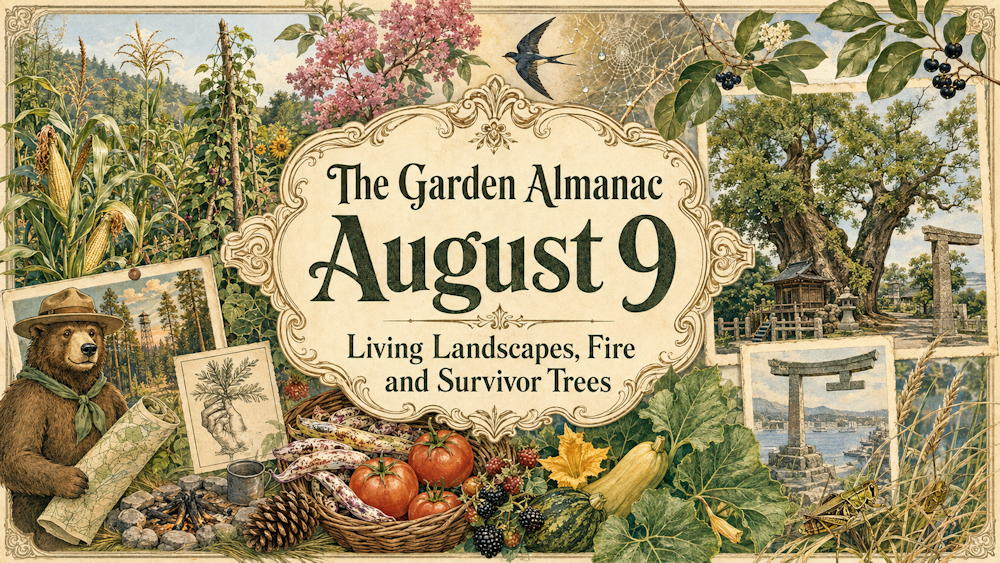

By early August, a garden is carrying both abundance and strain. Tomatoes are ripening, seed heads are forming, insects are busy among late flowers, and dry soil may reveal every weakness in the way water, shade and plant cover have been managed.
August 9 opens three very different doors onto this seasonal landscape. It is a day for recognising Indigenous knowledge rooted in generations of close observation, for reconsidering a famous bear’s message about fire, and for remembering trees in Nagasaki that returned to growth after almost unimaginable destruction.
August 9 – When Living Landscapes Hold Generations of Knowledge
The International Day of the World’s Indigenous Peoples is observed every August 9. The date recalls the first meeting of the United Nations Working Group on Indigenous Populations in 1982 and has been marked internationally since the 1990s. Its significance reaches far beyond cultural recognition: Indigenous communities around the world remain custodians of forests, grasslands, wetlands, mountains, coasts and cultivated landscapes of exceptional biological richness.
Many Indigenous food systems do not draw a hard boundary between farm, garden and wild habitat. Agroforestry, seed saving, rotational cultivation, herding, fishing and the seasonal gathering of wild foods may operate as parts of one connected system. In some places, dozens of edible species grow together beneath or among trees, supplying fruit, nuts, roots, leaves, medicines, fibres and animal habitat while protecting the soil from heat and erosion.
For gardeners, the central lesson is not to copy a tradition without understanding its people or place. It is to notice the principles behind it: diversity rather than dependence on one crop, careful attention to seasonal signals, respect for locally adapted plants and enough time for soil and habitats to recover. A garden containing fruit trees, shrubs, vegetables, herbs, flowers and self-seeding plants often uses space, sunlight and water more effectively than a collection of isolated planting zones.
This also gives seed saving a wider meaning. A locally maintained bean, maize, squash or grain variety is not simply an old curiosity – it may carry useful adaptations to drought, short seasons, local soils, pests or traditional methods of cooking. Gardeners can support this living diversity by obtaining regionally adapted seed from responsible growers, saving seed from suitable open-pollinated varieties and recording which plants perform well under their own conditions.
Garden Inspiration – What Can a Home Garden Learn from Diverse Food Systems?
Grow plants at several heights, combining trees or tall crops with shrubs, herbs and ground-covering species where space permits.
Avoid relying on a single cultivar when two or three varieties could spread flowering, harvest time and weather risk.
Keep notes on rainfall, first flowering, pest arrivals and harvest dates – local knowledge begins with repeated observation.
Learn who developed and maintained traditional crops, and support seed initiatives that respect community ownership and cultural knowledge.
August 9, 1944 – Smokey Bear and the Changing Story of Fire
On August 9, 1944, the United States Forest Service authorised Smokey Bear as the symbol of a national forest-fire prevention campaign. Created during the Second World War, the hat-wearing bear became one of the most recognisable conservation figures in American public life. His enduring message placed responsibility in the hands of ordinary people whose campfires, discarded matches, machinery or careless burning could start destructive wildfires.
That message remains important, especially as hotter, drier conditions increase fire danger in many regions. Yet fire ecology is more complex than the early campaign suggested. Lightning fires and carefully managed cultural or prescribed burns have shaped numerous grasslands, savannas, shrublands and forests. Some habitats depend on periodic fire to limit woody growth, recycle nutrients or create the open conditions required by particular plants and animals. The aim is therefore not to remove every flame from every landscape, but to prevent unwanted fires while leaving ecological fire management to trained people working under suitable conditions.
The home-garden lesson is practical: reduce easily ignited material before drought and heat turn it into fuel. Clear dry leaves from wooden structures, gutters and confined corners; keep dead grass and brittle stems away from sheds and fences; and follow local restrictions before using a barbecue, fire pit or garden burner. Composting, municipal green-waste collection and chipping are usually safer ways to handle prunings than burning them during dry weather.
Seasonal Tips – How Can You Make a Dry Summer Garden Safer?
- Remove dead vegetation beside buildings, decking, propane tanks and wooden fences.
- Prune out dead branches, but avoid severe pruning that exposes living plants to sunscald and drought stress.
- Keep hoses accessible and check that outdoor taps and connectors work before they are needed.
- Store firewood and piles of dry prunings away from the house.
- Choose well-watered, low-growing planting near structures rather than resinous shrubs or accumulated dry mulch.
- Never assume that yesterday’s safe conditions still apply – wind, humidity and local restrictions can change quickly.
Wildlife Note – Should Every Dry Stem Be Removed?
No. Fire safety does not require stripping the entire garden of habitat. Hollow stems and seed heads can shelter insects and feed birds, so retain some in moist or more distant parts of the garden while clearing combustible material from buildings, paths and evacuation routes. Thoughtful zoning allows a garden to support wildlife without leaving dry fuel in the most vulnerable places.
August 9, 1945 – The Trees That Grew Again in Nagasaki
On August 9, 1945, an atomic bomb devastated Nagasaki. Human loss stands at the centre of this anniversary, but the city also holds living witnesses in the form of hibakujumoku – trees that survived the blast, heat and fires. Among the best known are the great camphor trees at Sannō Shrine, roughly 800 metres from the hypocentre. Their trunks were damaged and their crowns stripped, yet new shoots later appeared.
Around 50 atomic-bombed trees are still recorded in Nagasaki. Some retain cracks, cavities and other visible scars, and their survival does not mean that they escaped injury. They endure because living tissue remained in protected parts of the trunk, root crown or root system, allowing dormant buds to produce new growth. Today these trees require specialist inspection and care as both ageing organisms and irreplaceable cultural monuments.
Their story offers a precise lesson about damaged garden trees: a bare crown is not always proof that the whole plant has died. After heat, fire, frost or storm damage, check whether the cambium beneath a small scraped area of bark remains green and moist, then watch for buds arising from the trunk base or roots. Do not rush to remove a valuable tree unless it is structurally dangerous. Equally, do not assume that new shoots make it safe – split trunks, hanging branches and major cavities should be assessed by a qualified arborist.
Garden Science – How Can a Severely Damaged Tree Sprout Again?
Trees store carbohydrates in their roots, trunks and larger branches. If some living tissue and dormant buds survive, those reserves can support new shoots after the original crown is lost. Broadleaved trees are often better able to resprout than many conifers, although the response varies greatly by species, age, injury and growing conditions.
New growth is only the beginning of recovery. A damaged tree must rebuild leaf area while defending exposed wood against decay and coping with a reduced root system. Protecting the root zone from excavation, soil compaction and repeated drought is often more useful than applying fertiliser. Deep watering during prolonged dry spells and a broad, shallow layer of organic mulch can help, but mulch should never be piled against the trunk.
Garden Reminder – Essential Jobs for the Second Week of August
- Water deeply and less frequently, directing water to the soil rather than sprinkling foliage in the heat of the day.
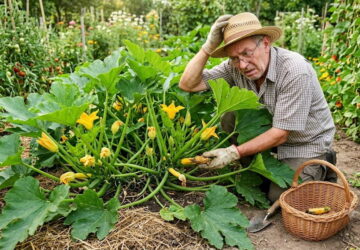
- Harvest courgettes, cucumbers, beans and tomatoes regularly so plants continue producing.
- Remove diseased fruit and foliage, but leave healthy seed heads where they can feed wildlife or provide next year’s seedlings.
- Check container plants daily – a small pot in full sun may dry out even when nearby garden soil still feels moist.
- Sow suitable fast-growing autumn crops such as radish, rocket, spinach or Asian greens where local temperatures allow.
- Collect only fully mature seed, label it immediately and dry it thoroughly before storage.
What to Observe Right Now
Look beyond the obvious harvest. Are late-summer flowers receiving fewer pollinator visits in the afternoon heat? Which plants remain firm after a dry day, and which wilt first? Notice where dew lingers in the morning, where birds come to drink and where bare soil has formed a hard crust.
Also watch for the first quiet signs of seasonal change: fruit beginning to colour, spiders building larger webs, swallows gathering, or leaves turning early on drought-stressed trees. These observations help distinguish the normal approach of autumn from problems caused by insufficient water, restricted roots or disease.
Looking Ahead
August 9 reminds us that resilient landscapes are neither accidental nor indestructible. They survive through accumulated knowledge, responsible prevention, biological capacity and attentive care. A gardener cannot recreate an ancient food system, manage a fire-dependent forest or heal a shattered historic tree alone, but the same principles still matter at garden scale – protect diversity, learn from local conditions, reduce avoidable risks and give living systems room to recover. The future of gardening may depend as much on remembering how to observe and care as on discovering anything new.