
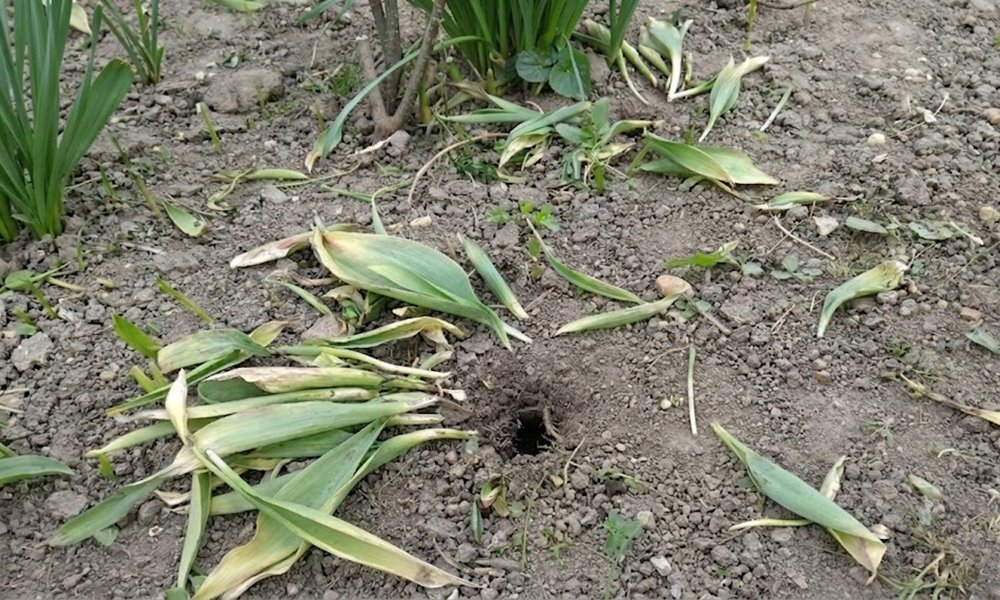

Tulips tend to inspire optimistic thoughts. You plant them in autumn, wait through winter, and picture that first bright spring display doing all the emotional heavy lifting your garden has been missing since November. Then one day you spot something odd: the leaves are flopping, the plant looks strangely loose, and when you give it the gentlest tug, the whole thing slides out of the ground like a badly anchored tent peg. That is usually not a tulip being dramatic. It is often the calling card of a vole.
In many temperate gardens across Europe and North America, vole damage shows up in exactly this frustrating way. The top growth may still look vaguely alive for a short while, but below the surface the bulb has already been chewed, hollowed out, or removed altogether. The leaves are basically running on borrowed time.
Why does the tulip pull out so easily?
A healthy tulip is anchored by roots and a firm bulb sitting securely in the soil. Once a vole has gnawed through the bulb or eaten enough of the basal plate and roots, that connection is gone. The leaves may remain green for a little while, but the plant can no longer take up water and nutrients properly. That is why this symptom is so distinctive: the tulip still looks like a plant, but it behaves like cut flowers shoved into the ground as a prank.
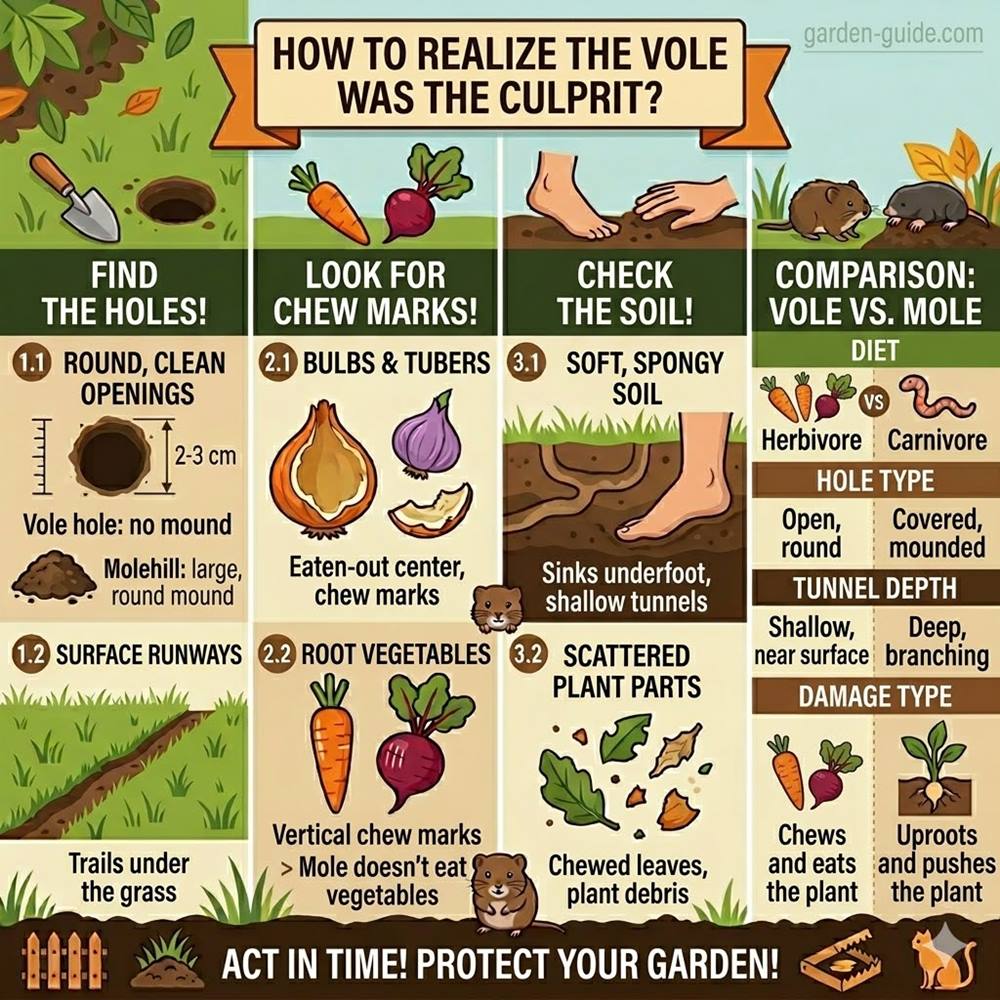
This can be confused with frost damage, rot, or accidental disturbance, but the giveaway is how little resistance there is when you pull it up. If the bulb is missing or badly chewed and the soil nearby has small runways or openings, vole damage moves straight to the top of the suspect list.
How can you tell it was a vole and not something else?
Voles are tidy enough to stay hidden, but messy enough to leave clues.
- Tulips or other bulbs pull out of the soil with almost no effort
- The bulb is partly eaten, hollowed, or completely missing
- Small round holes or shallow surface runways appear nearby
- Damage shows up in patches rather than evenly across the bed
- Leaves wilt or yellow even though the soil moisture seems reasonably normal
Gardeners often blame moles first, but moles are usually after worms and soil invertebrates, not flower bulbs. They tunnel, they upheave, they annoy. Voles, on the other hand, are the ones that actually sit down to dinner.
Why tulip bulbs are so tempting underground
From a vole’s point of view, a tulip bulb is an excellent find: starchy, moist, easy to reach, and planted in neat little clusters by an obliging human. It is less a random snack than a well-stocked pantry.
That is why damage can be so sudden and so complete. A bulb may be nibbled just enough to weaken the plant, or it may be eaten so thoroughly that only papery remnants remain. The leaves above ground may stay green briefly because they are using the last stored reserves, but that does not mean recovery is likely.
Can a damaged tulip still be saved?
If the bulb has been eaten entirely, no – there is nothing meaningful left to rescue. The leaves cannot rebuild a missing bulb from sheer determination.
If the bulb is only partly damaged, the plant may survive, but it will usually be weak. Flowering may fail this season, and next year’s performance may be poor as well. In practice, heavily damaged bulbs are rarely worth much optimism.
The sensible move is to inspect suspect plants carefully. Lift the loose ones, look at the bulb, and remove any that are clearly beyond recovery. That helps you assess the scale of the problem and stops you waiting for miracles from plants that are already finished.
What should you do next?
Once vole damage appears, the real lesson is not about this tulip—it is about the next planting season.
Plant bulbs in protective baskets
Bulb baskets are one of the simplest and most effective precautions. Plastic bulb baskets or homemade cages of fine wire mesh make it much harder for voles to reach the bulbs. They are not magical force fields, but they can make a real difference.
Watch for runways and repeat damage
If you notice narrow surface tracks in grass, small openings, or repeated losses among bulbs, young perennials, or root crops, do not shrug it off. Vole activity often becomes obvious only after the menu has already been sampled.
Keep beds less inviting
Overgrown edges, dense groundcover, thick mulch in the wrong places, and weedy borders can provide cover for voles. A perfectly tidy garden will not guarantee safety, but a more open and monitored planting area is generally less comfortable for them.
Think beyond tulips
If tulips are being eaten, other bulbs may be at risk too—crocus, lilies, alliums, even stored food crops depending on the garden layout. Voles are not tulip specialists. They are opportunists with small feet and impressive confidence.
What problems can this be mistaken for?
The two most common misdiagnoses are bulb rot and weather injury. Rot usually leaves soft, decaying, often foul-smelling tissue behind. Cold damage may distort or scorch the foliage, but it does not usually make the plant detach from the ground this easily.
That is why it helps to investigate below the soil line instead of judging only by the leaves. In bulb problems, the real story is often underground.
The real takeaway from a tulip that lifts straight out
A tulip that comes up with almost no resistance is usually telling you something blunt: the bulb beneath it is no longer doing its job. In many gardens, the most likely reason is not disease, bad luck, or spring sulking. It is feeding damage from voles. Annoying? Absolutely. Useful as a clue? Also yes.
Because once you recognise the pattern, you can change how you plant next time—better drainage, better monitoring, and above all, physical protection around prized bulbs. That is far better than replanting the same bed the same way and accidentally reopening the buffet.
What to remember for autumn planting
When bulb-planting season comes round again, plan defensively. Choose well-drained soil, plant at the right depth, and use baskets or mesh protection where vole pressure is likely. If one area has been hit repeatedly, do not treat it like a blank slate just because summer made the evidence disappear.
Gardening would be simpler if every failed tulip came with a signed confession. Instead, you get loose leaves, missing bulbs, and a suspicious little hole in the soil. Still, that is usually enough to solve the mystery.
And no, your tulips did not give up. Something underground simply got to lunch first.