
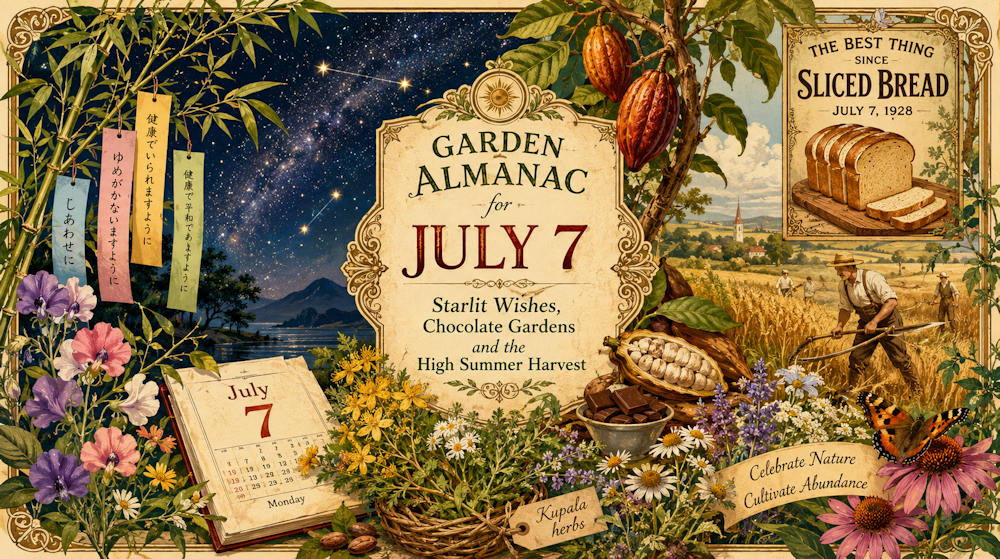

July has a way of making every garden feel abundant. The first tomatoes begin to blush, herbs release their richest fragrance in the afternoon sun, and bees move steadily from flower to flower as if they know the season has already reached one of its finest moments.
Across cultures, July 7 has long been associated with celebrations, stories and traditions that remind us how closely human life has always been tied to the rhythms of nature. From ancient summer festivals beneath the stars to the simple pleasure of sharing chocolate, today’s date offers surprising opportunities to look at our gardens with fresh eyes.
While history gives us memorable anniversaries, the garden reminds us that every July day is also part of a much older calendar – one written by flowering plants, ripening fruit, insects, birds and changing daylight.
Tanabata – When the Stars Inspire Gardens
One of the world’s most beautiful seasonal celebrations falls on July 7. In Japan, Tanabata, the Star Festival, commemorates the legendary meeting of the lovers Orihime and Hikoboshi, represented by the stars Vega and Altair, who are said to reunite only once each year across the Milky Way. People traditionally write wishes on colourful strips of paper and hang them on bamboo branches.
Although Tanabata is rooted in celestial folklore, its connection with plants is just as important. Fresh bamboo symbolizes flexibility, resilience and continuous growth – qualities every gardener hopes to encourage in the garden. The tradition reminds us that plants have long served not only practical purposes but also cultural and spiritual ones.
For gardeners, this is also an ideal moment to appreciate vertical plants. Fast-growing climbers such as runner beans, sweet peas, morning glories or ornamental vines are now racing upward, making natural green screens and cooling shaded corners of the garden.
Garden Inspiration
If you have children or grandchildren, create your own “wish tree” using a bamboo cane, hazel branch or small ornamental tree. Hanging handwritten wishes among the leaves is a charming midsummer tradition that brings together gardening and storytelling.
World Chocolate Day – A Sweet Reminder of Tropical Forests
July 7 is widely celebrated as World Chocolate Day, a date traditionally associated with chocolate’s introduction to Europe during the sixteenth century.
Chocolate begins with the cacao tree (Theobroma cacao), a rainforest species that thrives beneath the canopy of larger tropical trees. Unlike many crops grown in full sun, cacao naturally evolved in humid forests where filtered light, rich soils and remarkable biodiversity create ideal growing conditions.
This makes chocolate a surprisingly good reminder of one of gardening’s most valuable lessons: healthy ecosystems often depend on layers. Forest gardens, mixed planting and companion planting imitate this natural structure, allowing different species to support one another while improving soil health and moisture retention.
Even in temperate gardens, we can borrow this principle by combining trees, shrubs, perennials and groundcovers instead of relying on large areas of bare soil.
Garden Science
Mulching around vegetables and ornamental plants at this time of year works much like a rainforest floor. Organic mulch reduces evaporation, moderates soil temperature, feeds soil organisms and helps plants cope with the heat of midsummer.
Ivan Kupala – Water, Herbs and the Midsummer Landscape
In parts of Eastern Europe, July 7 is also celebrated as Ivan Kupala Day, one of the region’s best-known midsummer festivals. Traditionally associated with bonfires, rivers, medicinal herbs and flowering meadows, it reflects ancient beliefs about the extraordinary vitality of nature during early July.
Many of the herbs gathered during Kupala celebrations – including St. John’s wort, yarrow, mugwort and chamomile – are still appreciated today for their historical importance and ecological value. Whether or not one believes the old folklore, early July truly is one of the best moments to observe many medicinal and pollinator-friendly plants in full bloom.
For gardeners, the festival highlights an important seasonal task: allowing parts of the garden to remain slightly wild. Native flowering plants provide nectar precisely when many insects are raising their second generation.
Wildlife Note
Leave a small patch of flowering herbs uncut for another week or two. Bees, hoverflies and butterflies continue to rely heavily on these blooms during July, and many beneficial insects are now laying eggs that will help control garden pests later in the season.
Bread, Harvest and the Value of Good Crops
July 7, 1928 also marked the first commercial sale of pre-sliced bread – an invention that transformed everyday life so completely it gave rise to the famous expression, “the best thing since sliced bread.”
Behind this seemingly ordinary milestone lies something every gardener understands: good bread begins with healthy grain, healthy grain begins with fertile soil, and fertile soil depends on careful stewardship.
Even if we never grow wheat ourselves, the principle remains the same. Every tomato, bean, cucumber or lettuce harvested from a home garden reflects countless biological processes taking place beneath our feet – earthworms, fungi, bacteria and decomposing organic matter quietly building the foundation for each harvest.
Seasonal Tasks
Early July is an excellent time to:
- harvest herbs regularly before flowering reduces their flavour
- continue picking beans, peas and courgettes frequently to encourage more production
- water deeply but less often, encouraging stronger root systems
- inspect tomatoes for side shoots and maintain good airflow around the plants
- refresh mulch where summer heat has begun to dry the soil
What to Observe Right Now
Early July rewards attentive gardeners with subtle seasonal changes.
Look closely and you may notice:
- dragonflies hunting above ponds and water features
- young birds becoming independent around the garden
- butterflies reaching one of their seasonal peaks
- second flushes of flowering in many perennials after deadheading
- the first signs of apples, pears and plums beginning their final stage of summer development
These small observations help gardeners respond to the garden’s changing needs rather than simply following the calendar.
Looking Ahead
July 7 reminds us that gardens are shaped by far more than weather and seasons. They are also places where traditions, food, folklore and biodiversity quietly meet.
Whether inspired by bamboo wishes beneath the stars, the rainforest origins of chocolate, centuries-old herb traditions or the humble loaf of bread, today’s stories all point toward the same lesson: thriving gardens grow from healthy relationships – between plants and pollinators, soil and roots, people and nature.
As midsummer unfolds, take time not only to harvest what your garden offers today, but also to notice the countless living connections that make every future harvest possible.