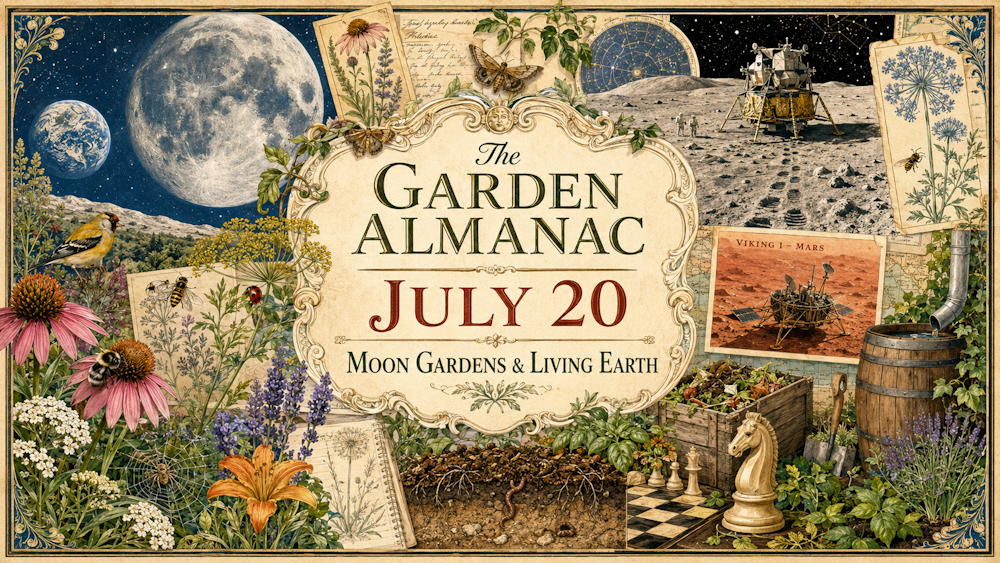

In the heart of summer, when gardens are full of colour, scent and restless life, July 20 invites us to look beyond the flower border and think about the wider landscapes we inhabit. It is a date connected with journeys into unknown worlds, new ways of understanding our planet, and the human desire to explore, observe and care for nature.
For gardeners, this midsummer day carries a special message. A garden is not only a collection of plants arranged by human hands. It is a small living landscape, a place where soil, weather, insects, water and seasons interact. The stories linked to July 20 remind us that every landscape – from a backyard vegetable patch to the surface of another world – begins with curiosity and careful observation.
July 20, 1969 – The Moon Landing That Changed How We Saw Our Own Garden Planet
On July 20, 1969, Apollo 11 achieved the first human landing on the Moon. Neil Armstrong and Edwin “Buzz” Aldrin walked on the lunar surface while Michael Collins remained in orbit around the Moon. The event became one of the defining moments of modern exploration, watched by hundreds of millions of people around the world.
At first glance, a moon landing may seem far removed from gardening. The Moon has no forests, no flowering meadows and no living soil. Yet the images brought back by space exploration transformed our understanding of Earth. Seeing the planet as a fragile blue sphere surrounded by darkness helped inspire a new environmental awareness and changed the way many people thought about conservation.
The same perspective is valuable in the garden. A gardener who looks closely at a single planting bed begins to notice connections that are easy to miss: how a flowering plant supports bees, how fallen leaves feed soil organisms, how shade changes moisture levels, and how a small pond can become a habitat for countless forms of life.
Garden Inspiration – What can the Moon teach us about Earth gardens?
The lunar landscape is a reminder that life depends on very specific conditions. Unlike the Moon’s dry and lifeless surface, a healthy garden contains:
- living soil filled with microorganisms
- plants adapted to local conditions
- water managed carefully through seasons
- spaces where wildlife can shelter and feed
A successful garden does not simply display plants. It creates a small ecosystem.
International Moon Day – Celebrating Exploration Through Sustainable Thinking
July 20 has also become International Moon Day, established by the United Nations to mark the anniversary of the Apollo 11 landing and to encourage awareness of peaceful and sustainable exploration of the Moon.
The idea of sustainability beyond Earth brings an interesting question back to our own landscapes: how can we use resources responsibly here at home? The challenges of exploring another world highlight the importance of protecting the one world where we already have forests, rivers, gardens and agricultural fields.
For gardeners, sustainability begins with everyday choices. A compost pile, a rain barrel, a native plant border or a pesticide-free corner of the garden may seem small, but together these actions create healthier environments.
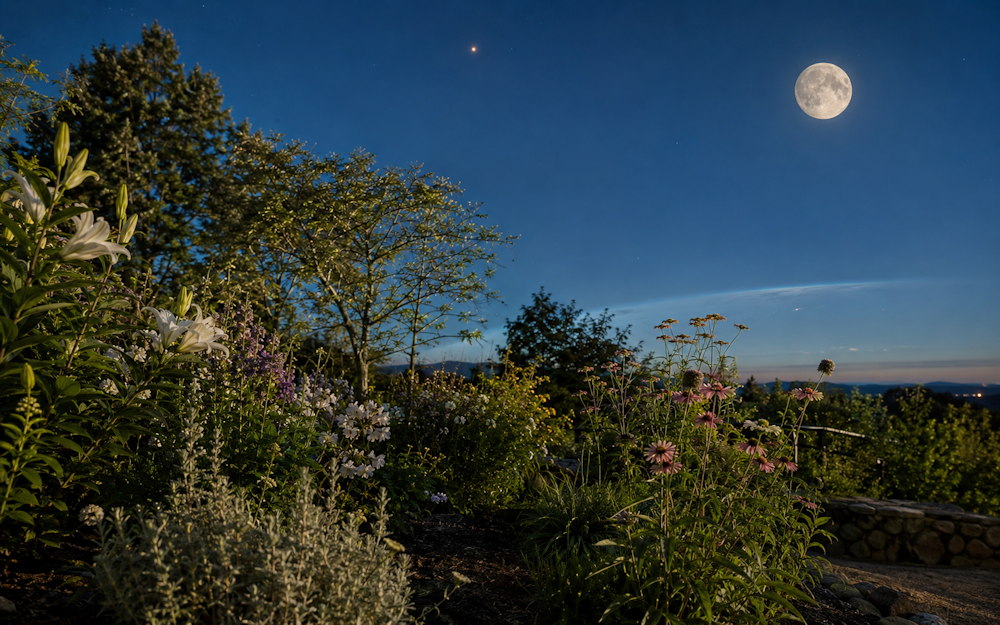
Garden Reminder – How can you make a summer garden more sustainable?
In late July, consider these practical steps:
- Mulch bare soil to reduce evaporation and protect plant roots from heat.
- Water deeply in the early morning or evening rather than during the hottest part of the day.
- Leave some faded flowers standing to provide seeds for birds and shelter for insects.
- Collect rainwater where possible and use it during dry periods.
Small decisions in a home garden reflect the same principle that guides environmental protection on a global scale: resources are limited, and careful management matters.
July 20, 1976 – Viking 1 Reached Mars and Expanded the Idea of a “Garden”
Seven years after Apollo 11, July 20 became another milestone in planetary exploration. In 1976, NASA’s Viking 1 became the first spacecraft to successfully land on Mars, sending back detailed images and scientific information about the Martian surface.
Mars appeared as a cold, rocky landscape, but the mission encouraged scientists and the public to think more deeply about planets, climate and the conditions required for life. The contrast between Earth and Mars made one fact increasingly clear: our planet’s living systems are extraordinarily valuable.
For gardeners, Mars represents a fascinating comparison. A garden depends on exactly the conditions that make Earth unique – stable temperatures, available water, fertile soils and complex biological relationships. When we improve garden soil or protect pollinators, we are preserving the same natural systems that allow life to thrive.
Garden Science – Why is healthy soil more than just dirt?
Soil is a living community. A handful of healthy garden soil can contain billions of microorganisms, including bacteria and fungi that help plants absorb nutrients and maintain strong root systems.
In summer, soil health becomes especially important because heat and drought can stress plants. Organic matter, such as compost or well-rotted plant material, improves soil structure by helping it hold moisture while still allowing roots access to oxygen.
A garden with healthy soil is not simply better at growing flowers and vegetables. It is a miniature example of a functioning ecosystem.
World Chess Day – The Garden as a Game of Strategy and Patience
July 20 is also recognised as World Chess Day, marking the founding of the International Chess Federation (FIDE) in Paris on July 20, 1924. The United Nations later recognised the date to celebrate the cultural and educational value of chess around the world.
Chess and gardening may seem unrelated, but both reward patience, planning and attention to detail. A gardener, like a chess player, must think several steps ahead. A tree planted today may shape a garden decades into the future. A neglected soil problem may not appear immediately, but its effects become clear later.
Seasonal gardening is a long game. The choices made in spring influence summer growth, and the care given in summer determines the strength of future seasons.
Seasonal Tips – What garden lessons can we borrow from chess?
Think like a strategist:
- Observe before making changes.
- Choose plants according to the conditions you already have.
- Plan for future growth rather than only today’s appearance.
- Create balance between beauty, productivity and wildlife value.
The best gardens are rarely created through quick decisions. They develop through observation, adaptation and thoughtful moves over time.
Wildlife Note – Who Is Visiting the Garden in Late July?
July gardens are often at their busiest. Warm evenings, abundant flowers and mature vegetation create ideal conditions for wildlife activity.
Look closely among flowering plants and you may notice:
- bees collecting pollen during the morning hours
- butterflies searching for nectar-rich flowers
- birds feeding on developing seeds and insects
- beneficial insects hunting among leaves and stems
Avoid removing every “untidy” area of the garden. A small patch of wild growth, fallen leaves or seed heads can provide important shelter for many species.
A garden does not need to be perfectly controlled to be beautiful. Often, the most interesting corners are those where nature is allowed to participate.
What to Observe Right Now – The Hidden Summer Changes Around You
Late July is a moment of transition. Although summer is still strong, many plants are already preparing for the next stage of the year.
Take time to notice:
- which flowers are attracting the greatest number of pollinators
- which plants are beginning to form seeds
- where the soil dries fastest during hot weather
- which areas of the garden remain naturally cooler and more humid
Observation is one of the oldest gardening skills. Before tools, fertilizers and modern techniques, gardeners learned by watching patterns in weather, plants and wildlife.
Looking Ahead
The stories of July 20 connect distant worlds, scientific discovery and everyday gardens through one shared idea: understanding nature begins with paying attention.
The Moon landing changed how humanity viewed Earth. The exploration of Mars showed how rare living landscapes may be. Even the quiet strategy of gardening teaches us that the future is shaped by careful choices made today.
As climate challenges and biodiversity concerns continue to influence the way we manage landscapes, gardens can become places of practical hope. By protecting soil, supporting wildlife and choosing plants wisely, every gardener helps create a healthier relationship between people and the natural world.
On July 20, the greatest lesson may be this: whether we look up at the stars or down at the soil beneath our feet, curiosity and care are what allow landscapes to flourish.