
Some summer days seem made for looking down – checking tomatoes for blight, harvesting beans, or searching for the first ripe blackberry. July 16 invites us to do the opposite. It is a day that reminds us to look upward, toward the sky, while keeping both feet firmly planted in the soil.
Across history, this date has become associated with remarkable journeys, enduring traditions and seasonal celebrations. From humanity’s first steps toward the Moon to centuries-old midsummer flower festivals, July 16 reveals how curiosity about the wider world has always gone hand in hand with a deeper appreciation of the landscapes closest to home.
For gardeners, that connection feels especially meaningful. Every thriving garden depends on careful observation – of weather, light, insects, soil and the changing rhythm of the seasons. Looking farther often teaches us to see the familiar more clearly.
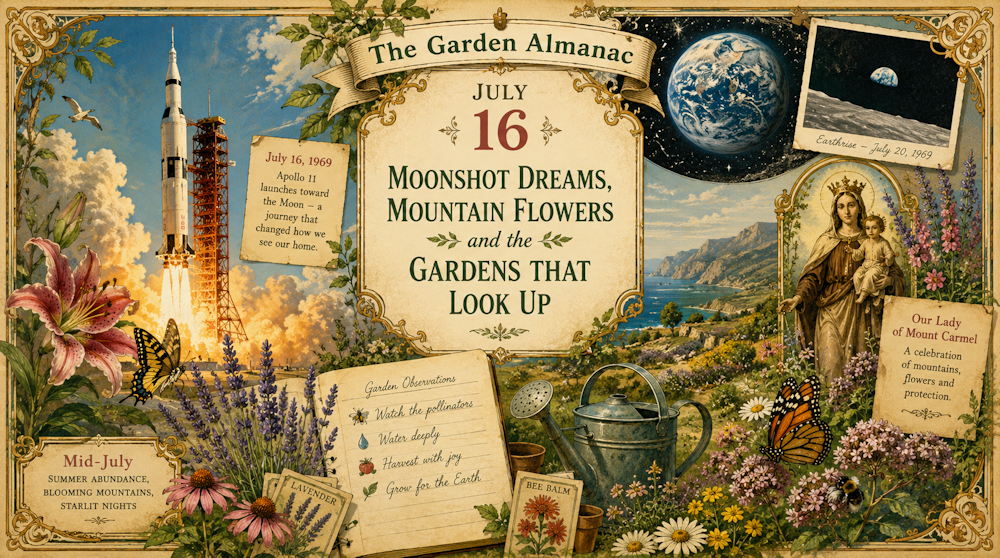
July 16, 1969 – When a Garden Planet Looked Toward the Moon
On July 16, 1969, Apollo 11 lifted off from Kennedy Space Center, beginning the journey that would place the first humans on the Moon only four days later. Millions watched the launch, but few realized how much the mission would ultimately change our understanding of Earth itself.
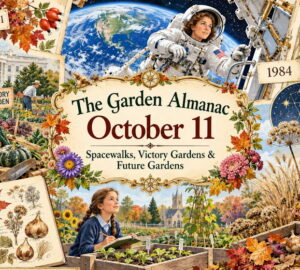
The photographs returned by Apollo astronauts transformed environmental thinking. Images such as Earthrise and the later Blue Marble showed our planet as a remarkably small, fragile oasis surrounded by darkness. Those views became powerful symbols for conservation movements around the world.
For gardeners, that perspective remains surprisingly practical. Every compost heap, pollinator border and rain barrel is part of the same living system visible from space. Healthy gardens do not exist in isolation – they contribute to healthier landscapes by storing carbon, cooling cities, supporting wildlife and protecting soils.
Garden Science – Why Do Plants Care About the Moon?
Many gardeners wonder whether moonlight influences plant growth.
The answer is that sunlight overwhelmingly controls plant development, not moonlight. Photosynthesis requires light intensities thousands of times greater than a full Moon can provide. However, lunar cycles have long been used as traditional planting calendars because they offer a convenient natural rhythm, even though modern research finds little consistent scientific evidence that moon phases directly improve germination or harvests.
What truly matters is:
- consistent soil moisture
- appropriate temperature
- healthy soil biology
- correct planting time for your local climate
Our Lady of Mount Carmel – Where Mountains Become Living Gardens
July 16 is also celebrated in many countries as the Feast of Our Lady of Mount Carmel, a tradition whose roots stretch back to Mount Carmel in present-day Israel. The mountain has long been known for its remarkable diversity of wildflowers, aromatic herbs and Mediterranean woodland.
Mountains often act as natural botanical refuges. Cooler temperatures, varied slopes and changing soils allow many different plant communities to thrive within relatively small areas. Even today, Mount Carmel remains internationally recognised for its exceptional biodiversity.
This offers an inspiring lesson for home gardeners.
Instead of creating one uniform planting scheme, consider designing small “microhabitats”:
- a sunny, dry corner for lavender and thyme
- a shaded woodland edge for ferns and hostas
- a damp area where moisture-loving plants flourish
Greater habitat diversity almost always supports greater wildlife diversity.
Wildlife Note – Why Are So Many Butterflies Active Right Now?
Mid-July is one of the busiest periods for butterflies across much of the Northern Hemisphere.
Warm temperatures allow adults to feed actively while many summer flowers provide abundant nectar. Leaving even a small patch of flowering herbs, clover or native wildflowers uncut can create an important feeding station during this peak season.
A Summer Garden Is Also an Observatory
July skies often reward patient observers. Warm evenings bring longer twilight, active bats, singing crickets and, in many years, the first early meteors of late summer.
The habit of careful observation has always connected astronomy and gardening.
Gardeners notice:
- which flowers close before rain
- when dragonflies suddenly become abundant
- how evening fragrance changes after hot days
- where dew forms first in the morning
These quiet observations often reveal more about local weather and ecosystem health than any single forecast.
What to Observe Right Now
Rather than adding another job to your gardening list, spend ten quiet minutes simply watching.
Notice:
- which flowers attract the greatest variety of pollinators
- whether bees prefer single or double blooms
- where birds search for insects after watering
- which parts of the garden remain cool during afternoon heat
- whether butterflies return to the same nectar plants repeatedly
These small observations help shape better gardening decisions throughout the season.
Garden Reminder – What Should Gardeners Focus on in Mid-July?
July can be one of the most demanding months for plants because rapid growth coincides with heat and, in many regions, irregular rainfall.
A few priorities make a noticeable difference:
- Water deeply rather than lightly to encourage stronger root systems.
- Harvest vegetables regularly to keep crops producing.
- Remove diseased foliage promptly to reduce fungal spread.
- Deadhead repeat-flowering annuals and perennials to extend blooming.
- Refill bird baths and shallow water dishes daily during hot weather.
Healthy gardens are often built through small, consistent tasks rather than occasional bursts of intensive work.
Looking Ahead
July 16 reminds us that exploration comes in many forms. Some journeys carry astronauts beyond Earth’s atmosphere, while others begin with a careful look at a flowering border or a newly arrived butterfly.
Both start with curiosity.
The more closely we observe our own gardens, the more clearly we understand the larger living world they belong to. Every healthy patch of soil, every flowering border and every pollinator-friendly corner contributes to a planet that is still wonderfully alive – a world worth exploring, protecting and passing on to future generations.