

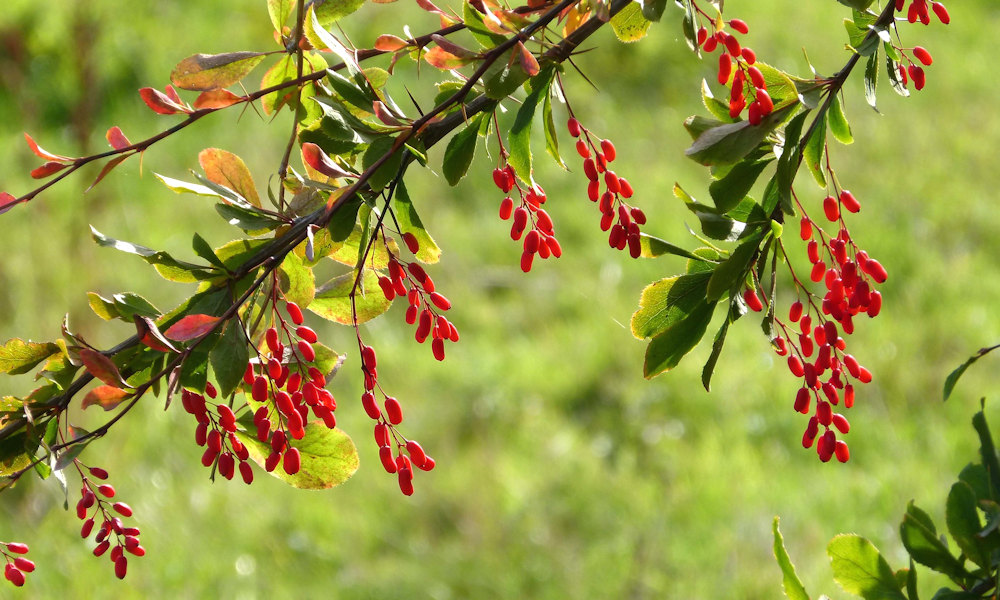

A treat from the edge of forests.
Common barberry (Berberis vulgaris) is mainly common in dry, bushy areas, oak forests and sunny forest edges. It is also planted as a hedge in many places. This deciduous shrub usually grows 1.5-2 meters tall and prefers sunny, dry locations.
Common barberry has been known as a medicinal and food plant as far back as the Middle Ages. Its fruit is rich in vitamin C and minerals, which is why it has long been used in folk medicine for colds. It is also known for its appetite-stimulating and stomach-protecting effects.
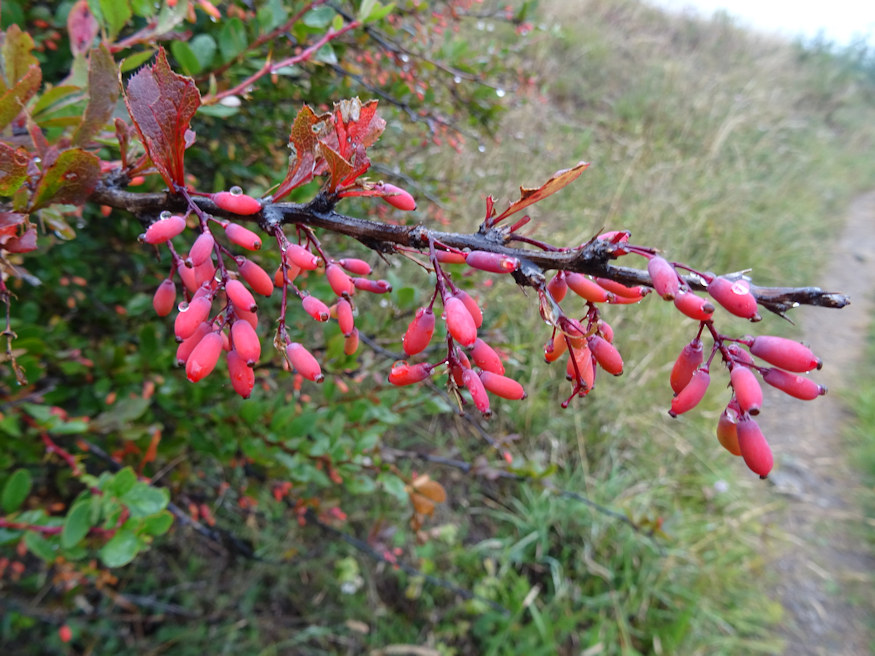
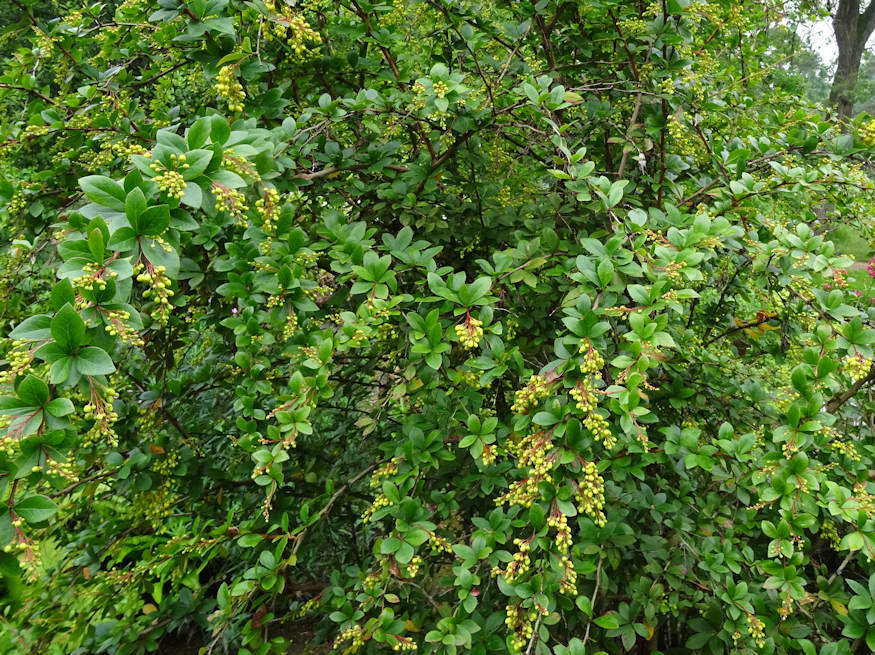
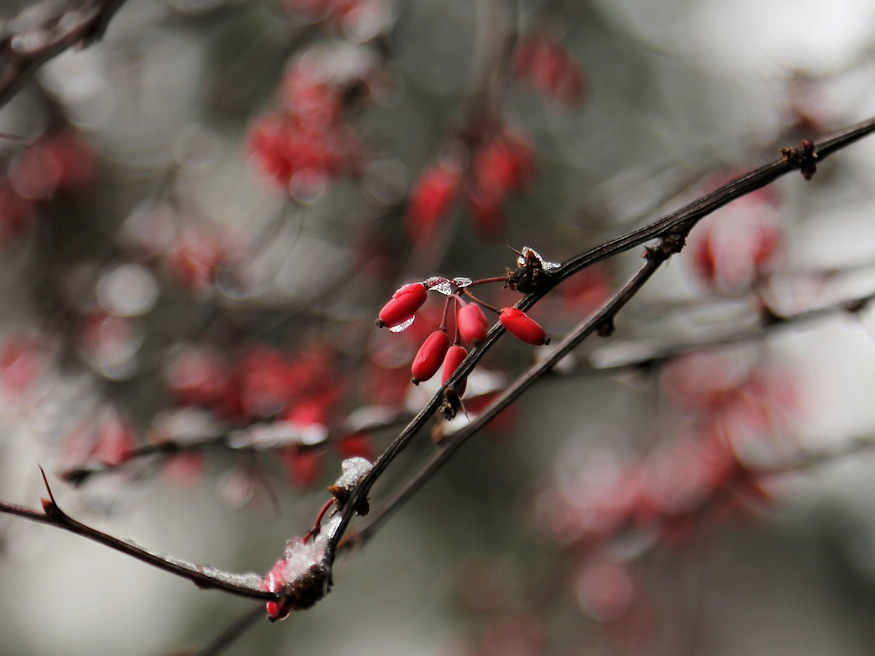
The yellow flowers of common barberry with bell-shaped bracts bloom in drooping clusters. Its elongated, oval fruits ripen in late summer and throughout autumn. You can pick the bright red berries until the end of October. They have a tart, sour, fruity aroma, but after being bitten by the frost, they become less sour.
Among other things, jam, jelly, juice and syrup can be made from the berries. In Far Eastern cuisine, it is used to flavor rice, poultry and fish dishes. You can also add the dried berries to a wide variety of desserts.