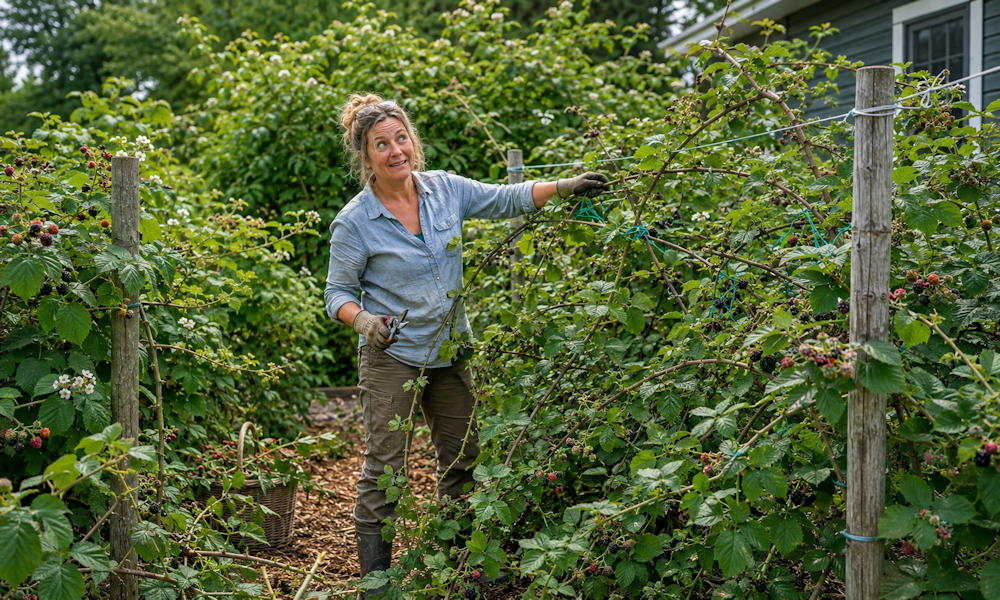

Raspberries and blackberries are wonderful plants – as long as they are kept under control. Give them a little too much freedom, however, and a neat berry bed can quickly turn into a thorny, suckering thicket with plans of its own.
By late spring, there is still plenty you can do to prevent that from happening. A little thinning, tying-in, mulching and checking now can make the difference between an easy harvest and a summer expedition into a berry jungle.
First, Know What Kind of Canes You Are Looking At
With raspberries, it is especially important to understand which canes are fruiting and which are new growth. Summer-fruiting raspberries produce berries on canes that grew the previous year, while at the same time sending up fresh shoots for next year’s crop.
That means careless cutting can cost you more than just a few extra leaves. Remove the wrong canes, and you may be removing part of next year’s harvest.
Autumn-fruiting, or everbearing, raspberries can follow a different pruning rhythm, depending on how they are managed. This is why it is worth knowing what type of raspberry you have when you buy or plant it. In pruning, “a raspberry is a raspberry” is not a very safe rule.
Thin the Canes for Better Air and Better Fruit
When too many canes crowd together, the plants become harder to manage. Air circulation drops, picking becomes more difficult, and the risk of disease may increase. The berries themselves are not necessarily better for all that extra growth either.
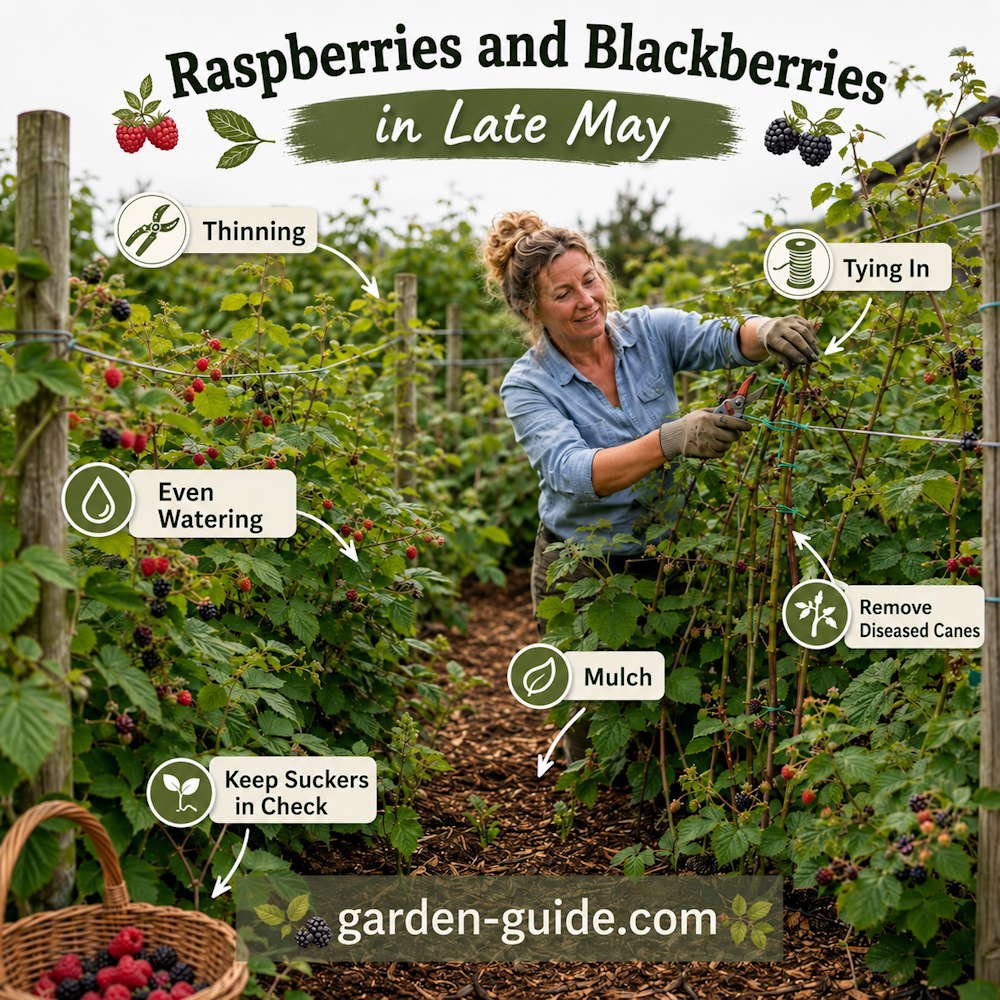
Thinning is not about weakening the plant. It is about giving the strongest, best-placed canes enough space to grow, flower and carry fruit properly.
Remove weak, thin, damaged or badly placed shoots. Do not let every sucker that appears outside the row claim new territory. Raspberries are not very interested in garden boundaries, so the gardener has to be.
Tie Them In Before the Berry Chaos Begins
Raspberries and blackberries are far easier to handle when their canes are supported. A simple wire system, posts, stakes or a small trellis can help keep the growth upright and organised.
Tying in the canes keeps them from flopping onto the ground, helps the fruit stay cleaner, and makes harvesting much less like a thorny obstacle course.
For blackberries, support and training are particularly important. Their long, vigorous canes can soon grow in all directions. If they are not guided early, the plant may start building something that feels less like a berry patch and more like a private fortress.
Keep Moisture Steady, Not Extreme
Raspberries and blackberries appreciate an even water supply, especially during flowering, fruit set and berry development. They do not respond well to the cycle of drying out completely and then suddenly being drenched.
Mulch can be a great help. It reduces moisture loss from the soil, keeps the root zone cooler and suppresses weeds around the plants.
Straw, shredded leaves, mature compost or partly dried grass clippings can all work well. The key is moderation: do not bury the crowns or pack a thick, wet layer directly against the stems. A good mulch protects the soil; it should not smother the plant.
Feed the Soil, But Do Not Overfeed the Canes
Raspberries and blackberries benefit from good soil and a steady supply of organic matter. Mature compost applied in spring or early summer can support healthy growth and fruiting.
What they do not need is a sudden heavy dose of nitrogen. Too much nitrogen can encourage lush leafy growth at the expense of fruit production. The goal is not to grow a green wall, but strong, healthy, productive canes.
Avoid fresh manure and aggressive “quick boost” feeding. Berries are usually happier with balanced soil care than with dramatic interventions.
Remove Dead, Diseased and Damaged Growth
Dead, diseased or injured canes do not help the plant. They crowd the row, reduce airflow and may provide hiding places for pests or diseases.
Cut them out and remove any diseased material from the base of the plants. Do not leave infected prunings lying under the canes as mulch.
Good airflow is one of the simplest forms of plant protection in a berry patch. The other half of the battle is being able to reach the fruit without feeling as if the plant has taken you prisoner.
Late-Spring Raspberry and Blackberry Checklist
- Identify which canes are fruiting and which are new growth.
- Thin out weak, damaged or badly placed shoots.
- Remove unwanted suckers outside the row.
- Tie long canes to a support system.
- Keep the soil evenly moist.
- Mulch around the plants without covering the crowns.
- Remove dead, diseased or damaged canes.
- Do not let the raspberry patch take over half the garden.
A Tidy Berry Patch Is Not Boring – It Is Harvestable
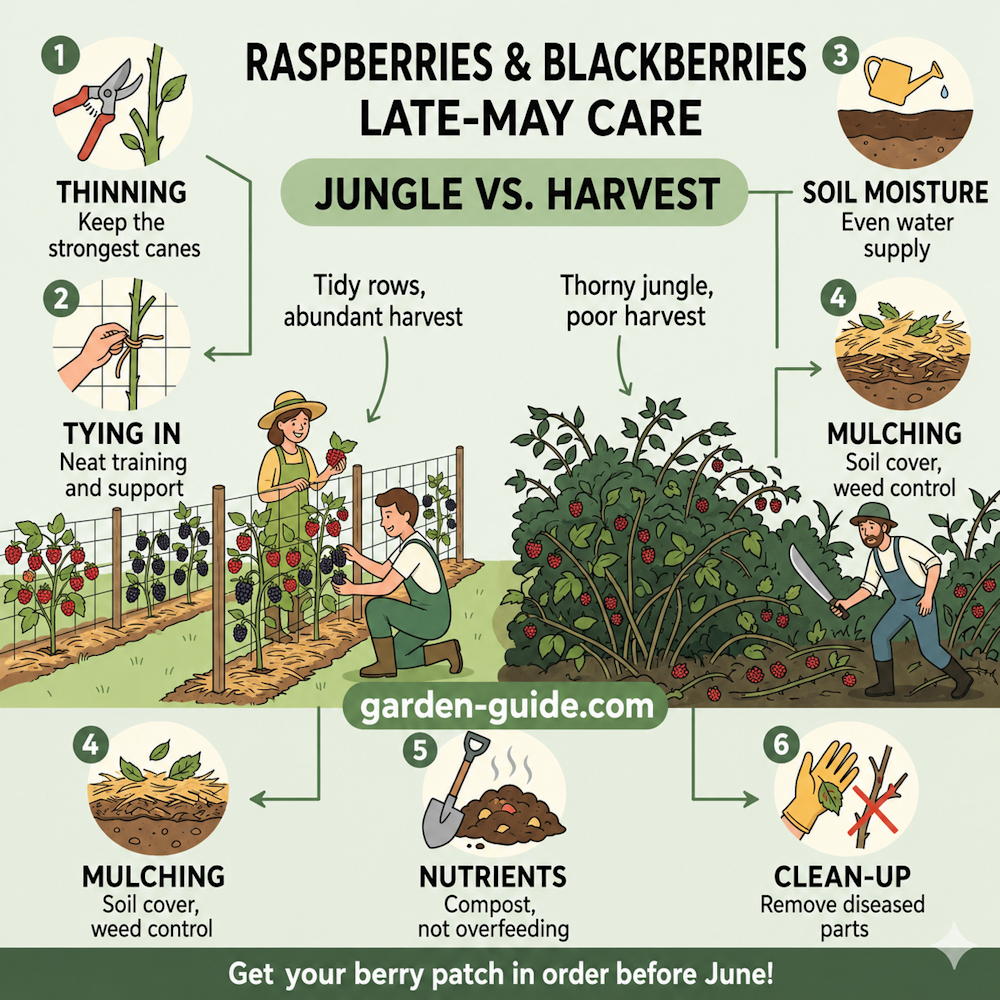
Raspberries and blackberries give the most pleasure when you do not have to fight for every berry. A tidy row, well-spaced canes, proper support and mulched soil are not unnecessary fuss. They are preparation for a more comfortable, healthier and more generous harvest.
Take control of your berry plants now, and they will be easier to manage later. You may also be grateful when you are picking fruit from an open, well-kept row instead of trying to rescue the last raspberry from the depths of a thorny jungle that clearly believes it is winning.