
Late August gardens often seem suspended between abundance and surrender. Tomatoes are still ripening, seed heads are filling, and pollinators crowd the last generous flowers, yet shorter evenings and cooler dawns already suggest that the season is turning.
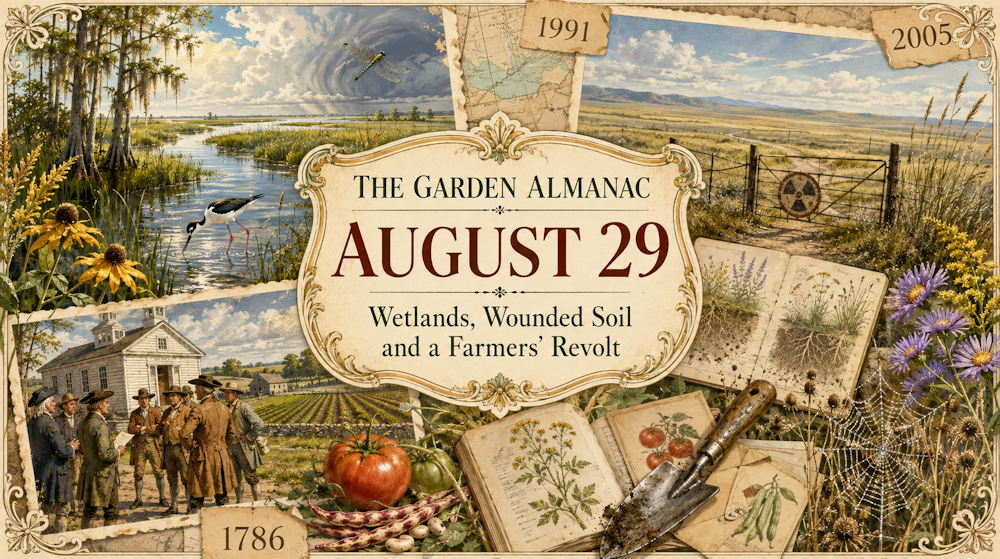
August 29 also carries stories in which land is far more than scenery. A devastating hurricane exposed the protective value of wetlands, the closure of a nuclear test site drew attention to the long memory of contaminated soil, and indebted farmers once resisted the loss of the fields on which their survival depended. Together, they reveal how closely human security is rooted in healthy, resilient ground.
August 29, 2005 – Hurricane Katrina and the Landscapes That Could Not Hold Back the Sea
Hurricane Katrina made landfall on the US Gulf Coast on August 29, 2005, bringing destructive winds, storm surge and catastrophic flooding. New Orleans became the most visible centre of the disaster after levees and flood walls failed, but the storm affected a much wider living landscape. Coastal communities, forests, marshes, waterways and cultivated ground were all changed by salt water, debris, sewage, oil and prolonged flooding.
The disaster also focused attention on Louisiana’s disappearing coastal wetlands. Marshes, barrier islands and forested swamps can slow waves, hold floodwater and reduce erosion, although no wetland can make a powerful hurricane harmless. Where these habitats have been fragmented by canals, deprived of river sediment or lost to subsidence and rising seas, both wildlife and human settlements become more exposed.
This principle applies on a smaller scale in towns and gardens. Soil covered by paving sheds water quickly, while healthy beds, rain gardens, ponds, hedges and planted depressions temporarily store it. Deep-rooted plants open channels through the ground, organic matter improves the structure of many soils, and layered vegetation slows the journey of rain from leaf to drain. One garden cannot prevent a flood, but thousands of water-sensitive gardens can reduce pressure on urban drainage systems.
Late summer is a useful time to inspect how water actually moves through a property. After heavy rain, look for bare soil, overflowing gutters, eroded paths and puddles pressed against buildings. Redirect roof water only where it can soak in safely, keep drains clear, and choose overflow routes that lead away from foundations and neighbouring homes. The lesson of Katrina is not that nature alone can protect us, but that removing natural buffers leaves fewer layers of defence.
Garden Science – How does a rain garden reduce runoff?
A rain garden is a shallow planted basin that receives water from a roof, path or other hard surface. It holds runoff briefly, allowing water to infiltrate gradually rather than rushing immediately into a drain. It should empty between storms – it is not a permanently waterlogged pond – and must be positioned a safe distance from buildings, septic systems and unstable slopes.
August 29, 1949 and 1991 – The Day Semipalatinsk Changed Meaning
On August 29, 1949, the Soviet Union conducted its first nuclear weapons test at the Semipalatinsk test site, now in Kazakhstan. Over the following four decades, hundreds of nuclear tests took place across the vast steppe landscape. Radioactive fallout affected soils, water, vegetation, livestock and nearby communities, creating an environmental and human legacy that could not simply be fenced off when testing ended.
Exactly 42 years later, on August 29, 1991, the test site was officially closed. The date is now observed internationally as a day against nuclear testing. Its ecological significance lies in an uncomfortable truth familiar to soil scientists and gardeners alike – contamination may be invisible, and land can remain biologically active while still carrying hazards through dust, water and food chains.
For gardeners, the practical lesson is to investigate the history of unfamiliar ground before growing food. Former industrial plots, land beside heavily trafficked roads, areas containing ash or demolition waste, and sites near old treated-timber structures may justify professional soil testing. Raised beds with verified clean soil can reduce contact with suspect ground, but they do not remove the original contamination. Do not rely on sunflowers, mustard or other plants advertised online as universal “soil cleaners” – phytoremediation is contaminant-specific, slow, and requires expert handling and disposal of the harvested material.
Garden Reminder – Starting a food garden on unknown soil
- Check previous uses of the site before digging or planting.
- Test suspect soil through an accredited laboratory and ask which contaminants are relevant.
- Cover bare ground with vegetation, clean mulch or another suitable barrier to limit dust and splashing.
- Wash produce and hands after gardening, and peel root crops when local guidance recommends it.
- Seek professional advice rather than composting or moving potentially contaminated soil.
August 29, 1786 – When Massachusetts Farmers Defended Their Land
On August 29, 1786, farmers and other protestors prevented a county court from sitting in Northampton, Massachusetts. The action marked the beginning of what became known as Shays’ Rebellion. Many rural families, including veterans of the American Revolutionary War, faced high taxes, scarce hard currency, court proceedings and the seizure of farms or livestock when debts could not be paid.
The uprising became an important episode in the political development of the young United States, but it was also an agrarian crisis. In a largely subsistence-based rural economy, land was not merely an investment. It produced food, supported animals, supplied fuel and represented a family’s capacity to survive the next winter. Losing a farm could mean losing an entire network of practical knowledge built around its soils, water, crops and seasons.
Modern gardeners work in a very different economic world, yet food-growing land remains vulnerable to financial pressure, development and neglect. Allotments, community gardens, seed libraries and shared orchards help protect more than a harvest – they preserve skills and make productive land accessible to people who do not own large gardens. A practical response is to record what works: save locally successful seed where appropriate, label perennial plantings, map water sources and share cultivation knowledge. A resilient garden depends not only on fertile soil, but also on knowledge that survives beyond one gardener.
Wildlife Note – Should every late-summer seed head be cut down?
No. Leave some sound seed heads standing, especially those of sunflowers, teasels and native perennials. They can feed birds, shelter small invertebrates and add winter structure. Remove diseased material and prevent aggressive self-seeders from spreading where necessary, but avoid turning the whole garden bare at once.
Seasonal Tips – What Should You Do in the Garden in Late August?
August 29 falls at a useful gardening threshold. Warm-season crops may still be producing, while cool-season sowing and autumn preparation are already beginning.
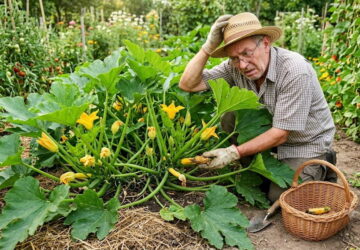
- Harvest courgettes, beans, cucumbers and tomatoes regularly so plants do not waste energy on oversized or overripe fruit.
- Water deeply at soil level during dry weather, preferably in the morning, and check containers separately – they can dry out much faster than open ground.Sow suitable fast-growing leaves and hardy autumn crops according to your local climate and expected first frost.
- Stop feeding many tender perennials with high-nitrogen fertiliser – soft late growth is more vulnerable to cold.
- Collect only mature, healthy seed, dry it thoroughly and label it with the plant name and year.
- Add compost or mulch to bare soil, but leave small accessible patches where ground-nesting solitary bees are already active.
What to Observe Right Now
Pause before treating every seasonal change as a problem. Some yellowing leaves are simply ageing, while sudden widespread discoloration may indicate drought, waterlogging, nutrient stress or disease.
Look for the first heavy morning dew, spiders’ webs becoming visible across shrubs, ripening berries in hedges and birds beginning to investigate seed-rich borders. Notice which flowers still attract bees during the quieter weeks of late summer – asters, sedums, oregano, rudbeckias and other late bloomers can reveal where next year’s garden needs more continuity.
Also watch the soil during the next downpour. Does water soak in, pool, or rush away carrying fine particles with it? That brief observation may tell you more about the resilience of your garden than an inspection made on a dry afternoon.
Looking Ahead
The stories attached to August 29 show that landscapes remember what people do to them – whether through drainage, contamination, cultivation or care. Future-ready gardens will need to hold more water, protect living soil and offer food and shelter across a longer, less predictable season. Even modest actions such as planting a hedge, reducing hard surfaces, checking soil history or preserving locally adapted seed can add another layer of resilience. The most hopeful gardens are not sealed away from the wider world – they are small, carefully tended parts of its recovery.