


November begins with a curious contradiction. In gardens across the Northern Hemisphere, leaves are falling, growth is slowing and the natural world appears to be retreating. Yet beneath the fading colours, countless preparations for another season are already underway.
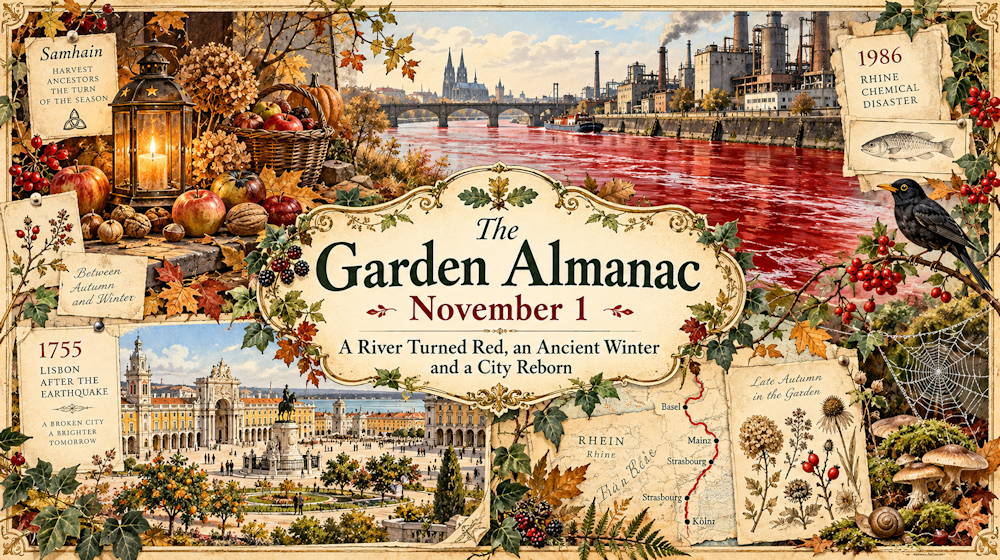
November 1 also opens three remarkable chapters in the relationship between people and nature: an ancient celebration shaped by the agricultural year, an environmental catastrophe that transformed a European river, and an earthquake that changed how a great city was rebuilt.
November 1, 1986 – The Night the Rhine Turned Red
Shortly after midnight on November 1, 1986, a fire broke out in a chemical warehouse at Schweizerhalle, near Basel, Switzerland. Firefighters battled enormous flames, but the water used to extinguish the blaze carried a dangerous mixture of pesticides and other chemicals into the nearby Rhine. As the contamination spread downstream, the river turned an alarming red.
The consequences extended far beyond Switzerland. Fish and other aquatic organisms died along hundreds of kilometres of the Rhine, with eels suffering particularly devastating losses. Drinking-water supplies were temporarily threatened, and communities in several countries discovered how quickly pollution could cross national borders. A river that connected cities, industries, farms and natural habitats had become the pathway for an international environmental disaster.
Yet the catastrophe also marked a turning point. Public pressure helped strengthen cooperation between countries sharing the Rhine, leading to the Rhine Action Programme in 1987. Its ambitions included reducing dangerous chemical discharges and making the river healthy enough for salmon to return. The disaster demonstrated that protecting a river requires more than treating pollution after it occurs – preventing contamination and coordinating action across an entire watershed are equally important.
FORTY YEARS LATER
The anniversary in 2026 offers an opportunity to consider how much has changed. The Rhine has experienced substantial ecological recovery, although chemical pollution, warming water and other pressures remain concerns. For gardeners, the story reaches surprisingly close to home: rainfall can carry substances from paths, lawns and cultivated soil into drains, streams and eventually rivers. Careful use of garden chemicals, healthy soil and vegetated areas that slow runoff all contribute to protecting water beyond the garden boundary.
Garden Science – How Does Garden Runoff Affect Rivers?
Rainwater does not always soak into the ground. On compacted soil, slopes and paved surfaces, it may flow away, carrying soil particles, fertilisers and pesticide residues.
- Improve infiltration: Add compost and protect soil structure to help rainwater soak in.
- Reduce nutrient losses: Avoid applying fertiliser before heavy rain or when soil is saturated.
- Slow the flow: Rain gardens and planted borders can intercept runoff, although they cannot make hazardous chemicals harmless.
The condition of a river can begin changing long before water reaches its banks.
November 1 and Samhain – When Winter Began with the Harvest
Long before Halloween became associated with glowing pumpkins and elaborate costumes, November 1 marked Samhain, one of the great seasonal turning points in the traditional Irish calendar. The main celebrations began the previous evening, but the date itself announced the beginning of winter. It was a change measured not simply by the calendar, but by fields, livestock and food stores.
For farming communities, this was a practical threshold. Crops had largely been gathered, livestock were brought in from pasture, and households prepared for the darker, colder months. Apples, nuts and other harvested foods featured in celebrations and games. The familiar supernatural traditions of Halloween developed alongside customs rooted in the realities of agricultural life.
There is something revealing about a festival that marks winter before the winter solstice arrives. Traditional farming calendars followed seasonal work and local conditions rather than astronomical boundaries alone. Modern gardeners can make a similar distinction: November may be suitable for planting dormant trees in one region, while elsewhere frozen ground already makes planting impossible. Soil temperature, moisture and local frost patterns are often more useful guides than the date itself.
Garden Reminder – What Should Gardeners Do in Early November?
In temperate Northern Hemisphere gardens, early November is a useful time to prepare for winter without removing everything that makes the garden a living habitat.
- Plant deciduous trees and shrubs during dormancy, provided the ground is workable and not waterlogged.
- Collect fallen leaves from lawns and paths, using healthy leaves for leaf mould or mulch.
- Protect vulnerable plants before hard frosts, especially tender perennials and container-grown species.
- Check drainage around pots, raised beds and young trees before prolonged winter rain.
- Leave healthy seedheads standing where possible, providing food and shelter for wildlife.
The aim is not to make the garden spotless, but to help it enter winter in good condition.
November 1, 1755 – The Earthquake That Changed Lisbon’s Landscape
On the morning of November 1, 1755, worshippers were attending All Saints’ Day services when a powerful earthquake struck Lisbon. Buildings collapsed, fires spread through the Portuguese capital, and a tsunami swept into the Tagus estuary. The disaster devastated much of the city and became one of the most consequential natural catastrophes in European history.
The response was remarkable for its ambition. Rather than simply rebuilding Lisbon’s damaged streets as they had been, the authorities undertook a sweeping redesign of the city centre. Broader streets, more regular urban blocks and new construction methods reflected a growing determination to understand and reduce the risks posed by natural disasters. Reconstruction also opened possibilities for public green space. The Passeio Público, developed in the decades that followed, became an important early example of a purpose-built public garden within a wider urban rebuilding programme.
Lisbon’s story reminds us that gardens and green spaces are not merely decorative additions to cities. Their placement, accessibility and relationship with surrounding buildings can influence how urban neighbourhoods function. Today, well-designed urban greenery can help manage rainwater, reduce summer heat and support biodiversity. But planting alone is not enough: appropriate species, sufficient rooting space, healthy soil and long-term maintenance determine whether a green space delivers these benefits.
Wildlife Note – Why Leave Some Autumn Leaves Where They Fall?
A thick carpet of leaves may look like garden waste, but it forms an important part of many woodland ecosystems.
As leaves decompose, fungi, bacteria and soil invertebrates help recycle their nutrients. Leaf litter also creates sheltered conditions for insects and other small animals during cold weather.
In garden borders, beneath hedges and around established shrubs, a modest layer of healthy leaves can protect the soil and provide habitat. Leaves covering lawns or smothering small plants are better moved to suitable beds or composting areas.
What to Observe Right Now – The Hidden Activity of November
Early November is a particularly rewarding time to notice changes that are easily overlooked.
- Fallen leaves: Look for the first signs of decomposition and the small organisms living beneath them.
- Winter buds: Examine the buds already formed on deciduous trees, ready for next spring.
- Berry-bearing shrubs: Watch how blackbirds, thrushes and other birds use seasonal food supplies.
- Soil after rainfall: Notice where water infiltrates quickly and where puddles persist.
- Late flowers: In mild areas, watch for the last pollinators visiting ivy and other autumn blooms.
Garden Science – Why Do Trees Prepare for Spring Before Winter Arrives?
Many deciduous trees form next year’s buds during the growing season, well before their leaves fall. These buds contain developing shoots or flowers protected by specialised structures.
As autumn progresses, shorter days and falling temperatures help regulate dormancy. Many temperate species require a period of winter chilling before their buds can resume normal development.
A bare tree in November is therefore not simply a plant that has stopped growing. It is carrying much of the preparation for its next season.
Looking Ahead
November 1 invites us to look beyond the visible garden. The recovery of a polluted river, the seasonal knowledge preserved in old farming traditions and the rebuilding of a city after disaster each reveal different ways people respond to the natural world. As winter approaches, gardeners can put that awareness into practice through careful water management, thoughtful planting and greater consideration for wildlife. Even a small garden can become a place where seasonal observation leads to better decisions – and where preparations for spring begin long before the first new leaves appear.