
By August 30, summer has begun to show its seams. Seed heads darken, fruit bends branches towards the ground, and the evening light arrives a little earlier than it did only a few weeks ago. In northern gardens, this is a season of ripening and gradual release, while across much of the Southern Hemisphere the first signs of spring are gathering momentum.
Yet this single date reaches far beyond the late-summer border. It leads from an ancient seabed high in the Canadian Rockies to the storm-darkened summer that helped inspire Frankenstein, and from there into tropical oceans where the world’s largest fish follows invisible gardens of plankton.
August 30, 1909 – The Mountain That Remembered an Ocean
On August 30, 1909, palaeontologist Charles Doolittle Walcott discovered the fossil-bearing formation now known as the Burgess Shale in the Canadian Rockies. The rocks preserve marine animals from more than 500 million years ago, including delicate soft-bodied creatures whose eyes, digestive systems and other fine structures would normally have disappeared long before fossilisation. What now stands high above sea level was once the floor of a shallow tropical sea.
The discovery transformed scientific understanding of the Cambrian period, when animal life diversified into a remarkable range of forms. Some Burgess Shale creatures have recognisable relationships with animals living today, while others resemble evolutionary experiments with no close modern equivalent. Together, they reveal that biodiversity is not simply a collection of successful species, but the surviving portion of a much larger and stranger history.
For gardeners, the most immediate lesson lies beneath our feet. Every landscape is built in layers: bedrock, mineral particles, organic remains, roots, fungi, water and air. Garden soil may look still, but it is the temporary surface of an ancient geological story. Its texture, drainage and mineral composition are partly inherited from rocks formed under conditions that may bear little resemblance to the landscape above them today.
This makes soil observation more useful than relying on plant labels alone. A plant described as “easy” can still struggle if its roots sit in compacted clay, dry rapidly in shallow stony ground or cannot obtain nutrients at the soil’s existing pH. Before replacing an unhappy plant, examine the ground: feel its texture, check how quickly water drains after rain and look for earthworms, roots and crumb structure. The garden often explains itself when we stop treating soil as an empty container.
Garden Science – Why does soil type influence drainage?
Large particles in sandy soil leave relatively wide spaces through which water moves quickly. Clay contains much finer particles and holds more water, but compaction can leave roots short of oxygen. Adding organic matter does not magically change one soil type into another, yet it can improve aggregation, water retention in sandy ground and pore space in heavy soil.
August 30, 1797 – Mary Shelley and the Summer That Went Missing
Mary Shelley was born in London on August 30, 1797. Her best-known work, Frankenstein, grew from an extraordinary season beside Lake Geneva in 1816. The previous year, Mount Tambora had erupted in present-day Indonesia, sending material high into the atmosphere. The resulting climatic disruption helped make 1816 notorious as the “Year Without a Summer”, with persistent cold, rain and crop failures affecting parts of Europe and North America.
Shelley and her companions found themselves repeatedly confined indoors by gloomy, stormy weather. A ghost-story challenge helped set her imagination in motion, but the conditions surrounding the novel also offer a striking example of nature’s ability to connect distant places. An eruption in Southeast Asia altered skies and growing seasons thousands of kilometres away, influencing harvests, human movement, daily life and, indirectly, literary history.
Gardeners cannot prevent an unseasonable summer, but they can make gardens less vulnerable to weather extremes. Growing several varieties instead of depending on one, including some early and late cultivars, reduces the chance of losing an entire harvest to a brief cold spell or heatwave. Mulch moderates rapid changes in soil moisture, while hedges and mixed planting provide shelter without creating the turbulence caused by a completely solid barrier. Diversity is not merely decorative – it is practical insurance.
Seasonal Tips – How can a garden cope with unpredictable weather?
- Keep harvested rainwater available for dry periods, but cover containers securely.
- Mulch bare soil after rain so moisture remains available for roots.
- Grow crops with different harvesting times rather than one large batch of a single variety.
- Use permeable paths and planted areas to slow runoff during intense downpours.
- Record first frosts, heat damage and flowering times to build a useful local climate diary.
August 30 – Whale Sharks and the Ocean’s Invisible Garden
International Whale Shark Day is observed on August 30, drawing attention to the largest living fish and the marine habitats on which it depends. Despite its immense size, the whale shark is a filter feeder. It moves through warm seas gathering plankton, fish eggs and tiny swimming organisms from the water rather than hunting large prey.
The celebration emerged from international conservation efforts and carries an urgent message. Whale sharks are classified as endangered, facing dangers that include accidental capture, vessel strikes, poorly managed tourism and changes to marine habitats. Their movements are closely tied to productive waters where currents and seasonal conditions concentrate food. Protecting the animal therefore means protecting an entire web of life, much of it too small to see easily.
An inland garden may appear remote from a tropical ocean, but water connects the two. Excess fertiliser can leave gardens and fields in runoff, enter streams and rivers, and eventually contribute to nutrient pollution in lakes, estuaries and coastal waters. Apply fertiliser only when plants need it, keep granules off paving, and avoid feeding immediately before heavy rain. Healthy growth comes from matching nutrients to plants and soil, not from assuming that more fertiliser must produce a better result.
Wildlife Note – Can a small garden support a larger food web?
Yes. A shallow water source, pesticide-free flowers, native plants and undisturbed leaf litter can support insects, birds and other wildlife far beyond the garden boundary. Small habitats become especially valuable when they form stepping stones between parks, hedges, waterways and larger natural areas.
Garden Reminder – What Should You Do in the Garden at the End of August?
Late August is a useful moment to balance harvesting with preparation. Plants may still be growing strongly, but shortening days are beginning to change their priorities.
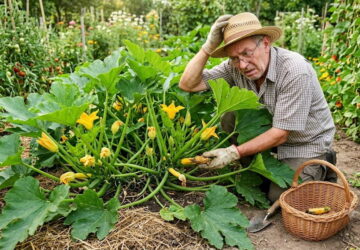
- Pick beans, courgettes and other productive crops regularly so plants continue forming new flowers and fruit.
- Remove diseased leaves from beneath susceptible plants, but keep healthy fallen material for composting or habitat.
- Water newly planted perennials and trees deeply enough to moisten the root zone rather than sprinkling only the surface.
- Collect ripe seed on a dry day and label it immediately with the plant name and year.
- Leave some sound seed heads standing for birds and winter structure.
- Check late-season flowers for bees and hoverflies before deciding what to cut back.
- In spring gardens of the Southern Hemisphere, protect emerging shoots from molluscs and prepare supports before rapid growth begins.
What to Observe Right Now – Signs That the Season Is Turning
The transition between seasons is rarely announced by a single dramatic event. It becomes visible through a collection of small changes.
- Notice which flowers still receive visitors during the cooler hours of morning and evening.
- Watch for berries changing colour and the birds that begin inspecting them.
- Compare leaves in sun and shade – drought stress often appears first in exposed positions.
- Look for spiders’ webs made visible by dew.
- Observe where water remains after rain, as these patches may reveal compaction or blocked drainage.
- Listen for changes in bird activity as feeding patterns and migration begin to shift.
These observations are more than seasonal pleasures. They help reveal which plants extend the garden’s food supply, where soil needs attention and how wildlife uses the space when human activity becomes quieter.
Looking Ahead
August 30 reminds us that no garden exists only in the present. Ancient seas shape today’s soils, distant climatic events can alter local harvests, and water leaving a garden may eventually join ecosystems far beyond the horizon. The practical response is not to control every variable, but to cultivate resilience through diversity, careful observation and thoughtful use of water and nutrients. A garden managed in this way becomes both more dependable and more generous to the wider living world.