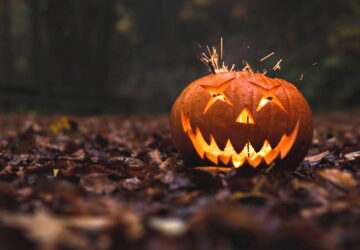

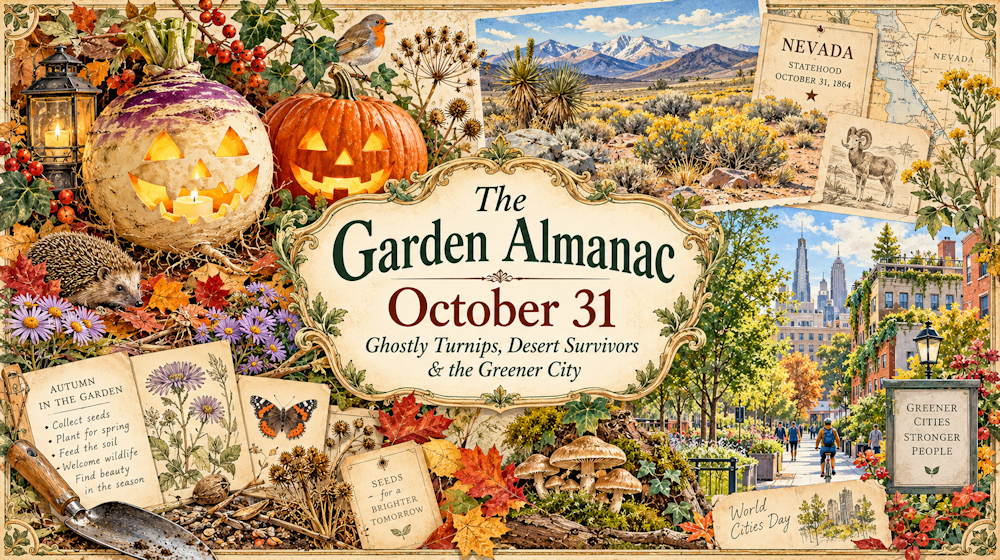

A lantern flickers inside a hollowed-out vegetable, fallen leaves gather beneath the hedges, and the last flowers of autumn stand against the approaching cold. October 31 is a day when the changing season becomes impossible to ignore – even if much of the world is busy celebrating Halloween.
Behind the familiar pumpkins and costumes lie some remarkable stories. An ancient harvest tradition crossed an ocean and acquired a new vegetable, a desert territory became a state with a landscape unlike almost anywhere else, and a modern international observance began asking whether cities could make more room for nature.
October 31 – Before Pumpkins, Halloween Had a Much Stranger Face
Imagine a lantern carved not from a bright orange pumpkin, but from a hard, pale turnip, its twisted features illuminated by a candle. The result would probably look more frightening than most modern Halloween decorations. Such lanterns were once part of Halloween customs in Ireland and Scotland, where people used locally available root vegetables to create eerie faces. Their origins belong to a much older seasonal world, shaped by the Celtic festival of Samhain and the transition from harvest to winter.
Samhain marked the end of the agricultural growing season and the beginning of the darker part of the year. Livestock, stored food and the prospect of surviving winter mattered far more than decorative pumpkins. Over centuries, seasonal customs became intertwined with Christian observances around All Saints’ Day. The tradition of making lanterns also became associated with the folk legend of Stingy Jack, a wandering figure condemned to carry a light through the darkness.
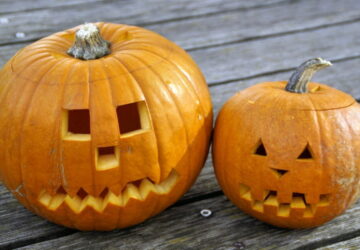
The familiar orange jack-o’-lantern emerged after these customs crossed the Atlantic. Irish immigrants encountered North American pumpkins, which were larger, softer and easier to hollow out than turnips. A local crop transformed an inherited tradition into something new. The pumpkin itself had been cultivated in the Americas for thousands of years, long before it became an international symbol of Halloween.
This history has a wonderfully practical gardening dimension. Pumpkins belong to the genus Cucurbita, a group of warm-season plants that need fertile soil, sufficient moisture and room for their sprawling vines. The impressive fruits displayed in October are the result of a growing season that began months earlier. Their transformation from harvest crop to seasonal decoration is also a reminder that plants have always shaped human celebrations according to what the local landscape could provide.
Garden Science – Why do pumpkins last so long after harvest?
A mature winter squash or pumpkin develops a firm rind that helps limit moisture loss and protects the flesh inside. Storage life depends on the variety, maturity at harvest and storage conditions.
- Keep the stem attached: A broken or damaged stem can provide an entry point for decay.
- Store uncarved pumpkins somewhere cool and dry: Good ventilation and protection from frost help preserve them.
- Carve close to Halloween: Once the rind is cut, microorganisms and moisture loss accelerate deterioration.
- Use LED lights: Unlike candles, they do not warm the inside of the pumpkin and encourage premature softening.
A sound, properly stored pumpkin may remain attractive for weeks or even months. A carved lantern may deteriorate within days, especially in warm, damp weather.
October 31, 1864 – Nevada’s Desert Becomes a State, but the Sagebrush Tells Another Story
On October 31, 1864, Nevada became the 36th state of the United States. Its admission came during the American Civil War, when President Abraham Lincoln’s administration wanted additional political support. Nevada’s constitution was transmitted to Washington by an extraordinarily long and expensive telegram. Yet while politicians concentrated on elections and mineral wealth, the territory itself was dominated by mountains, dry basins and vast expanses of sagebrush.
Much of Nevada belongs to the Great Basin, an enormous region where many waterways never reach the sea. Rainfall is limited, evaporation can be intense, and temperatures vary dramatically between seasons. Here, big sagebrush (Artemisia tridentata) has developed an impressive survival strategy: extensive roots capture scarce moisture, while its small, hairy leaves help reduce water loss. These apparently modest shrubs also support an intricate ecosystem of birds, insects and other wildlife.
For gardeners in dry climates, Nevada’s vegetation challenges the assumption that a successful landscape must be densely green throughout the year. Drought-resistant planting begins with understanding local rainfall, soil drainage and summer temperatures rather than simply choosing plants labelled as drought-tolerant. Deep-rooted native shrubs, suitable grasses and carefully positioned shade plants can create attractive gardens with less irrigation. Even in wetter regions, the principle remains useful: match the plant to the site instead of continually changing the site to suit the plant.
Garden Reminder – What should you do in the garden before November?
In temperate Northern Hemisphere gardens, the final days of October are a useful opportunity to prepare for frost and winter rain.
- Protect tender plants: Move frost-sensitive containers to shelter and prepare horticultural fleece for cold nights.
- Clear blocked drains and gutters: Falling leaves can quickly obstruct rainwater drainage.
- Plant suitable hardy trees and shrubs: Where the soil is workable and not waterlogged, autumn conditions can support root establishment.
- Keep some healthy leaves: Leave a thin layer beneath hedges and around established shrubs to protect soil and shelter wildlife.
- Check recently planted specimens: Evergreen shrubs and young trees may still need watering during prolonged dry spells.
Avoid working wet soil when it sticks heavily to your tools. Compaction can damage its structure long after autumn has ended.
October 31, 2014 – The Day Cities Began Celebrating Their Green Future
A different milestone arrived on October 31, 2014, when the first United Nations World Cities Day was celebrated, with Shanghai hosting the main international event. The observance grew partly from ideas developed around the 2010 Shanghai World Expo and was created to encourage better urban planning and more sustainable cities. Its significance extends well beyond architecture: the way cities handle vegetation, rainfall and open space affects both human wellbeing and urban wildlife.
For a long time, urban greenery was often regarded primarily as decoration. Today, it is increasingly understood as working infrastructure. Street trees provide shade and cooling through evaporation, planted areas help rainwater soak into the ground, and connected green spaces can offer routes and habitats for birds and insects. A carefully designed rain garden, for example, can capture runoff from nearby hard surfaces while supporting plants adapted to temporary wet conditions.
The most interesting implication is that urban nature does not need to be confined to large parks. A small courtyard with a tree, a flowering roadside verge, a green roof or a garden planted with locally appropriate species can contribute to the wider ecological network. Where space is limited, layers of vegetation – trees, shrubs, perennials and groundcover – may provide more habitat than a regularly mown lawn alone. The challenge for tomorrow’s cities is not simply to add more green colour, but to create living spaces that function throughout the seasons.
Wildlife Note – Who is hiding beneath the autumn leaves?
An untidy corner of the garden may be one of its most valuable habitats as winter approaches. Fallen leaves and hollow stems provide shelter for beetles, spiders and other invertebrates, while log piles and dense vegetation can offer refuge to amphibians and small mammals.
In parts of Europe, hedgehogs begin seeking safe places for winter hibernation during autumn. Before moving a pile of leaves, branches or garden waste, check carefully for animals sheltering inside. Avoid lighting bonfires on piles that have been standing for several days.
Leaving a sheltered corner relatively undisturbed is a simple way to help wildlife survive the coldest months.
What to Observe Right Now – Four Signs That the Garden Is Changing
The last day of October offers more than colourful leaves. A short walk around the garden can reveal how plants and animals are responding to shorter days and falling temperatures.
- Leaf colour and leaf fall: Compare trees of the same species in sunny and shaded positions. Their timing may differ because of local conditions.
- Late-season flowers: Watch ivy, asters and other remaining blooms for bees, hoverflies and other insects on mild afternoons.
- Seed heads and berries: Notice which plants still carry food that may attract birds during the coming weeks.
- The soil beneath the leaves: Lift a small patch of loose leaf litter and look for earthworms, woodlice and other decomposers, then replace it gently.
These small observations reveal a garden still very much alive, even when its most conspicuous summer growth has ended.
Looking Ahead
As October gives way to November, the garden enters a quieter but equally important phase. Harvest traditions remind us how closely seasonal celebrations depend on plants, desert ecosystems demonstrate the value of adaptation, and greener cities show how nature can be welcomed into places built for people. The coming weeks offer opportunities to improve soil, protect wildlife habitats and plan planting that suits local conditions. A good winter garden begins long before spring – often with what we choose to leave undisturbed today.