
Some calendar dates seem to bloom with meaning. July 14 is one of them – a day remembered for revolution, scientific curiosity and a growing understanding that healthy landscapes depend as much on wild nature as on careful human hands.
By the middle of July, gardens across much of the Northern Hemisphere have reached their richest, busiest stage. Flowers are feeding pollinators, vegetables are ripening almost daily, young birds are leaving their nests, and gardeners are beginning to see the rewards of spring’s work. It is an ideal moment to pause, observe and remember that every thriving garden is part of a much larger living story.
The events connected with July 14 remind us that landscapes change through both human decisions and patient observation. Sometimes a single day can alter the way we see an entire world.
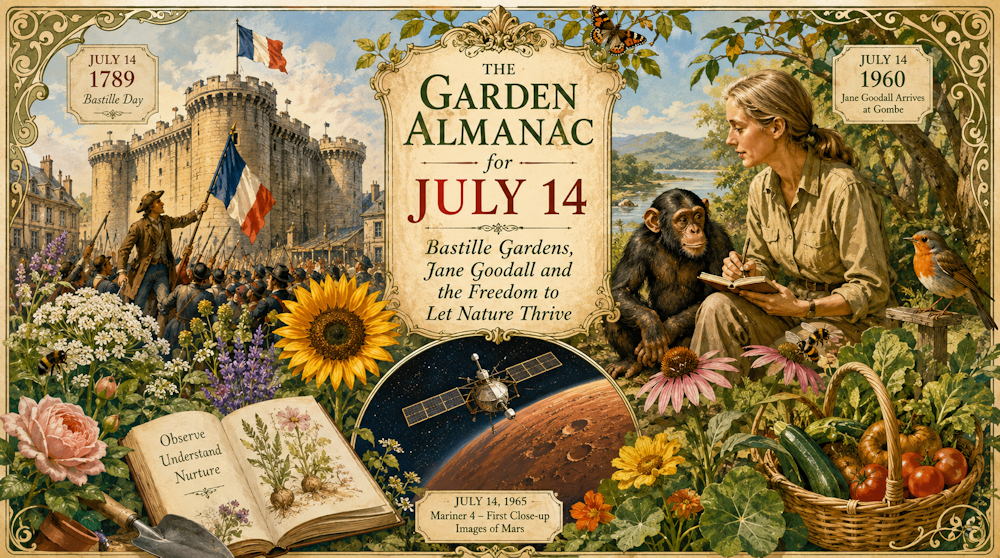
July 14, 1789 – Bastille Day and the Gardens of a New Society
The storming of the Bastille in Paris became the defining symbol of the French Revolution. Although the prison itself held only a handful of prisoners, its fall represented the desire for freedom, equality and the possibility of building a different future.
The revolution also transformed the French landscape in quieter ways. Aristocratic estates were gradually reshaped, many botanical collections became publicly accessible, and parks that had once belonged only to the privileged slowly evolved into places where ordinary citizens could walk among trees, flowers and carefully designed landscapes.
Modern community gardens follow a similar philosophy. Shared green spaces allow people from different backgrounds to grow food, exchange knowledge and strengthen neighbourhoods. A productive garden is not only a place of harvest – it is also a place where communities take root.
Garden Reminder – Is Your Summer Garden Becoming Too Dense?
Mid-July is an excellent time to improve air circulation around many crops.
- Remove yellowing lower leaves from tomatoes.
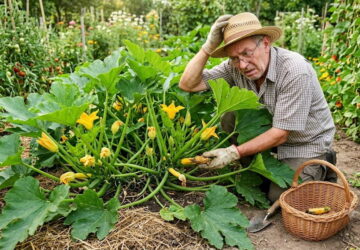
- Harvest beans, courgettes and cucumbers regularly to encourage continued production.
- Thin overcrowded herbs so sunlight reaches the centre of the plants.
- Water deeply rather than little and often, encouraging stronger root systems.
July 14, 1960 – Jane Goodall Arrives at Gombe
On July 14, 1960, a young Jane Goodall stepped onto the shores of what is now Gombe National Park in Tanzania. Her observations transformed our understanding of chimpanzees, revealing tool use, complex social relationships and personalities that challenged long-held assumptions about the boundary between humans and other animals. Today, the anniversary is celebrated as World Chimpanzee Day.
Goodall’s greatest scientific contribution was surprisingly simple: she watched patiently.
That same lesson applies beautifully to gardening. Many problems reveal themselves long before they require intervention. Aphids attract ladybirds. Leaf colour hints at nutrient balance. Pollinator activity tells us whether flowers are thriving. Careful observation often reduces the need for unnecessary chemicals or drastic action.
Healthy gardens reward those who notice small changes before they become large ones.
Garden Science – Why Does Watching Plants Every Day Matter?
Plants rarely decline overnight.
Early signs such as slight leaf curling, pale foliage or slower growth often appear days or even weeks before serious stress develops. Regular observation allows gardeners to correct watering, nutrition or pest problems while plants are still able to recover quickly.
In gardening, prevention is usually easier than cure.
Wildlife Note – Which Visitors Should You Welcome Right Now?
July gardens are among the busiest wildlife habitats of the year.
Keep an eye out for:
- Hoverflies feeding on tiny flowers while their larvae consume aphids.
- Young robins and tits learning to forage independently.
- Bumblebees visiting late-flowering perennials during the warmest part of the day.
- Frogs hiding beneath dense foliage where the soil remains cool and moist.
A shallow dish of clean water with a few stones for insects to land on can become one of the most valuable features in the garden during hot weather.
Looking Beyond Earth – Mariner 4 and a New Appreciation of Home
On July 14, 1965, NASA’s Mariner 4 spacecraft made history by returning the first close-up images ever taken of another planet during its flyby of Mars. The photographs revealed a cold, cratered landscape dramatically different from the lush world many had imagined.
For gardeners, the lesson is unexpectedly profound.
The more we discover about other worlds, the more extraordinary our own appears. Earth’s fertile soils, flowing water, forests and pollinator-rich meadows are remarkable exceptions rather than cosmic rules.
Every compost heap, flowering border and mature tree becomes part of protecting something exceptionally rare.
What to Observe Right Now
Instead of adding another task to today’s list, spend ten quiet minutes simply noticing.
Ask yourself:
- Which flowers are attracting the greatest variety of pollinators?
- Which vegetables are producing faster after recent harvesting?
- Where does moisture remain longest after watering?
- Which parts of the garden stay noticeably cooler in the afternoon?
These observations often become next season’s best gardening decisions.
A Mid-Summer Lesson in Freedom
The stories of July 14 share an unexpected connection. The French Revolution reminds us that societies can be reshaped. Jane Goodall showed that understanding begins with patient observation. Mariner 4 revealed how precious our living planet truly is when viewed against the vastness of space.
Together, they suggest that good gardening is not about controlling every corner of nature. It is about creating conditions where life can flourish – where vegetables grow abundantly, pollinators find food, wildlife finds shelter and people rediscover their place within the living landscape.
Looking Ahead
As summer reaches its height, July invites gardeners to shift from constant effort toward thoughtful stewardship. Continue harvesting generously, observe more carefully than you intervene, and leave room for the countless creatures that share your garden. The healthiest gardens are not only productive – they are resilient ecosystems, shaped by curiosity, patience and respect for the living world that surrounds us.