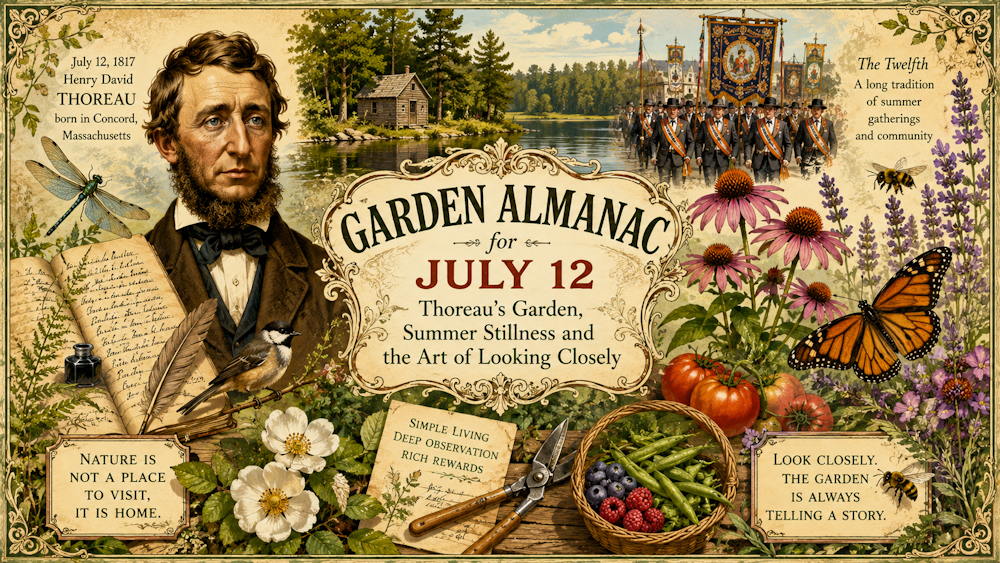

There is a particular quality to mid-July. The rush of spring has faded, the first harvests have begun, and gardens seem to settle into a quieter rhythm. Yet beneath that calm surface, every flower is feeding pollinators, every ripening fruit is storing sunlight, and every patch of soil tells a story of the season so far.
July 12 reminds us that gardens are not only places to grow plants – they are places to observe, simplify, and reconnect with the living world. It is a date linked to one of history’s greatest champions of nature, to centuries-old summer traditions, and to the timeless lesson that careful observation often reveals more than constant activity.
Henry David Thoreau – The Naturalist Who Changed How We See Nature
On July 12, 1817, Henry David Thoreau was born in Concord, Massachusetts. Best known for Walden, he spent over two years living beside a small woodland pond, documenting not only his own search for a simpler life but also the astonishing complexity of the natural world around him. His careful notes on flowering times, tree growth, birds, insects, weather and seasonal change continue to help scientists study the effects of climate change today.
Thoreau never viewed nature as scenery. He believed every walk was an opportunity to notice something previously overlooked. A single oak leaf, the arrival of dragonflies or the changing colour of pond water all deserved attention.
For gardeners, his legacy is remarkably practical. The healthiest gardens are rarely those that receive the most intervention. Instead, they belong to gardeners who notice subtle changes before they become problems – the first signs of drought stress, an unexpected beneficial insect, or a flower opening days earlier than last year.
Garden Science – Why Is Careful Observation One of a Gardener’s Best Tools?
Many plant problems become much easier to manage when detected early.
Regular observation helps you notice:
- leaves beginning to wilt before serious drought damage occurs
- the first aphid colonies before they spread
- beneficial insects arriving naturally
- fruit beginning to ripen at the perfect harvest stage
A few quiet minutes spent looking closely often prevent hours of corrective work later.
National Simplicity Day – Sometimes Less Really Does More
Because July 12 is Thoreau’s birthday, it is also widely celebrated as National Simplicity Day – an occasion that encourages people to appreciate a less complicated way of living.
That philosophy fits gardening surprisingly well.
A thriving garden is rarely the result of owning the most equipment or growing the largest number of plants. Often, the most successful gardens rely on healthy soil, appropriate plant selection and patience.
Instead of adding more, July is an excellent time to ask:
- Which plants are thriving without constant watering?
- Which flowers are attracting the greatest diversity of pollinators?
- Which areas stay naturally cool and moist?
- Which gardening jobs could actually be skipped?
Many experienced gardeners discover that simplifying maintenance often improves both plant health and personal enjoyment.
Garden Reminder – What Should You Focus On in Mid-July?
- Water deeply rather than frequently to encourage deeper root growth.
- Harvest vegetables regularly to keep crops productive.
- Remove diseased leaves promptly, especially from tomatoes and cucurbits.
- Deadhead repeat-flowering annuals and perennials where appropriate.
- Avoid heavy fertilising during hot weather, as excessive soft growth is more vulnerable to drought and pests.
Summer Celebrations and the Long Tradition of Gathering Outdoors
Across parts of Ireland, Northern Ireland, Scotland and elsewhere, July 12 has long been associated with The Twelfth, a day of outdoor parades and community gatherings rooted in historical events dating back to the late seventeenth century. While its political and cultural significance remains specific to those regions, the timing itself is no coincidence.
Mid-July has always been one of the great outdoor seasons across the Northern Hemisphere. Haymaking, early grain harvests, orchard care and long daylight hours naturally brought communities together.
Long before modern parks, many villages gathered beneath large shade trees – oaks, lindens, chestnuts or beeches – whose broad canopies provided welcome relief from summer heat. These trees became natural meeting places, reminding us that landscapes have long shaped social life as much as architecture has.
For today’s gardeners, mature trees remain among the most valuable features of any landscape. Besides cooling the air, they shelter wildlife, slow evaporation from the soil and help create more resilient gardens during increasingly frequent heatwaves.
Wildlife Note – Why Are Mature Trees So Full of Life?
A single mature tree may support hundreds of different species.
Look carefully and you may spot:
- bees collecting nectar from late summer blossoms
- hoverflies hunting aphids
- woodpeckers searching bark for insects
- butterflies resting in cool shade
- spiders building evening webs between branches
Large trees function as entire ecosystems rather than simply landscape features.
What to Observe Right Now – The Garden Is Telling You About the Rest of Summer
Mid-July offers clues about the weeks ahead.
Pay attention to:
- tomatoes beginning to change colour
- apples and pears starting their final period of fruit swelling
- butterflies becoming more numerous around nectar-rich flowers
- dragonflies patrolling ponds and wetlands
- seed heads forming on early-flowering perennials
These seasonal transitions help gardeners judge irrigation needs, harvesting schedules and the timing of late-summer planting.
Nature often provides better calendars than printed ones.
Looking Ahead
July 12 reminds us that great gardens are shaped not only by work but by attention. Henry David Thoreau showed that careful observation can deepen our understanding of both nature and ourselves. Traditional midsummer gatherings remind us that trees, fields and gardens have always been places where communities meet as well as landscapes where food is grown.
As the season reaches its warmest weeks, resist the temptation to do more simply because the calendar says so. Spend a little longer watching pollinators at work, notice how the light changes beneath a mature tree, or compare this year’s harvest with last summer’s. Those quiet observations may become your most valuable gardening lessons – helping you grow not only healthier plants, but also a closer relationship with the living world around you.