


June 22 arrives just after the summer solstice in the Northern Hemisphere, when gardens are bursting with growth and the longest days of the year are still fresh in memory. Roses are flowering, vegetables are racing upward, and pollinators are taking full advantage of the season’s abundance.
Yet this date is also linked to several remarkable moments in environmental history and scientific discovery. Together, they reveal how closely human progress, nature, and careful observation are connected.
June 22, 1969 – The River That Changed Environmental History
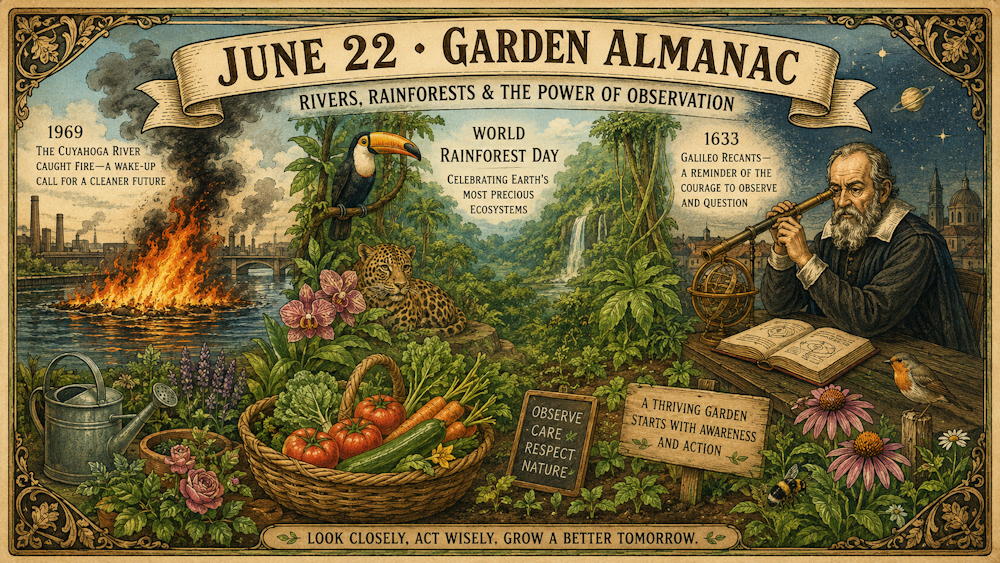
One of the most influential environmental events associated with June 22 took place in Ohio, USA, when the heavily polluted Cuyahoga River caught fire.
Although industrial pollution had caused fires on the river before, the 1969 incident became a symbol of environmental neglect. Images and reports of a burning river shocked the public and helped fuel a growing environmental movement that would eventually contribute to stronger clean-water legislation and the creation of major environmental protection programs in the United States.
For gardeners, the lesson remains surprisingly relevant today.
Every garden is connected to a larger ecosystem. Rainwater flowing from driveways, lawns, and flower beds eventually reaches streams, rivers, lakes, and groundwater reserves. Choosing compost over excessive fertilizers, reducing pesticide use, and planting vegetation that helps absorb rainfall are small actions that support healthier waterways.
Garden Reminder
- Check whether watering is really necessary before reaching for the hose.
- Use mulch to reduce evaporation.
- Avoid applying fertilizers before heavy rain is forecast.
World Rainforest Day – Celebrating Nature’s Greatest Gardens
June 22 is also recognized as World Rainforest Day, drawing attention to some of the most diverse ecosystems on Earth.
Rainforests cover only a small percentage of the planet’s land surface, yet they support an extraordinary share of global biodiversity. They regulate rainfall patterns, store vast amounts of carbon, and provide habitat for countless plant and animal species.
While most gardeners will never cultivate a tropical rainforest, many rainforest principles can inspire better garden design.
A healthy forest grows in layers. Tall trees form a canopy, smaller trees occupy the middle level, shrubs fill gaps, and groundcovers protect the soil below. This diversity creates stability and resilience.
Modern ecological gardening often follows the same idea.
Garden Inspiration from the Rainforest
- Combine trees, shrubs, perennials, and groundcovers.
- Leave some areas densely planted rather than exposing bare soil.
- Include a variety of flowering plants to support pollinators throughout the season.
- Create shelter for birds and beneficial insects.
The result is often a healthier, more self-sustaining garden that requires less intervention.
June 22, 1633 – Galileo and the Value of Observation
On June 22, 1633, Galileo Galilei was forced to recant his support for the idea that Earth revolves around the Sun.
The event is remembered as one of history’s most famous clashes between observation and accepted belief. Galileo’s work helped transform the way people understood the natural world, emphasizing evidence, experimentation, and careful observation.
Gardeners may appreciate this lesson more than most.
No book, website, or expert can fully predict what will happen in a specific garden. Every plot has its own soil, climate, pests, wildlife, and microclimates. The most successful gardeners are often the best observers.
What to Observe Right Now
Late June is an ideal time to pay attention to:
- Which plants attract the most pollinators.
- Areas where soil dries out quickly.
- Early signs of fungal disease after humid weather.
- Branches or stems that may need support before summer storms arrive.
- Vegetables that are ready for succession sowing.
A few minutes of observation each day often prevent larger problems later.
The Season in the Garden – Nature at Full Speed
In many temperate regions, late June is one of the most dynamic periods of the gardening year.
Vegetables are growing rapidly, newly planted perennials are establishing roots, and flowering plants are reaching their peak. Wildlife activity is also intense, with bees, butterflies, birds, and other beneficial creatures making the most of the season’s resources.
This abundance can make gardens feel almost effortless, but it is also the moment when small maintenance tasks have the greatest impact.
Seasonal Tasks for June 22
- Deadhead repeat-flowering roses and annuals.
- Harvest herbs regularly to encourage fresh growth.
- Check tomatoes and climbing crops for support needs.
- Monitor containers closely during hot weather.
- Continue sowing quick crops such as lettuce, radishes, and some herbs for later harvests.
The work is modest now compared with spring planting, but consistency pays dividends later in the season.
Looking Ahead
The stories connected to June 22 share a common message. Whether it is a river that helped awaken environmental awareness, a global celebration of rainforests, or Galileo’s commitment to observation, each reminds us that understanding nature begins with paying attention.
The gardens of the future will benefit from the same qualities that have always helped people work successfully with the natural world: curiosity, diversity, stewardship, and a willingness to learn from what we see. Every healthy garden, no matter how small, becomes part of that larger story.