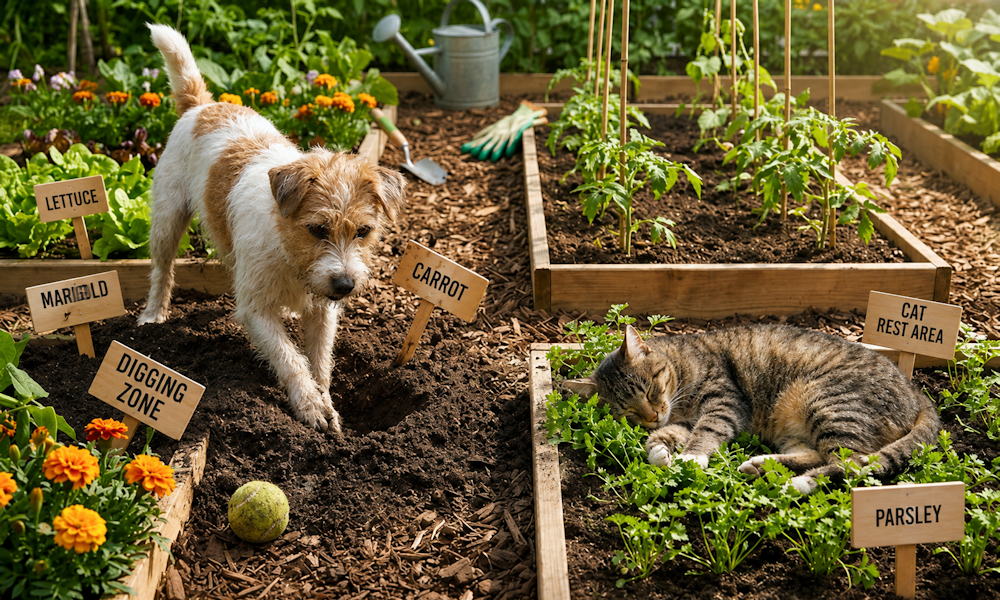

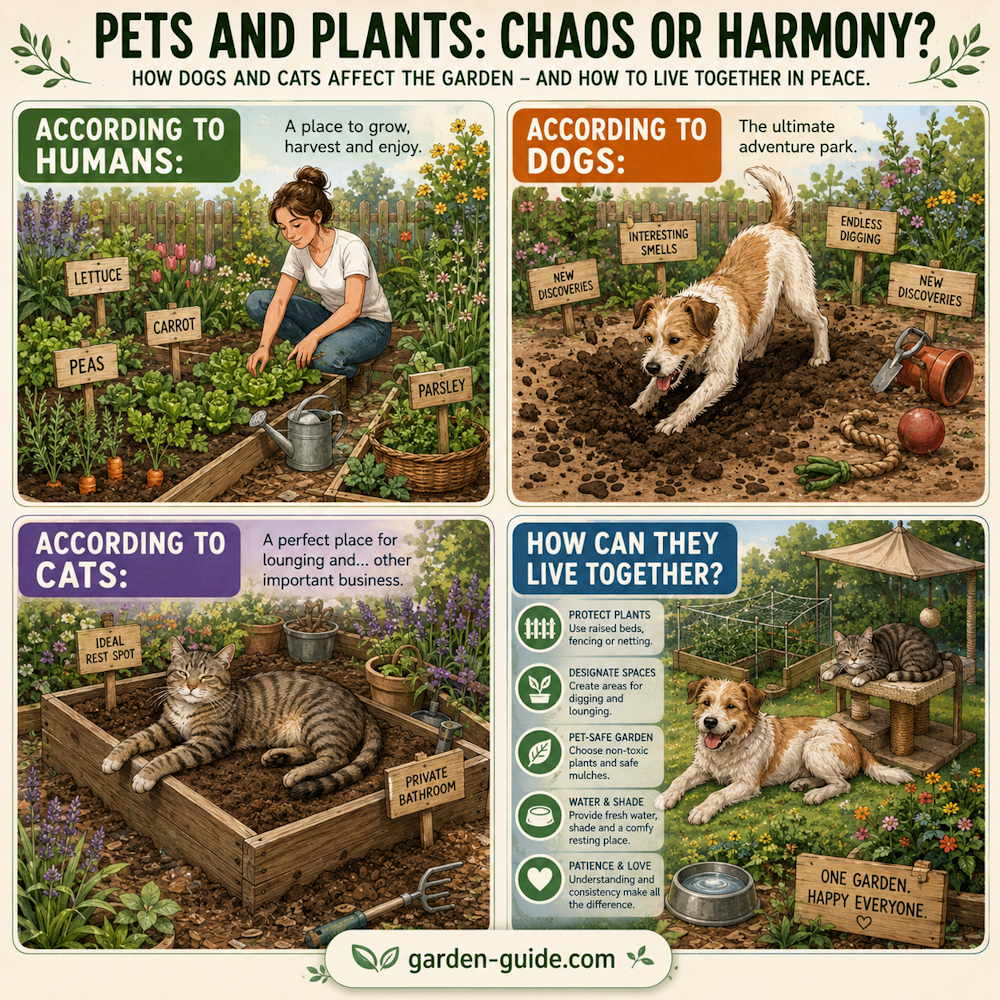
A gardener sees a neatly planned vegetable patch. A dog sees an adventure park full of fascinating smells. A cat sees a sunny observation deck with a conveniently soft bathroom area. And that’s where the trouble usually begins.
The good news? You don’t have to choose between happy pets and homegrown tomatoes. A peaceful coexistence is possible – but it rarely happens by accident. A little planning can save your seedlings from becoming unwilling participants in a four-legged action movie.
Why Dogs Dig (And Why They Don’t Care About Your Planting Plans)
Few things are more frustrating than finding a freshly planted bed transformed into an archaeological excavation site overnight.
But dogs rarely dig out of spite. They may be bored, following interesting scents, trying to stay cool, playing, or simply acting on instincts bred into them for generations. Telling them not to dig often isn’t enough if they have nowhere else to channel that behavior.
One practical solution is to create a designated digging zone. A corner with loose soil or sand can become the approved excavation area. Hide toys or treats there and many dogs quickly learn where their inner archaeologist is welcome.
Meanwhile, protecting vegetable beds with low fencing or raised beds can help keep the peace. After all, expecting a dog to ignore a freshly turned, wonderfully scented patch of soil may be asking a bit much.
The Cat’s Perspective on Gardening
Cats have their own interpretation of garden design.
Freshly cultivated soil feels luxurious under their paws, making seedbeds and vegetable plots particularly attractive. Young seedlings may be flattened during a casual stroll, while carefully prepared rows can become an unexpected litter box.
Providing alternative areas with loose soil, sand, or mulch can reduce the temptation. Strategic planting and a few physical barriers around vulnerable beds often work better than trying to negotiate with a cat. As many cat owners know, negotiations rarely succeed anyway.
Not Every Plant Is Pet-Friendly
When planning a garden, it’s worth thinking about what curious noses and teeth might encounter.
Some ornamental plants, bulbs, and other species can be harmful if chewed by dogs or cats. This is especially important for puppies, kittens, and naturally inquisitive pets that explore the world by tasting it.
Garden products deserve attention too. Fertilizers, pesticides, slug pellets, plant feeds, and even certain mulches should be stored where pets cannot access them. What helps vegetables thrive may pose a risk to a curious animal.
A pet-friendly garden doesn’t have to be a sterile one. It simply needs to be designed with the understanding that your dog gardens with its nose and your cat with its paws.
Mulch: Ground Cover or Toy Collection?
Gardeners love mulch because it helps conserve moisture and suppress weeds.
Dogs sometimes love it because it’s fun to carry around.
Some mulching materials are more tempting than others. Lightweight, strongly scented, or chunky materials can quickly become chew toys or treasures to relocate elsewhere in the garden. Cocoa shell mulch is particularly unsuitable around dogs because it can be dangerous if ingested.
If your dog treats every mulch layer as a personal challenge, consider less tempting materials or temporary protection until plants become established.
Shade, Water and a Place to Relax
Many garden conflicts have surprisingly simple solutions.
A dog that has access to fresh water, shade, and a comfortable resting place is less likely to seek relief by digging up cool soil around your vegetables. Likewise, a cat with appealing spots to lounge and observe the world may be less interested in your carefully planted lettuce bed.
Sometimes the secret to protecting the garden isn’t stricter rules – it’s making sure your pets have better options.
A Garden Shared by Everyone
The most successful gardens are often the ones that accept a simple truth: pets and gardeners experience the same space very differently.
Instead of fighting natural behaviours, work with them. Create areas where digging is allowed, protect vulnerable plants, choose pet-safe species, and make the garden comfortable for its furry residents.
Your vegetable patch may never be completely free from paw prints, but with a little planning, it can become a place where tomatoes, dogs, cats, and gardeners all manage to live happily together.