

One day you’re calmly watering your houseplants. The next, tiny black flies lift off from the soil as if an underground party has just been interrupted. They’re not fruit flies, not mosquitoes, and not a personal message from nature. They’re fungus gnats – insects belonging to the family Sciaridae – and they are far more common than most people realise. Annoying at first glance, yes. Dangerous? Not always. But once they settle in, they tend to tell a story worth listening to.
A Life Spent in the Soil
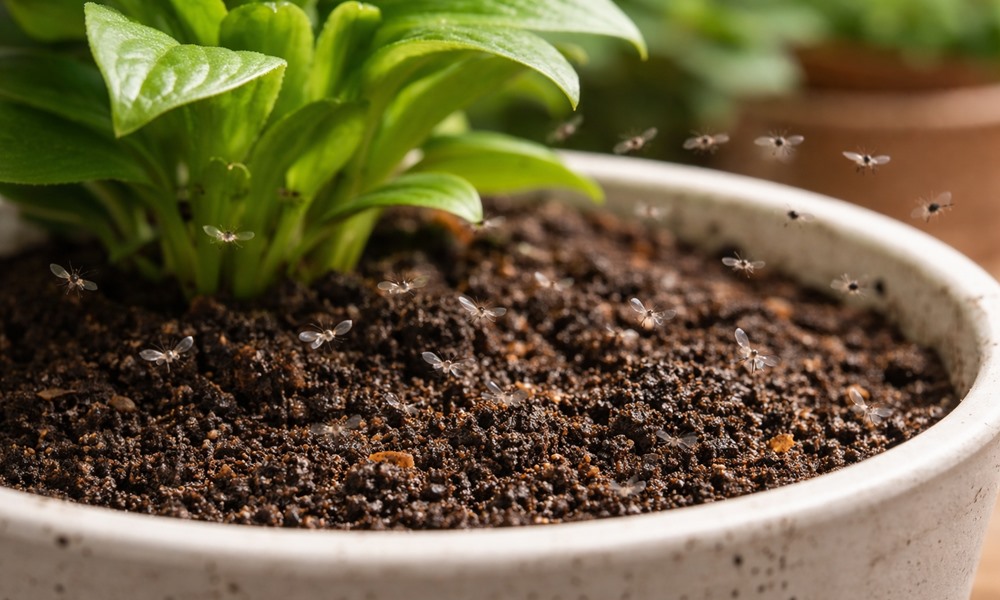
Fungus gnats are small, usually just a few millimetres long, dark-coloured insects with long legs and a slightly clumsy flight. You’ll notice them most often right after watering, when several adults suddenly rise from the potting mix.
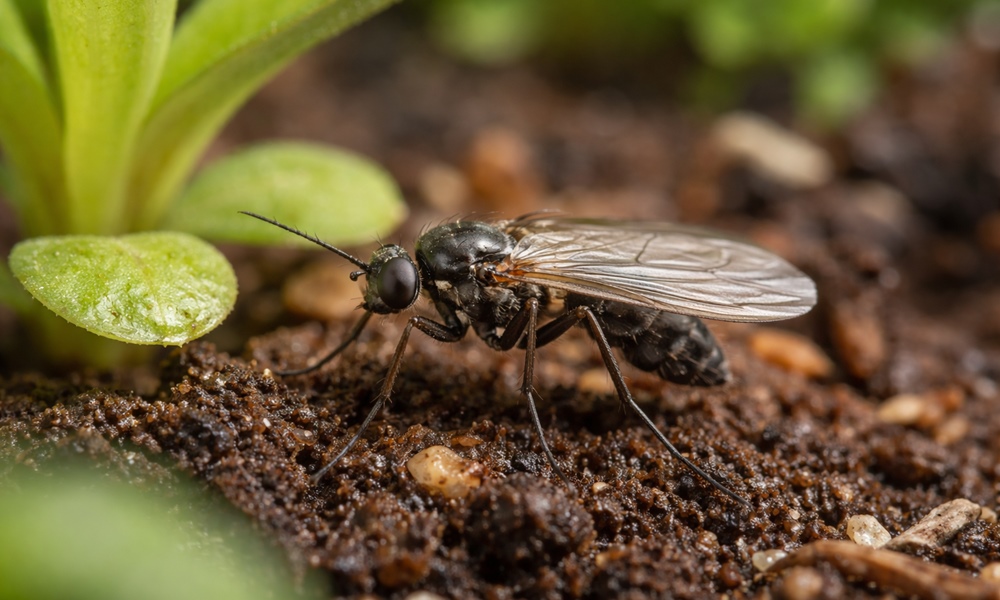
The adults themselves do very little harm. The real issue lies below the surface. Their larvae live in moist soil, feeding on organic matter – and when conditions allow, on tender plant roots as well. Seedlings, young plants, and freshly repotted houseplants are especially vulnerable.
Why They Thrive Indoors
Fungus gnats aren’t picky, but they are predictable. They favour consistently moist soil, poor drainage, and potting mixes rich in peat or organic material. Many commercial potting soils unintentionally provide the perfect nursery.
Regular watering, compacted soil, and containers without proper drainage holes create an environment where fungus gnats don’t just survive – they flourish. This is why they often arrive вместе with newly purchased plants.
Harmless Nuisance or Hidden Pest?
In small numbers, fungus gnats are mostly a cosmetic problem. They don’t bite, sting, or chew leaves. But when populations grow, their larvae can interfere with root development, slowing growth and making plants more susceptible to stress and disease.
This is where irritation turns into a horticultural issue – particularly for gardeners raising seedlings indoors.
A Fast and Efficient Life Cycle
Their success is driven by speed. A single female can lay dozens of eggs in damp soil. Within days, larvae hatch, feed, pupate, and soon produce a new generation of flying adults. Under favourable conditions, this cycle repeats rapidly.
That’s why a few stray gnats can turn into a noticeable swarm within weeks.
Fungus Gnats as a Signal
Rather than viewing fungus gnats purely as pests, it helps to see them as indicators. Their presence often signals soil that is too wet, poorly aerated, or out of balance.
In this sense, they’re less an enemy and more an inconvenient messenger, pointing to conditions that might eventually cause other problems as well.
Do You Actually Need to Control Them?
Sometimes, no. Occasional gnats appearing after watering are common and often disappear on their own. Active intervention becomes worthwhile when numbers increase, plants show signs of stress, or vulnerable seedlings are involved.
What Effective Control Really Means
With fungus gnats, control rarely means eradication. It’s about changing the conditions they depend on. Allowing the top layer of soil to dry between waterings, improving drainage, and increasing soil aeration often reduce populations dramatically – without any chemicals at all.
When Intervention Is Necessary
If numbers remain high, biological solutions are usually the most sensible option. Beneficial nematodes and products based on Bacillus thuringiensis israelensis (BTI) target larvae in the soil while leaving plants and indoor environments unharmed.
Sticky traps can help monitor and reduce adult populations, though they work best as a supporting measure rather than a standalone solution.
Chemical insecticides are rarely justified indoors. Most target only adult insects and fail to address larvae in the soil, allowing the problem to return.
When Your Plant Is Trying to Tell You Something
Dealing with fungus gnats isn’t about quick wins. It’s about restoring balance. Once the environment stops working in their favour, they quietly fade into the background.
Even a single potted plant is part of a living system. Sometimes it thanks you with flowers. Sometimes with growth. And sometimes, with a small flying reminder that something needs adjusting.