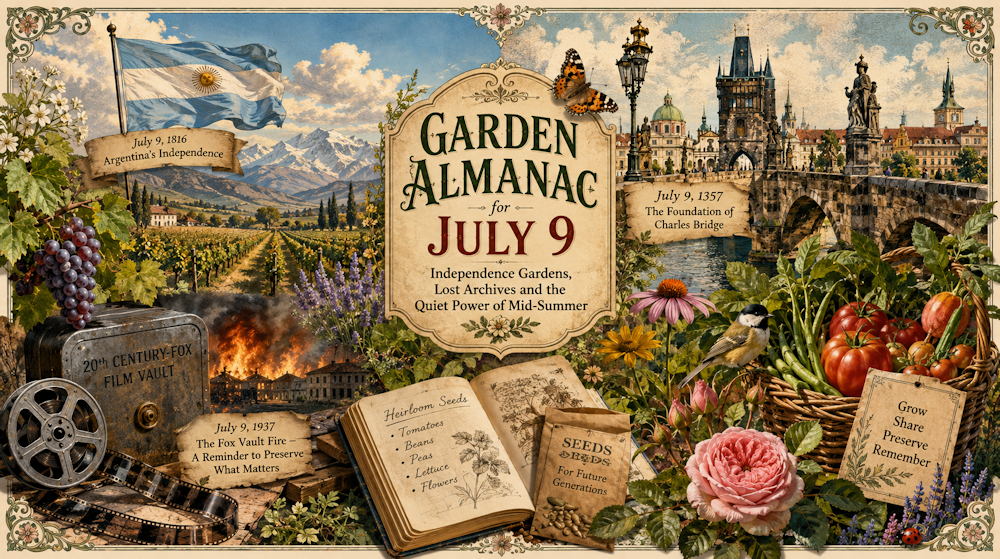

By early July, the garden has entered one of its most generous seasons. Roses may be slowing, beans are climbing higher every day, tomatoes are beginning to blush, and every dawn seems to bring another butterfly, another birdsong, another surprise hidden beneath the leaves.
July 9 is one of those remarkable dates where history and nature quietly echo one another. Across continents, it has become associated with independence, carefully built connections and the fragile importance of preserving what would otherwise be lost. Whether we look at national celebrations, ingenious engineering or cultural treasures destroyed by fire, the day reminds us that the strongest things – gardens included – are rarely created overnight.
July 9, 1937 – The Fire That Reminds Us Why Heritage Matters
On July 9, 1937, a fire broke out in a 20th Century-Fox film storage vault in Little Ferry, New Jersey. The blaze destroyed a vast number of early films, many of them silent-era originals stored on highly flammable nitrate film. For cinema history, it was a devastating loss: whole works of art, performances and cultural memory vanished in a single night.
For gardeners, the lesson is surprisingly close to home.
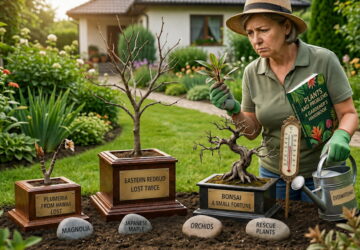
Old fruit varieties, regional vegetable strains and locally adapted flowers can disappear just as quietly. Not in a dramatic fire, perhaps, but through neglect, changing fashions, commercial uniformity or the simple failure to save seed from one generation to the next.
A heritage apple, a family bean, an old tomato variety or a locally cherished rose is more than a plant. It is a living archive of taste, climate adaptation, gardening skill and human memory.
Garden Reminder – How Can Gardeners Help Preserve Plant Heritage?
You do not need a large orchard or a specialist collection to help protect old varieties.
- Grow one or two heritage vegetables each year.
- Save seed from open-pollinated plants, not F1 hybrids.
- Label plants carefully and keep simple notes on flavour, yield and disease resistance.
- Share surplus seed with neighbours, gardening groups or seed libraries.
- Choose old fruit varieties suited to your region rather than only modern supermarket types.
A garden can be a small archive – one that flowers, feeds and renews itself.
Argentina’s Independence – A Landscape Worth Growing
On July 9, 1816, delegates meeting in Tucumán declared the independence of what would become modern Argentina. While the event belongs to political history, it also celebrates something very physical: stewardship of an immense and varied landscape, from Andean forests to fertile grasslands and vineyards.
For gardeners, this offers a useful reminder that every region develops its own gardening traditions because every landscape asks different questions.
The plants that flourish naturally in one climate often struggle in another. Successful gardening rarely comes from copying fashionable planting schemes – it comes from observing local rainfall, soils, native insects and seasonal rhythms.
A garden becomes healthier when it works with its environment rather than against it.
Garden Science – Why Do Native Plants Often Need Less Care?
Native species have evolved alongside local soils, rainfall patterns, fungi, pollinators and wildlife over thousands of years.
Because of these long relationships, they often:
- require less supplemental watering once established,
- support a greater diversity of insects and birds,
- cope better with local pests and weather extremes,
- fit naturally into existing ecological cycles.
That doesn’t mean exotic plants have no place, but including even a modest proportion of native species can noticeably increase the ecological value of a garden.
A Bridge Built on Numbers – And What Gardens Can Learn from It
According to Czech tradition, construction of Prague’s famous Charles Bridge began on July 9, 1357, at the unusually precise time of 5:31 a.m. The carefully chosen moment formed the numerical sequence 1357 9/7 5:31, believed by Emperor Charles IV to bring strength and good fortune. Whether or not the numerology mattered, the bridge itself certainly did – it has connected people for centuries.
Gardens, too, are built through connections rather than isolated features.
A pond supports dragonflies that hunt mosquitoes. Flowering herbs feed pollinators that later visit vegetables. Shrubs provide nesting places for birds that help control caterpillars.
The healthiest gardens are not collections of individual plants. They are living networks.
Wildlife Note – What Creates the Greatest Biodiversity?
One of the most effective ways to increase wildlife is to combine several habitat types within a small area.
Even an ordinary garden becomes richer when it includes:
- flowering plants across different seasons,
- a few shrubs or small trees,
- shallow water,
- patches of undisturbed leaf litter,
- dead wood or old branches left in discreet corners.
Each feature supports different species, creating a more stable garden ecosystem.
Mid-Summer Is Watching Season
Early July is no longer the frantic planting season of spring. Instead, it becomes the season of observation.
This is when gardeners begin noticing which vegetables truly thrive in their soil, which flowers attract the greatest variety of pollinators and which corners remain surprisingly dry after rainfall.
Many of the best decisions for next year’s garden begin with careful observation now.
What to Observe Right Now
Take a slow walk through your garden and look for:
- tomatoes beginning to change colour,
- second flushes of flowering on repeat-blooming roses,
- bees favouring certain flowers over others,
- butterflies laying eggs beneath leaves,
- birds collecting insects to feed growing fledglings,
- signs of powdery mildew before it spreads.
Observing these small changes early often prevents much larger problems later in the season.
Looking Ahead
The stories attached to July 9 all share a quiet lesson. Whether preserving a living variety before it disappears, celebrating a nation’s landscape, or building a bridge designed to outlast generations, lasting success comes from thinking beyond today.
Gardens ask the same of us. Every compost heap enriches future soil. Every seed saved protects a fragment of living history. Every flowering border helps sustain the pollinators that future harvests will depend upon.
Perhaps that is the true spirit of this July day – building living connections that continue to grow long after the work itself is finished.