
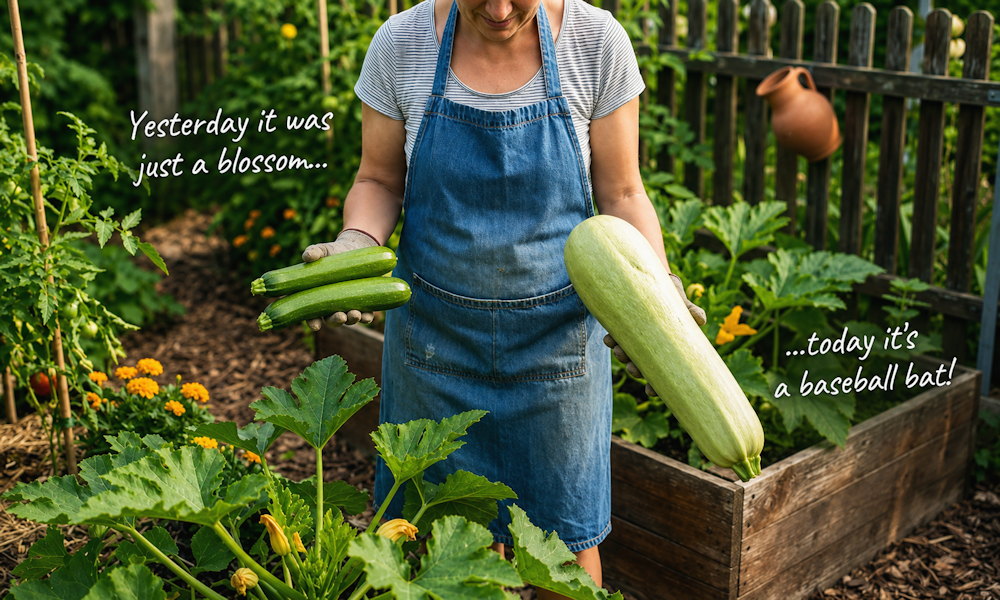

Zucchini has a wonderful sense of timing—just not yours.
One day you’re admiring its cheerful yellow flowers, thinking everything is under control. A day or two later, there’s a giant fruit hiding beneath the leaves that seems to have skipped the “vegetable” stage and gone straight to sporting equipment.
Anyone who has ever grown zucchini knows one simple truth: this is not a crop for the “I’ll harvest it tomorrow” approach.
Why does zucchini grow so fast?
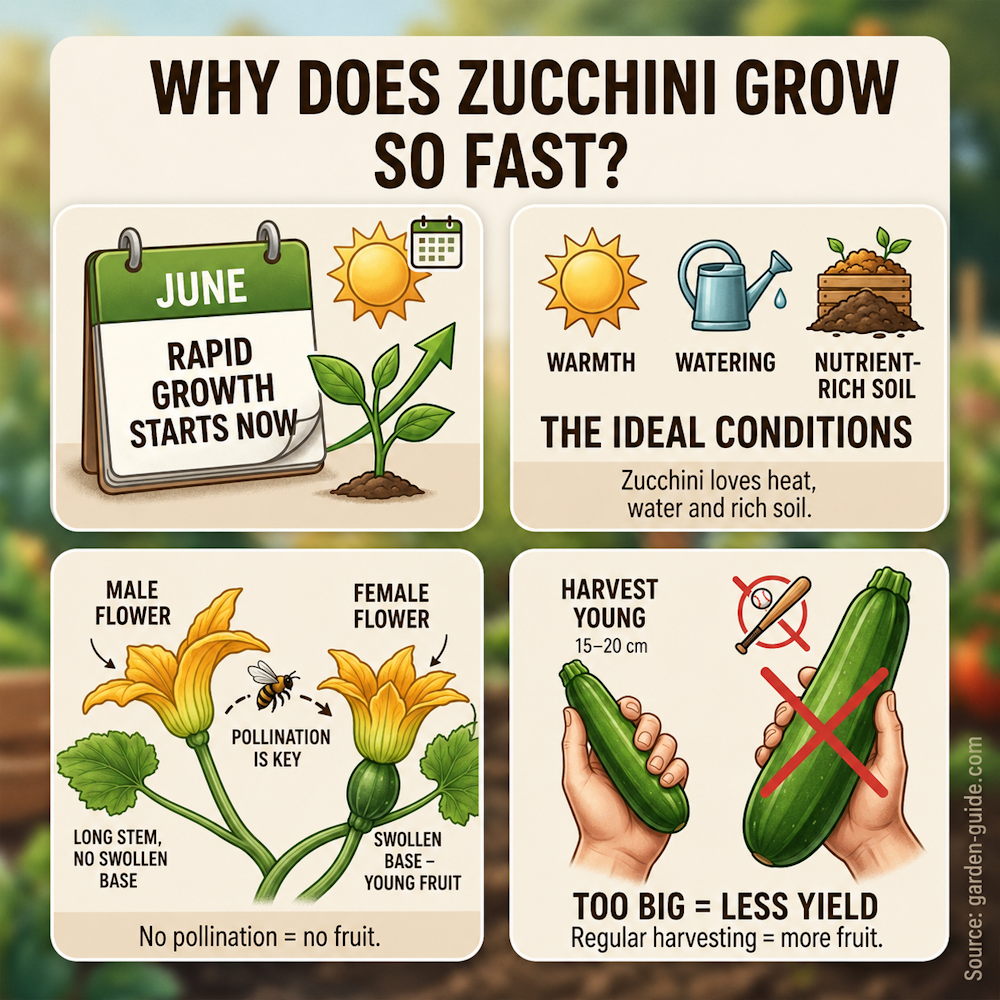
Once early summer arrives, zucchini shifts into high gear. Warm temperatures, rich soil, regular watering and plenty of sunshine create almost perfect growing conditions, allowing fruits to enlarge at an astonishing pace.
Unlike many vegetables, zucchini doesn’t wait politely for your weekend gardening session. Under ideal conditions, a fruit can gain several centimetres (or inches) in just a couple of days.
That’s part of its charm—but also part of the challenge.
When should you harvest zucchini?
For most varieties, the best flavour and texture come from harvesting while the fruits are still young and tender.
Young zucchini typically have:
- thin, delicate skin
- firm, juicy flesh
- small, soft seeds
- excellent flavour
- versatility in the kitchen
If left on the plant too long, the skin thickens, the seeds mature, and the flesh can become watery, fibrous or coarse. Oversized fruits also encourage the plant to put more energy into ripening existing zucchini instead of producing fresh ones.
The lesson is simple: frequent harvesting usually means more zucchini over the season.
Is an oversized zucchini useless?
Not at all.
An enormous zucchini may be less appealing for quick sautéing, but it can still be delicious in many recipes. Large fruits work particularly well for:
- stuffed zucchini
- soups
- grated into fritters
- baked dishes
- cakes and muffins
- freezing for later use
Still, if your goal is a steady supply of tender, flavourful zucchini, don’t let every fruit grow to giant proportions.
Why is the end of my baby zucchini turning yellow and rotting?
One of the most common disappointments is seeing a tiny zucchini begin to develop, only for its tip to soften, yellow and eventually rot.
In many cases, the culprit is poor pollination.
If the female flower doesn’t receive enough pollen, the young fruit simply stops developing.
Other contributing factors may include:
- too few pollinating insects
- cool or rainy weather
- prolonged high humidity
- drought stress
- irregular watering
- general plant stress
If only a few fruits are affected, there’s usually no reason to worry. Remove the damaged ones and allow the plant to continue producing new flowers.
Male and female flowers: why doesn’t every flower become a zucchini?
Many beginner gardeners are surprised to discover that zucchini plants produce two different kinds of flowers.
Female flowers have a tiny miniature zucchini directly behind the blossom. Male flowers grow on long, slender stems without any swelling at the base.
For fruit to develop, pollen from a male flower must reach a female flower, usually with the help of bees and other pollinating insects.
It’s also perfectly normal for plants to produce mostly male flowers early in the season. Female flowers generally appear in greater numbers as the plant matures.
How should you water zucchini?
Zucchini is a thirsty plant with large leaves that lose significant amounts of water through evaporation.
For healthy growth:
- water deeply rather than lightly
- keep the soil consistently moist but not waterlogged
- water around the base of the plant
- avoid wetting the leaves whenever possible
- apply mulch to help conserve soil moisture
Long periods of drought followed by heavy watering can stress the plant and reduce fruit quality.
White patches or powdery mildew?
Not every white marking on zucchini leaves signals disease.
Many varieties naturally have silvery or pale marbling on their foliage. This attractive pattern is completely normal.
Powdery mildew, however, looks different. Watch for:
- a white, powder-like coating
- patches that spread over time
- curling or drying leaves
- symptoms appearing on multiple leaves or plants
Good air circulation, careful watering and removing badly infected leaves can help reduce the problem.
Should you prune zucchini?
Heavy pruning isn’t necessary.
However, removing damaged, diseased or ageing leaves can improve airflow, make harvesting easier and help you spot developing fruits before they become unexpectedly enormous.
Just don’t remove too many leaves at once—the plant still relies on them to produce energy.
The goal isn’t a naked zucchini plant, but a healthy, well-maintained one.
What should you do with a mountain of zucchini?
This is one of gardening’s happiest problems.
At first, every fruit feels like a small victory. A few weeks later, family, friends and neighbours may suddenly become very good at avoiding eye contact when you approach carrying another basket.
Fortunately, zucchini is remarkably versatile.
Try it:
- grilled
- roasted
- in stir-fries
- in soups
- as fritters
- layered into casseroles
- spiralised into “zoodles”
- pickled
- grated into cakes, muffins or quick breads
Its mild flavour blends beautifully into countless dishes—sometimes so well that nobody even notices it’s there.
The real secret to great zucchini
There’s no complicated trick.
Successful zucchini growers simply make a habit of checking their plants every day or two during the peak season.
Regular harvesting, consistent watering, healthy pollination and a quick look at the leaves are usually enough to keep plants productive for weeks.
With zucchini, the biggest surprise isn’t how fast it grows.
It’s how quickly “I’ll pick it tomorrow” becomes “Where did this giant come from?”
Frequently Asked Questions
When is the best time to harvest zucchini?
Harvest when the fruits are young and tender, before the skin thickens and the seeds become large.
Why do baby zucchini rot before growing?
Poor pollination is the most common cause, although cool weather, excessive humidity, drought stress and inconsistent watering can also contribute.
Does zucchini need pruning?
Not much. Simply remove damaged, diseased or overcrowded leaves to improve airflow and make harvesting easier.
Why are my zucchini leaves turning white?
Some zucchini varieties naturally have pale or silvery leaf markings. If you see a powdery white coating that spreads across the leaves, it’s more likely to be powdery mildew.