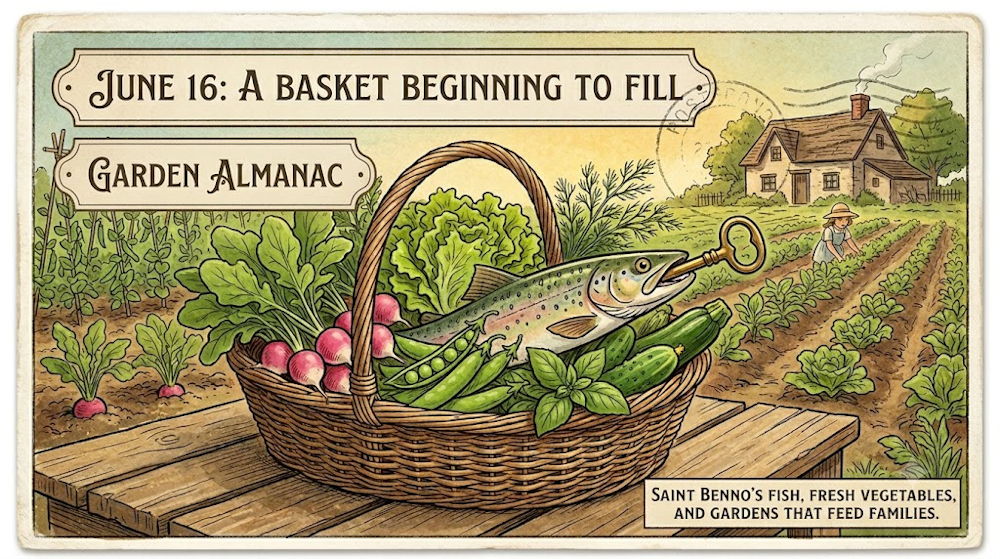

June 16 brings an unexpected but fruitful combination into the Garden Almanac: Saint Benno’s fish, a lost key, fresh vegetables, summer harvest timing, and the gardens that help feed families.
It is not one of the great weather-lore days of the year. It does not arrive with thunder, forty days of rain, or famous harvest omens. Instead, June 16 speaks in a quieter voice: the voice of a basket beginning to fill.
Around this time, kitchen gardens start to shift from promise to use. Lettuce, radishes, peas, herbs, spring onions, early cucumbers, courgettes, chard or other tender crops may begin moving from soil to table. The garden is no longer only being tended. It is beginning to feed.
Saint Benno and the Key in the Fish
June 16 is the feast day of Saint Benno of Meissen. One of the best-known legends connected with him tells of keys thrown into the Elbe River and later found inside a fish.
It is a memorable image: something lost in water, hidden from human sight, returned through a creature of the river. Because of this legend, Saint Benno is often shown with a fish and a key.
For the Garden Almanac, the image is useful and beautiful.
Gardens also return lost things. A forgotten dill plant reseeds itself. An old bean variety survives in someone’s envelope. A method dismissed as old-fashioned suddenly proves useful again. A patch of soil that seemed exhausted comes back to life with compost, water and time.
The key to abundance is not always new. Sometimes it has been waiting inside an old story.
Fresh Vegetables and the Summer Basket
June 16 is also marked in some modern calendars as Fresh Veggies Day. Whether treated as a lighthearted observance or simply a good seasonal reminder, it fits the kitchen garden beautifully.
Fresh vegetables are not only ingredients. They are timing.
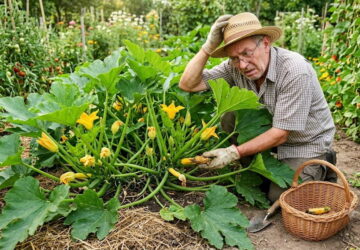
A radish must be picked before it turns woody. Peas are sweetest before they harden. Lettuce is best before heat pushes it toward bitterness or bolting. Courgettes are tender when young and comically oversized if ignored for too long. Herbs are most fragrant when cut with care before they become tired or coarse.
The summer basket asks the gardener to pay attention daily.
Freshness is not a storage method. It is a moment.
Harvest Timing Is Garden Wisdom
A good gardener does not only know how to grow. They know when to harvest.
Morning is often best for many fresh crops, before heat drains them. Leafy greens and herbs should be kept cool and shaded. Peas should be shelled or cooled soon after picking. Cucumbers and courgettes should be checked often. Damaged produce should be separated from sound produce. Herbs can be used immediately, dried carefully, or stored in ways that preserve their flavor.
The journey from garden to table is part of gardening.
Food can lose quality quickly after harvest, especially in summer heat. A vegetable grown well deserves to be handled well.
Water Is the Hidden Key
Saint Benno’s fish leads naturally to water, and water is the hidden key of the summer vegetable garden.
Radishes, lettuce, cucumbers, courgettes, peas and herbs all respond quickly to uneven moisture. Too little water can mean bitterness, toughness, poor growth, stress or bolting. Too much water can bring rot, disease, weak roots or damaged quality.
Watering is not just an action. It is judgment.
When? How deeply? How often? Onto what soil? Under mulch or bare ground? In the morning or evening? For which crop? After rain or before heat?
The garden’s key is not simply more water. It is better water wisdom.
Family Remittances and Rural Gardens
June 16 is also the International Day of Family Remittances, a global observance recognizing the money sent home by migrant workers to support families and communities. Much of this support reaches rural households, where it may help pay for food, education, health care, housing, farming needs or small improvements that strengthen family resilience.
This may seem far from a basket of vegetables, but the connection is real.
For many families, gardens are not hobbies. They are part of survival, dignity and household strategy. A small kitchen garden may not solve every problem, but it can help feed a family, reduce dependence on purchased food, add freshness to the diet, preserve cultural food habits and provide a little security.
Money sent home may become school fees, medicine, seed, tools, irrigation, a repaired roof, or simply enough stability to keep a household going.
The garden is often one place where family care becomes visible.
Gardens That Feed More Than Appetite
A vegetable garden feeds appetite, but it can also feed memory, skill, confidence and connection.
A child learns where peas come from. An older gardener passes on a variety that works in that soil. A neighbor receives extra cucumbers. A family recipe returns when the herbs are ready. A migrant worker’s remittance becomes a water tank, seed packet or improved bed. A small plot becomes part of a larger web of care.
Food is never only food.
Fresh vegetables carry water, sunlight, labor, memory, timing and household hope.
Sharing the Surplus
Summer gardens rarely produce in perfect portions. They often arrive in waves.
Too many courgettes. Too many cucumbers. Too much basil. A sudden rush of beans. A basket of peas that needs shelling now, not in three days.
This is when the garden becomes social.
Sharing surplus is one of the oldest garden customs. A bunch of herbs, a bag of beans, seedlings, saved seed, fruit, jam or a bowl of fresh vegetables can strengthen relationships. It can also prevent waste.
Abundance is healthiest when it circulates.
What June 16 Teaches
June 16 teaches that the key to garden abundance is timing, water, handling and sharing.
Saint Benno’s fish reminds us that what seems lost may be returned.
Fresh vegetables remind us that quality is fleeting.
Family remittances remind us that food, money, care and resilience travel through families in many forms.
The kitchen garden reminds us that small harvests matter.
In the Garden Almanac on this day, the first summer basket becomes a kind of key.
Pick at the right moment.
Keep it cool.
Use it well.
Share what you cannot use.
Do not let the garden’s gift become waste.
The door to abundance opens quietly.
Often, it looks like a radish, a pea pod, a handful of herbs, and a basket carried in from the garden.