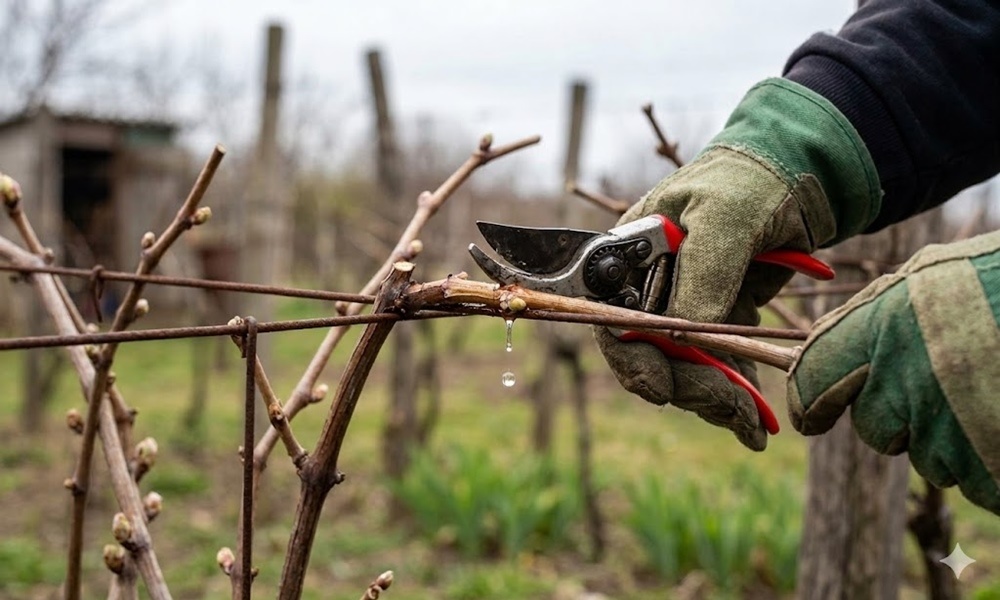

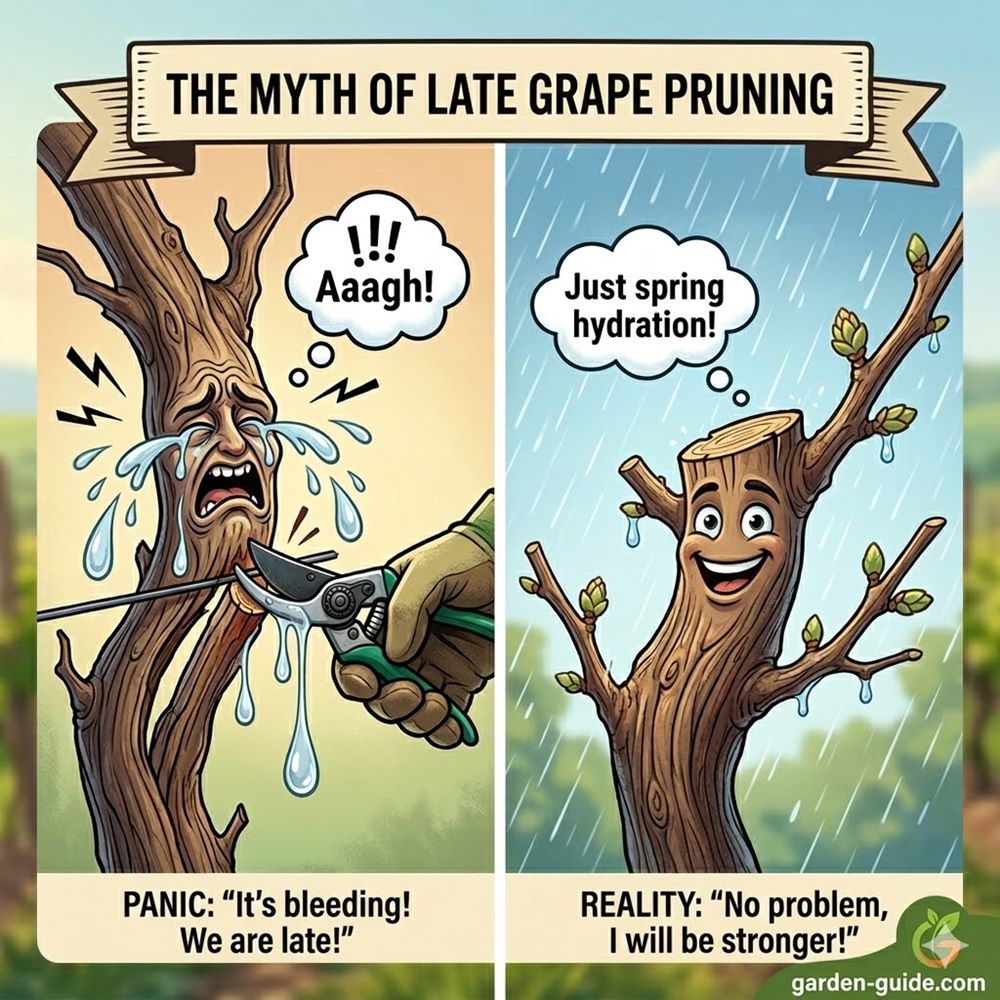
Late winter and early spring pruning often raises the same question among home gardeners: have we already missed the right moment? Grapevines behave differently from many fruit trees. When pruning happens after the plant’s internal sap flow has started, clear liquid may drip from the cuts. This phenomenon is known as “vine bleeding”. Although it looks alarming, it is usually a natural physiological response rather than a serious problem.
What Causes Vine Bleeding?
As soil temperatures rise in early spring, grapevine roots begin absorbing water again. Root pressure pushes water and dissolved nutrients upward through the vine. If pruning cuts are made during this period, sap may flow out of the fresh wounds.
Bleeding typically occurs when:
- soil temperatures start increasing,
- buds begin swelling,
- the plant exits winter dormancy.
Sap may drip for several hours or even days after pruning.
Does Bleeding Harm the Plant?
In most cases, no. Grapevines are resilient plants, and the temporary loss of sap rarely causes lasting damage. However, pruning very late can disrupt early growth. When the vine has already mobilized its energy reserves, cutting back shoots may delay bud break or reduce the uniformity of new growth.
Possible effects of very late pruning include:
- delayed shoot development,
- uneven vine growth,
- slightly reduced yield.
For small garden vines these impacts are usually minor.
The Ideal Pruning Window
The best pruning period for grapevines is late winter, typically before sap flow begins. In many climates this means sometime between late January and early March.
Signs that pruning conditions are still ideal include:
- buds remain closed,
- canes appear dry,
- no sap is visible at fresh cuts.
When buds begin swelling, pruning is still possible but the optimal window is closing.
What If You Missed the Timing?
Many gardeners simply do not manage to prune their vines in February. If pruning happens later, the best approach depends on the plant’s stage of development. If buds are only beginning to swell and bleeding is minimal, pruning can still be performed with care.
If the vine is already bleeding heavily or bud break is imminent, a lighter approach is often wiser. Instead of heavy pruning, remove only damaged or poorly positioned canes and adjust vine structure later through summer pruning and shoot thinning.
Grapevines Are Surprisingly Forgiving
Viticulture traditions often emphasize precise timing. In commercial vineyards this matters greatly because uniform growth and yield are essential. In home gardens, however, grapevines are far more forgiving.
A slightly late pruning rarely ruins the season. With reasonable care the vine can still produce healthy growth and a good crop. The bigger mistake is often avoiding pruning entirely out of fear of doing it wrong.
Even a slightly imperfect pruning is usually better than none at all.