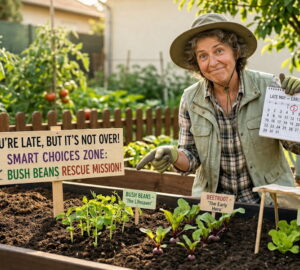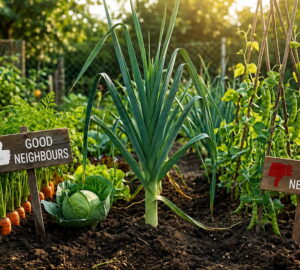


In February, there’s no digging, no sowing, no hoeing. The vegetable beds are often empty, the soil is cold, and the tools are still resting. That’s exactly why it sounds strange to say: this is when one of the most important decisions should be made. This isn’t about physical work — it’s about mental groundwork. Crop rotation doesn’t really get decided in spring, when it suddenly feels convenient to plant everything exactly where it performed well last year.
The comfort trap
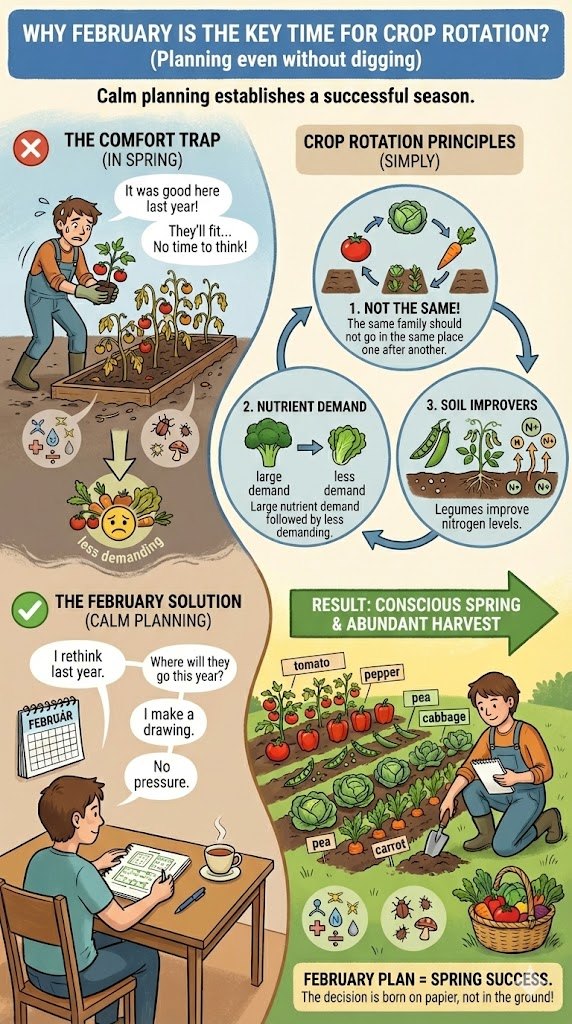
It’s a familiar scenario: last year your tomatoes thrived at the end of the bed. It feels logical to place them there again. Peppers were nearby too? They’re related — surely that’s fine. But soil has a long memory.
Plants with similar needs draw on the same nutrients and are vulnerable to the same pests and diseases. When they return to the same spot year after year, the soil gradually depletes, pathogens build up, and yields decline — even if everything else seems well managed.
Why February is the key moment
Because there’s no pressure yet. No seedlings waiting, no sowing schedule slipping, no rushed decisions made in muddy boots.
In February, there’s time to:
- review what grew where last season,
- sketch out this year’s layout,
- think in plant families (nightshades, legumes, brassicas, and so on),
- even draw a simple plan on paper.
A couple of thoughtful hours now can shape the entire growing season.
Crop rotation doesn’t have to be complicated
You don’t need scientific charts. A few core principles go a long way:
- avoid planting the same plant family in the same spot consecutively,
- follow heavy feeders with lighter feeders,
- remember that legumes (such as peas and beans) can enrich soil nitrogen and make excellent predecessors.
When this thinking happens in February, spring planting becomes deliberate rather than instinctive.
It matters even before the soil is worked
Many gardeners assume rotation only becomes relevant once the soil is being prepared. In reality, the decision is made on paper long before a spade touches the ground.
By the time you’re standing in the garden with trays of seedlings in hand, it’s often too late to rethink placement calmly. Convenience and time pressure tend to win.
The best kind of February gardening
When the garden is quiet, that doesn’t mean there’s nothing to do. Planning crop rotation is one of the least visible — yet most effective — late winter tasks.
Exactly when this planning phase falls depends on climate. In cool–temperate regions it often aligns with late winter, while in milder areas it may happen earlier and in colder climates slightly later. The principle remains the same everywhere: decisions made before the rush lead to stronger seasons.
Right now, it’s still easy to make good choices. In spring, you simply follow the plan.