

October begins with a particular kind of quiet. The year has not ended, but the garden has already changed its voice: apples are stored, seedheads are standing, late flowers are feeding the last busy insects, and the soil is beginning to ask for rest.
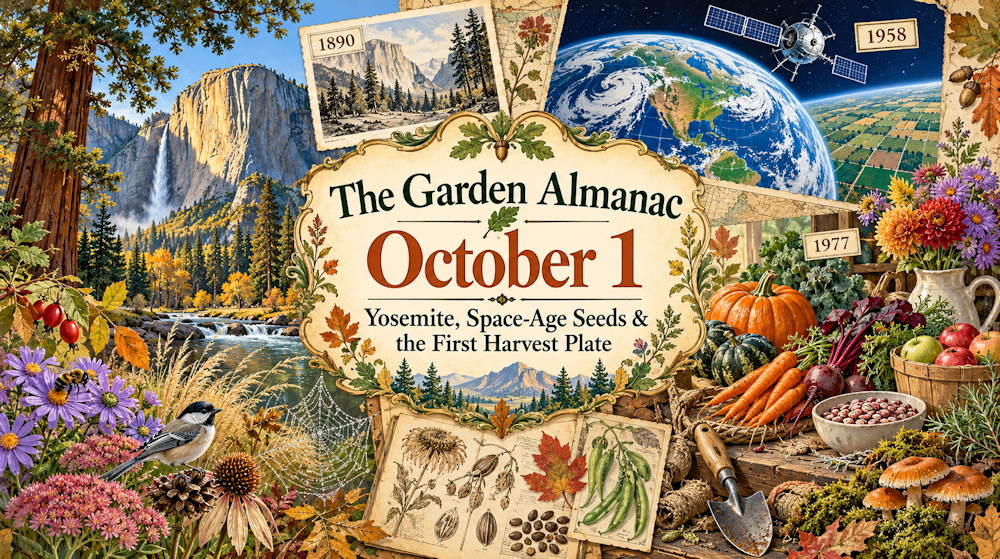
October 1 is a fine date for looking both outward and inward. It carries stories of protected landscapes, space-age science and the food choices that begin in ordinary garden soil. In the Garden Almanac, this is a day when mountains, satellites and autumn vegetables belong surprisingly well together.
October 1, 1890 – Yosemite and the Idea of Protecting a Whole Landscape
On October 1, 1890, Yosemite National Park was created, protecting one of the most dramatic mountain landscapes in North America. Granite cliffs, waterfalls, ancient trees, alpine meadows and forested valleys made Yosemite more than a scenic place: it became a powerful argument that some landscapes should be preserved not only for use, but for wonder, study and continuity.
For gardeners, Yosemite’s deeper lesson is scale. A garden may be small, fenced and personal, but it is never separate from the larger living world. The health of a flower border depends on insects, soil organisms, birds, fungi, weather patterns and nearby habitats. Yosemite reminds us that beauty is not only found in single specimens, but in relationships: meadow and pollinator, tree and soil, stream and root.
The park’s creation also points to a change in how people began to think about land. Nature was not simply raw material; it was a living system worth protecting before it was damaged beyond repair. In the garden, this same idea can be practiced in modest but meaningful ways: leaving a strip of unmown grass, planting native or well-adapted species, avoiding unnecessary chemicals and allowing some autumn seedheads to stand.
Garden Inspiration
A garden does not need to imitate a national park to borrow its wisdom. Think in layers and habitats:
- trees and shrubs for shelter
- flowers for nectar and pollen
- fallen leaves for soil life
- water for birds and insects
- quiet corners where nature can complete its own work
Garden Science – Why Autumn Leaves Matter More Than They Seem
Fallen leaves are not garden waste. They are a slow-release soil resource, habitat and protective blanket in one. As they break down, fungi, bacteria and small soil animals turn them into organic matter that improves soil structure and moisture retention.
A thin layer of leaves under shrubs or around perennial beds can protect roots from sudden temperature swings. It also gives overwintering insects a place to survive. The tidy autumn garden may look controlled, but the slightly looser autumn garden is often more alive.
If leaves are thick, wet and smothering the lawn, move them into borders, compost bays or leaf-mould piles. By next year, they will be on their way to becoming one of the gentlest soil improvers a gardener can make.
October 1, 1958 – NASA Begins, and Gardens Gain a View from Above
On October 1, 1958, NASA officially began operations. At first glance, space exploration may seem far from the garden gate, but one of the great gifts of the space age has been a new view of Earth itself. Satellites changed how people observe weather, drought, forests, crops, fires, soil moisture and seasonal change.
For gardeners and farmers, that wider view matters. Weather forecasting, climate monitoring and crop observation are now deeply connected to space-based science. The same impulse that sends instruments beyond the atmosphere also helps us understand when plants are stressed, how landscapes dry out, where forests are changing and how growing seasons are shifting.
NASA also made plants part of a larger question: how does life grow beyond Earth? Experiments with seeds, roots, light, water and controlled environments have sharpened our understanding of plant needs. A greenhouse, a windowsill seed tray and a space-growth chamber all ask a version of the same question: what does a plant require in order to thrive?
For today’s gardener, the lesson is both grand and practical. Observe carefully. Measure when useful. Notice patterns. The garden becomes easier to understand when we stop seeing each problem as isolated and start reading the whole system: light, water, temperature, soil, airflow and timing.
Garden Reminder
Early October is a good moment to prepare the garden for the slower season:
- collect seeds from healthy annuals and perennials
- plant spring bulbs where the soil is workable
- remove diseased foliage, but leave clean seedheads for wildlife
- mulch bare soil before heavy rain compacts it
- check stored fruit and vegetables regularly
- clean tools before winter damp settles in
October 1, 1977 – World Vegetarian Day and the Garden on the Plate
World Vegetarian Day was established on October 1, 1977, and it gives this date a particularly strong connection to gardens, harvests and the everyday choices that link food to land. A vegetable garden is never just a place of production. It is a small education in seasonality, patience and dependence on healthy soil.
By October, the vegetable plot often has two moods at once. Summer crops may still be fading at the edges, while autumn harvests are coming into their own: pumpkins, beans, late tomatoes, leafy greens, carrots, beetroot, leeks and herbs tough enough to enjoy cooler mornings. This is a good date to notice how generous a plant-based meal can be when it follows the season rather than fights it.
The ecological connection is also clear. Growing even a portion of one’s own food makes water, compost, pollination and soil fertility visible. It turns abstract environmental questions into practical decisions: what to plant, how much to waste, how to feed the soil, how to use leftovers and how to make a garden productive without exhausting it.
For gardeners, the useful lesson is not perfection, but attention. A small bed of salad leaves, a pot of herbs or a row of autumn spinach can change the way a household thinks about food. The garden teaches that meals begin long before the kitchen – in seed, weather, soil and care.
Seasonal Tips – The October Kitchen Garden
October is a bridge month in many temperate gardens. It is still active, but its work is different from summer’s rush.
Good jobs for this moment include:
- sowing hardy green manures on empty beds
- planting garlic and autumn onion sets where conditions allow
- harvesting pumpkins before hard frost
- lifting carrots or beetroot as needed
- cutting herbs for drying or freezing
- adding compost to cleared beds
- covering tender crops on cold nights
Avoid stripping the garden too bare. Some roots, leaves and stems can protect soil life, while selected seedheads support birds and insects through the colder months.
Wildlife Note – The Garden After the Flowers
By October, the showiest flowers may be fading, but the wildlife value of the garden can remain high. Late nectar plants such as asters, sedums, salvias and ivy can be important for insects still active on mild days. Seedheads of sunflowers, coneflowers and grasses may feed birds, while leaf litter shelters many small creatures that gardeners rarely see.
This is the season when restraint becomes a gardening skill. Cutting everything down at once may create neatness, but it can also remove food and shelter just when wildlife needs them. A better approach is selective tidying: clear what is diseased, dangerous or truly in the way, and leave some structure standing until late winter.
A living autumn garden is not messy by accident. It is textured, useful and full of quiet transactions.
What to Observe Right Now
Early October rewards slow looking. The garden is full of small signals that show the season turning.
Watch for the change in morning light, the first heavier dew on grass, berries softening on shrubs and spiders’ webs becoming visible between stems. Notice which flowers still attract insects, which leaves colour first and which plants hold their shape as others collapse.
These observations are more than pleasant details. They help gardeners understand their own microclimate. The coldest corner, the dampest bed, the sunniest wall and the most sheltered potting area all reveal themselves clearly at this time of year.
Looking Ahead
October 1 brings together three ways of seeing the living world: protecting landscapes, observing Earth from above and growing food with greater awareness. Each of these stories asks gardeners to look beyond the single plant and notice the system around it.
The future of gardening will depend on this wider vision. Gardens can feed, shelter, cool, connect and restore, even when they are small. As October begins, the best work may be simple: protect the soil, notice the season, share the harvest and leave enough life in the garden for tomorrow.