
By September 24, a garden in the Northern Hemisphere has begun to reveal its plans for winter. Sunlight falls across different beds than it did in June, late flowers are crowded with insects, and each cleared vegetable plot presents a choice: leave the soil bare or give it a living cover.
This date also opens three rather different doors. It recalls a Tasmanian thinker who taught gardeners to design with nature, a protected American landscape whose most famous feature is only part of its story, and a Brazilian geographer who asked why food can grow while people still go hungry. Together, they make a surprisingly useful guide to what we plant, protect and share.
September 24, 2016 – Bill Mollison and the Garden That Thinks Ahead
Bill Mollison, who died on this day in 2016, helped develop permaculture with David Holmgren in Australia in the 1970s. Their early work was a response to farming systems that exhausted soil and depended heavily on outside inputs. Rather than offering a fixed planting scheme, permaculture asked people to observe a place and design productive relationships among soil, water, plants, animals and human needs.
That way of thinking begins before the first seed goes in. Where does rain collect after a storm? Which corner gets morning sun but loses it by midafternoon in autumn? How far is the compost heap from the beds you visit every day? A gardener who notices these patterns can put a thirsty crop near a reliable water source, keep frequently picked herbs close to the kitchen and reserve the shadiest spot for plants that tolerate it. None of these choices requires a large plot.
Mollison and Holmgren also drew attention to perennial plants and diversity. A fruit tree, a berry shrub and ground-covering plants can occupy different layers, but successful combinations depend on local climate, root competition, available light and water. A young tree may leave plenty of sun for vegetables; the same bed may become too shady as its canopy matures. Planting for the long term means allowing for that change rather than assuming every year will resemble the first.
Late September is a good moment to try the simplest part of this approach: observation. Before redesigning a bed, note where autumn rain runs, where leaves collect and which flowers still draw visitors. Then choose one small improvement – perhaps a rain-fed planting area or a permanent path that keeps feet off growing soil – and watch how it performs through winter. A garden becomes more resilient when its design grows from what actually happens there.
Garden Science – Why does a cover crop protect an empty bed?
Living roots help hold soil in place, while foliage softens the impact of rain and competes with weeds. In regions with a suitable autumn growing season, winter rye or field beans can cover a harvested bed; the best choice depends on climate and the crop that will follow. Avoid a mustard cover crop before cabbage-family vegetables, because both belong to the same family and may share disease problems.
September 24, 1906 – Protecting More Than a Tower
On September 24, 1906, President Theodore Roosevelt proclaimed Devils Tower in Wyoming the first national monument in the United States. The dramatic rock formation supplied the stated reason for protection, but it was already a place of deep cultural importance to Indigenous peoples of the Northern Plains. Its designation did not begin that relationship, and the protected area is far more than a solitary column of stone.
Around the Tower, prairie, woodland and riverside habitats meet. This meeting of habitats supports a richer range of plants and animals than the bare outline of the landmark suggests. The lesson reaches well beyond national parks: a landscape’s value often lies in its connections – between open ground and shelter, flowers and insects, roots and soil, or water and the life along its banks.
In a garden, those connections are easy to overlook when attention settles on one showy tree or border. Keep a flowering strip beside a hedge, leave some undisturbed ground near shrubs and choose plants native to your region for the conditions you actually have. Even a small patch can offer nectar, seeds and shelter at different times of year. Protecting a place works best when we notice the less conspicuous life around its centrepiece.
Wildlife Note – What should stay standing after the flowers fade?
Leave some sound seed heads and dry stems through winter, particularly in a sheltered part of the garden. Birds may take the seeds, while some insects use plant stems or nearby leaf litter for shelter. Remove diseased material where necessary, but a complete autumn clear-out takes away useful habitat along with the untidiness.
September 24, 1973 – Josué de Castro and the Question Behind the Harvest
Brazilian physician and geographer Josué de Castro died on September 24, 1973. In The Geography of Hunger, published in 1946, he examined hunger across Brazil and challenged the idea that it was simply an unavoidable consequence of nature or too many people. How land was used, what was grown and who could obtain food mattered as much as the capacity to produce it.
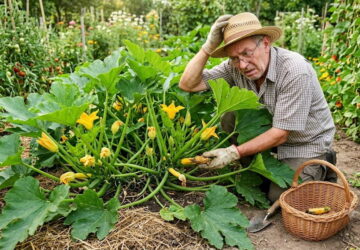
That is a wider question than any home garden can answer alone. Still, a vegetable plot makes one part of it visible: a large harvest of a single crop is of limited use if it arrives all at once and cannot be eaten, stored or shared. A mix of crops with different harvest times, together with sensible storage and a plan for surplus, can make a modest garden more useful over a longer season. Productive growing and access to food belong in the same conversation.
As September harvests come in, check what is ripening faster than your household can use. Pick beans and courgettes regularly where they are still cropping, store sound produce under conditions suited to each crop, and pass on surplus while it is fresh. For next year, record which varieties fed you steadily and which overwhelmed you for a fortnight. The point is not to claim that gardening alone solves hunger; it is to make the food we grow count.
Garden Reminder – What can you do in the garden this week?
- Sow a suitable cover crop on a cleared vegetable bed while the soil is still workable, or cover it with organic mulch where sowing is too late for your climate.
- Check recently planted trees and shrubs for dry root zones; shorter days do not remove their need for water while roots establish.
- Gather healthy fallen leaves for leaf mould or use some beneath shrubs. Keep thick, wet piles off low-growing plants that may rot beneath them.
- Label the seeds you save with the plant name and year, and dry them thoroughly before storing them somewhere cool and dry.
What to Observe Right Now – The Garden’s Autumn Map
Take a slow walk without a tool in your hand. Where does the low sun still reach the soil, and where is shade deepening? Which late blooms are busy on a mild afternoon? Watch where rainwater lingers after a shower, and whether birds return to the same seed heads. These small observations can tell you where to place a future crop, which flowering plants deserve more space and which corners already serve wildlife well.
September 24 does not mean autumn looks the same everywhere. In warm regions, summer crops may still be vigorous; farther north, frost may already have changed the garden. Use the date as a prompt to compare what you see with the needs of your own plants and local weather, rather than as a fixed deadline.
Looking Ahead
The stories of this date point toward gardens that notice more and waste less. Watch how light and water move before changing a bed, keep room for the less visible creatures around your favourite plants, and plan harvests you can actually use or share. A few careful decisions this autumn can make next year’s garden more productive, more welcoming to wildlife and better suited to the place where it grows.