
Early September has a talent for making two seasons visible at once. Dahlias may still be blazing, tomatoes are warm from the sun and bees are busy among late flowers, yet the mornings arrive with longer shadows and the first loosened leaves begin to show.
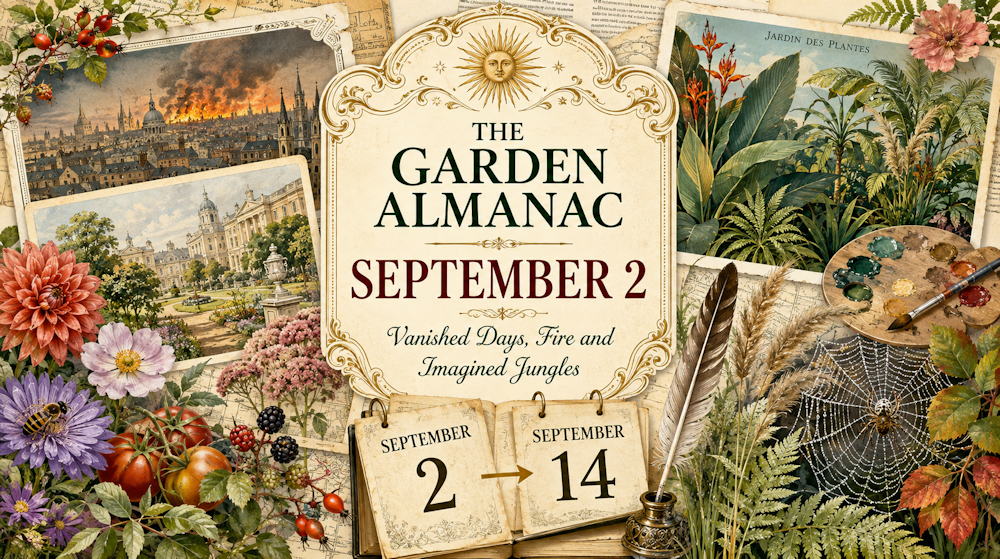
September 2 also opens three unexpected doors into the relationship between people and the living world. One leads to a calendar correction that made eleven dates disappear, another to a fire that changed the fabric of London, and the third to tropical jungles imagined in Paris. Together, they remind us that gardens are shaped by measured time, human settlement and the ways we learn to look at plants.
September 2, 1752 – The Night the Calendar Jumped Ahead
On September 2, 1752, people in Great Britain and its overseas possessions went to bed and woke up on September 14. The Calendar Act brought civil dates into line with the Gregorian system already used across much of Europe, correcting the slow drift caused by the Julian calendar. Eleven numbered days disappeared from official life – although, of course, the Sun, soil and ripening fruit continued exactly as before.
That vanished interval is more than a historical curiosity for gardeners. Calendars are useful organisers, but plants do not read them. Growth responds to day length, temperature, moisture and accumulated warmth. A traditional instruction may therefore work in one climate yet prove mistimed elsewhere or in an unusually warm year.
The change also explains why old seasonal records need care. A flowering date written before calendar reform may not match the same numbered date today. Modern phenology – the study of recurring natural events – records what actually happens: first blossom, ripe fruit, migrating bird or autumn colour.
For today’s gardener, the practical lesson is wonderfully simple: use the date as a prompt, then consult the garden itself. Keep a notebook or phone record of flowering, harvests, frosts and rainfall. After several years, those observations become a personal almanac more useful than any rigid schedule because it belongs to your soil, your exposure and your local climate.
Garden Science – Do Shorter Days Tell Plants That Autumn Is Coming?
Many plants measure the length of darkness through light-sensitive systems in their tissues. This photoperiod signal can influence flowering, dormancy and leaf fall, while temperature and water supply modify the response. Street lighting or strong security lamps may disturb these cues in some plants, so avoid shining bright lights continuously into trees, hedges and wildlife-friendly borders.
September 2, 1666 – What the Great Fire Still Teaches a Garden City
In the early hours of September 2, 1666, a fire began in a bakery in Pudding Lane and spread through London’s tightly packed streets. Timber buildings, stored fuel, dry weather and a strong easterly wind helped it race across the city. Thousands of buildings were lost, and the disaster exposed how profoundly urban form, materials and weather can combine to magnify fire.
The rebuilt city did not become the spacious metropolis imagined in ambitious plans, but construction changed: brick and stone gained ground and streets were regulated. The wider lesson remains urgent as hotter, drier periods increase fire risk in many regions. Vegetation cools cities, slows runoff and supports wildlife, yet planting must reflect local hazards.
A fire-aware garden is not a bare garden. Near buildings, it means removing dead growth, clearing leaves from gutters, keeping stored wood away from walls and avoiding an unbroken ladder of dry vegetation from ground level into shrubs and tree canopies. Plant choice matters, but maintenance, spacing and moisture matter just as much – no plant is completely fireproof.
Seasonal Tips – A Five-Minute Early-September Safety Check
- Remove dry stems, fallen twigs and accumulated leaves beside sheds, fences and walls.
- Water newly planted trees deeply during dry spells rather than sprinkling the surface.
- Keep compost moist and turn it if the centre has become excessively hot and dry.
- Store fuel, charcoal and firewood well away from the house and greenhouse.
- Check local rules before lighting any bonfire, and choose composting whenever suitable.
September 2, 1910 – Henri Rousseau’s Jungle Without Leaving Paris
The French painter Henri Rousseau died on September 2, 1910, leaving behind some of modern art’s most recognisable jungles. He had never travelled to the tropics. Instead, Paris supplied the raw material for his dense leaves, luminous flowers and watchful animals – especially visits to the Jardin des Plantes, along with illustrated books, popular displays and the city’s zoological collections.
Rousseau did not paint botanical field guides. He enlarged and repeated plant forms until familiar foliage became an invented forest. That transformation reveals something botanical gardens do exceptionally well: they introduce shapes, textures and ecological possibilities from far beyond the local landscape. A single leaf can begin a question about climate, adaptation or habitat.
Gardeners can borrow his attentive freedom without confusing fantasy with ecology. Study the rib of a canna leaf, the layered shadow beneath a fern or the contrast between glossy and matt foliage, then use those observations when composing a border. Repetition creates rhythm, overlapping leaves add depth and variation in leaf size can make a small planting feel more abundant – but suitable soil, hardiness and mature plant size must still guide the final choices.
Garden Inspiration – How Can Foliage Make a Border Feel Richer?
- Combine broad leaves with fine, airy foliage rather than relying on flower colour alone.
- Repeat one strong leaf shape in several places to lead the eye through the planting.
- Place the largest leaves where they have room to unfold without smothering neighbours.
- Include evergreen or seed-bearing structure so the composition survives beyond summer.
Garden Reminder – What Should You Do in the Garden in Early September?
September is a month of continuation, not immediate shutdown. Warm soil still supports root growth, while cooler air reduces stress on many new plantings. The exact timing varies with climate, so let current weather and soil moisture decide the pace.
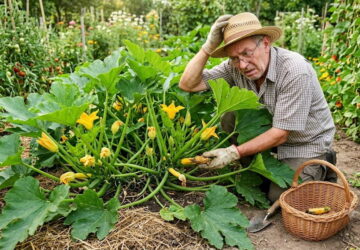
- Harvest tomatoes, beans, courgettes and soft fruit regularly so plants do not waste energy on overripe produce.
- Collect healthy seed only when pods or heads are fully mature and dry, then label it with the plant name and year.
- Divide established spring-flowering perennials if the soil is moist and temperatures are moderate.
- Continue watering containers and recent plantings – cool mornings can disguise dry compost below the surface.
- Leave some sound seed heads standing for birds, insects and winter structure instead of cutting every border down.
Wildlife Note – Should Late Flowers Be Left for Pollinators?
Yes – late nectar and pollen can be crucial when fewer plants remain in bloom. Ivy, asters, sedums, goldenrod and other regionally appropriate late flowers may support bees, hoverflies and butterflies preparing for winter or migration. Avoid blanket insecticide use, and leave a shallow dish of water with stones as landing places during warm, dry weather.
Tidiness can wait in part of the garden. Hollow stems, leaf litter and undisturbed soil shelter invertebrates, many of which become pollinators, decomposers or pest predators. Retain habitat where safe, while removing diseased material and genuine fire risks near buildings.
What to Observe Right Now – The Garden’s Own Calendar
Look beyond the printed date and notice which signals September is giving where you live:
- Is dew lasting longer in shaded parts of the garden?
- Which flowers receive the first and last pollinator visits of the day?
- Are fruits colouring earlier on the sunny side of a tree or wall?
- Which trees are changing colour because autumn is arriving, and which may be showing drought stress?
- Where does low evening light reveal spiders’ webs, seed heads and the first drifting leaves?
These small records sharpen seasonal judgement. Premature leaf browning, for example, may indicate drought, root restriction or disease rather than normal autumn colour, while a heavy fruit crop can leave branches needing support and trees needing water.
Looking Ahead
September 2 suggests that neither calendars, cities nor imagined landscapes are fixed. We can keep better records, design greener places with real hazards in mind and learn to see foliage as both beauty and living function. A few observations made today may improve next year’s planting, while one late flower or sheltered stem may carry a small creature into the next season. The future garden begins with paying closer attention to what the present one is already telling us.