
By August 10, the garden has entered its mature summer phase. Borders are dense with foliage, seed heads are forming among the flowers, and every patch of shade seems to hold its own small community of insects, birds and hidden night-time visitors.
This date opens three very different windows onto the living world. It marks the founding of an institution built to preserve and share knowledge, a global day devoted to one of the great guardians of wild landscapes, and an old feast associated with harvest customs and fiery streaks in the August sky. Together, they invite us to look more closely at what gardens conserve, whom they shelter and what becomes visible after sunset.
August 10, 1846 – The Smithsonian and the Garden of Collected Knowledge
On August 10, 1846, legislation establishing the Smithsonian Institution was signed in the United States. It grew from an unusual bequest made by the British scientist James Smithson, who left his fortune for an institution dedicated to the “increase and diffusion of knowledge”. From that beginning emerged a vast network of museums, research centres, archives and collections.
Plants have always been part of that work. Herbarium sheets, botanical drawings, seeds, pollen, wood samples and living specimens allow researchers to compare the natural world across different places and periods. A pressed plant may look like a quiet museum object, but its label can reveal where a species once grew, when it flowered and how its range has shifted.
Such collections have become especially valuable in an era of rapid environmental change. Historical specimens can help scientists investigate earlier flowering, the arrival of invasive species, changes in plant chemistry and the disappearance of local populations. Living collections and seed banks perform a related task by preserving genetic diversity that may later support research, cultivation or ecological restoration.
A gardener does not need an institutional archive to adopt the same way of thinking. Keeping dated photographs, noting the first ripe tomato, saving seed from a locally successful bean or recording which flowers attract the most pollinators creates a modest but useful history of a place. Over several seasons, these observations can reveal more than memory alone: which plants tolerate drought, where frost lingers and whether flowering times are changing.
Garden Science – Why are old plant records useful?
A plant specimen is most informative when it is linked to a date and location. Researchers can compare records collected decades apart to investigate changes in flowering time, distribution and climate response. Gardeners can use the same principle by recording:
- first flowering and fruiting dates
- late or early frosts
- rainfall and prolonged dry periods
- pollinator activity
- recurring pests and diseases
Garden Reminder – Start a Late-Summer Garden Record
August provides an excellent baseline because the garden displays both the successes and stresses of the season.
- Photograph the same border or vegetable bed from a fixed position.
- Note which plants remain vigorous without frequent watering.
- Mark particularly productive or healthy plants before saving seed.
- Record areas where water runs off, collects or evaporates quickly.
- Write down one change to make during autumn planting.
Even five minutes of observation each week can produce a valuable garden record. The aim is not perfect data, but better decisions based on what actually happens in your own soil and microclimate.
World Lion Day – What a Great Predator Reveals About a Landscape
World Lion Day is observed on August 10 and has drawn international attention to lion conservation since 2013. Lions once occupied a far greater range than they do today, but habitat conversion, declining prey populations and conflict with people have left many populations fragmented or isolated.
A lion may seem far removed from a flower bed, yet its survival depends on a complete ecological system. Healthy grasslands and savannas need functioning soils, seasonal water, diverse vegetation, grazing animals and connected areas through which wildlife can move. Protecting a large predator therefore means protecting an entire web of plants, animals and natural processes.
The scale is different in a garden, but the principle is remarkably similar. Wildlife rarely needs one isolated “feature” as much as it needs connected habitat: dense planting linked to a hedge, flowers followed by seed heads, shallow water near safe cover and gaps through which small animals can pass. A garden designed as a continuous living system supports more biodiversity than a collection of disconnected shelters.
Wildlife Note – How can a garden become better connected?
- Let hedges meet flower beds instead of separating them with bare ground.
- Grow climbers against fences to create vertical cover.
- Avoid pesticides that remove insects from the food web.
- Leave some hollow stems, leaf litter and seed heads through winter.
- If it is safe to do so, provide a small ground-level passage between neighbouring gardens.
Connectivity matters even in towns. A row of wildlife-friendly gardens can function as a stepping-stone route between parks, allotments, cemeteries and other larger green spaces.
August 10 and the Tears of Saint Lawrence
August 10 is also the Feast of Saint Lawrence, a date observed for centuries in many Christian communities. In parts of Europe, Lawrence became associated not only with fire, kitchens and metalworkers, but also with rural customs marking the advance of the harvest season. Some traditions connected the day with newly gathered fruit, vegetables and legumes.
The feast falls close to the annual Perseid meteor shower. Bright meteors appearing in the August night became popularly known as the Tears of Saint Lawrence, giving a human story to particles shed by Comet Swift–Tuttle and encountered by Earth each year. The shower is active for weeks, although its greatest activity usually occurs a little later in mid-August.
For gardeners, the spectacle offers a reason to experience the garden after dark – and to consider how much artificial light changes that experience. Bright outdoor lighting can obscure the sky and disrupt nocturnal insects, bats and other wildlife. Directing necessary lights downwards, using warm-coloured bulbs and switching them off when they are no longer needed can preserve both a clearer view and a healthier night-time habitat.
What to Observe Right Now – The Garden After Sunset
On a calm August evening, look and listen for:
- moths visiting tobacco plants, honeysuckle, jasmine or other night-scented flowers
- bats feeding where flying insects gather
- seed heads outlined against the fading sky
- dew beginning to form on cooler leaves
- the first Perseid meteors away from bright artificial light
Observation is the purpose of this exercise, not another list of jobs. Sit quietly for ten minutes and notice how the garden’s inhabitants change when daytime pollinators disappear.
Garden Science – Why Do Some Flowers Release More Scent at Night?
Floral scent is a form of communication. Plants release mixtures of volatile compounds that can guide pollinators towards nectar and pollen. Species pollinated mainly by moths often produce pale, easily visible flowers and strengthen their fragrance in the evening, when their principal visitors become active.
Warmth helps these compounds evaporate, but excessive heat and dry air can also shorten a flower’s life. Night-scented plants are therefore often most noticeable after temperatures begin to fall. Positioning them near a terrace, open window or frequently used path allows their fragrance to be enjoyed without repeatedly disturbing feeding insects.
Good choices vary with climate, but nicotiana, evening primrose, night-scented stock, honeysuckle and some jasmines can all contribute to an evening garden. Before planting, check local hardiness and invasiveness, since a well-behaved ornamental in one region may spread aggressively in another.
Seasonal Tips – Caring for the August Garden
Late summer calls for selective care rather than frantic tidying.
- Water deeply and less frequently so moisture reaches the main root zone.
- Check containers daily during hot or windy weather.
- Remove diseased leaves, but retain healthy seed heads for birds and insects.
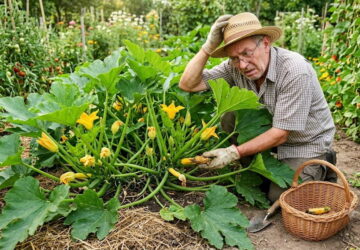
- Harvest courgettes, beans and cucumbers regularly to encourage continued production.
- Collect ripe seed only on a dry day and allow it to dry thoroughly before storage.
- Add fallen, disease-free plant material to the compost rather than leaving soil exposed.
- Delay major planting during extreme heat, even if the calendar says the season is approaching.
Watch plants before watering automatically. Temporary midday wilting can be a response to heat, while leaves that remain limp in the cooler morning may indicate a genuine shortage of moisture.
Looking Ahead
August 10 reminds us that conservation begins with attention: a specimen carefully labelled, a landscape kept connected or a garden allowed to remain dark enough for moths and stars. Records help us understand change, while diverse planting and gentler management give wildlife room to respond to it. As late summer moves towards seed and harvest, gardeners can preserve more than produce – they can preserve knowledge, habitat and possibilities for the seasons ahead.