
July has a way of making gardens feel wonderfully alive. Bees drift lazily from flower to flower, birds raise their last broods of the season, butterflies dance above warm borders, and every corner seems to hum with unseen life. It is the time of year when we are reminded that no garden truly belongs to us alone.
Appropriately, July 6 brings together stories that celebrate this shared world. From one of medicine’s greatest breakthroughs to ancient midsummer celebrations and the quiet lessons of biodiversity, this date reminds us that healthy gardens are built not only with careful planting, but with respect for the countless living creatures that call them home.
Whether you grow vegetables, tend a wildflower border or simply enjoy watching birds from your window, today’s almanac invites you to look beyond individual plants and appreciate the invisible connections that make every thriving garden possible.
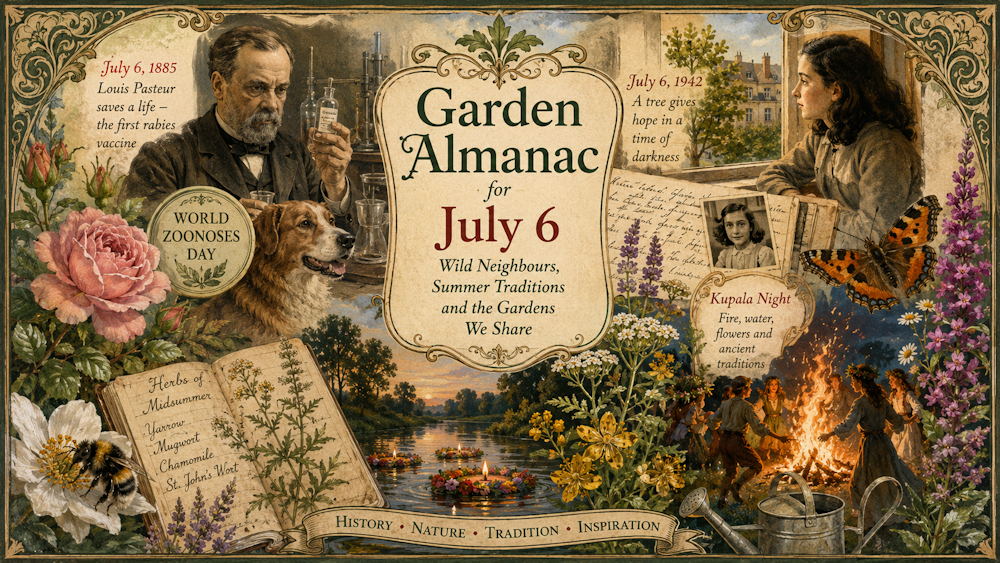
July 6, 1885 – The Vaccine That Began with a Garden Visitor
Few animals have shaped human history quite like the dog. On July 6, 1885, French scientist Louis Pasteur successfully administered the first rabies vaccine to nine-year-old Joseph Meister after he had been bitten by a rabid dog. The treatment saved the boy’s life and marked the beginning of modern rabies prevention. Today, the date is commemorated as World Zoonoses Day, highlighting diseases that can pass between animals and people while promoting the global “One Health” approach that links human, animal and environmental wellbeing.
For gardeners, this message feels surprisingly familiar. Every healthy garden exists where people, wildlife, pets, insects and soil organisms constantly interact. Most of these relationships are beneficial. Pollinators help fruit set, earthworms enrich the soil, birds keep insect populations balanced, and countless microorganisms quietly support plant growth beneath our feet.
The lesson is not to fear wildlife but to manage our gardens responsibly. Keeping bird feeders clean, vaccinating pets, avoiding unnecessary contact with sick wild animals and encouraging balanced ecosystems all contribute to healthier gardens for every species that shares them.
Garden Reminder
A thriving wildlife garden is a healthy garden – but good hygiene matters too.
- Refresh bird baths regularly.
- Clean feeders every few weeks during summer.
- Ensure pets are vaccinated and supervised around wildlife.
- Wash hands after handling compost, soil or animal feeders.
Kupala Night – When Fire, Water and Flowers Shared the Midsummer Sky
Across parts of Eastern Europe, the night around July 6–7 is celebrated as Kupala Night, one of the oldest midsummer festivals still remembered today. Rooted in ancient Slavic traditions, the celebration blends bonfires, rivers, herbs, flowers and legends about forests into a joyful celebration of nature at its seasonal peak.
People traditionally gathered medicinal herbs, floated flower wreaths on rivers, jumped over bonfires for good fortune and searched for the mythical fern flower – a magical bloom said to appear only once a year and grant wisdom or happiness to the one who found it.
Although ferns never actually flower, the legend reflects something gardeners understand well. Summer invites us to wander, observe and discover. Every border hides unexpected seedlings, every hedge shelters wildlife, and every evening walk through the garden reveals something different from the day before.
Many traditional herbs gathered during midsummer – including yarrow, mugwort, chamomile and St John’s wort – remain popular in wildlife-friendly gardens today, valued both for their beauty and for the pollinating insects they attract.
Nature Watch
Take a slow walk through your garden at dusk.
Notice which flowers remain open after sunset, listen for moths and bats, and watch how the evening shift of wildlife differs from the busy daytime garden.
Anne Frank’s Hidden View – Finding Hope in a Single Tree
On July 6, 1942, Anne Frank and her family entered the Secret Annex in Amsterdam, where they would spend more than two years in hiding. Through a small attic window, Anne often looked toward a single horse chestnut tree, describing how it gave her hope during unimaginably difficult times.
Her writing reminds us of something gardeners sometimes forget amid pruning schedules and harvest lists – that trees offer far more than shade or ornamental value. They become companions across generations, anchors of memory and symbols of resilience.
A mature tree cools the surrounding landscape, stores carbon, shelters birds and insects, enriches biodiversity and quietly shapes the character of a place for decades. Long after annual flowers have faded, a well-chosen tree continues to tell its story.
Garden Inspiration
If your garden has room, consider planting a tree not only for yourself but for future generations.
Even a small ornamental tree can become tomorrow’s favourite place for birds, pollinators and people alike.
July Gardens – Where Biodiversity Reaches Its Summer Peak
Early July is often the richest moment of the gardening year in the Northern Hemisphere. Roses continue flowering, vegetables accelerate toward harvest, herbs are fragrant, butterflies are abundant and seed heads begin forming on early perennials.
It can be tempting to tidy everything at once, but nature benefits from a lighter touch.
Leaving a few fading flowers provides seeds for birds later in the season. Some nettles tucked away in an unused corner become nurseries for butterfly caterpillars. Small patches of longer grass offer shelter to grasshoppers, solitary bees and countless beneficial insects.
The most beautiful gardens are not necessarily the neatest. They are the ones that remain alive from the soil upward.
Seasonal Tasks
Early July is an excellent time to:
- Deadhead repeat-flowering roses to encourage more blooms.
- Harvest herbs before they begin setting seed.
- Water deeply rather than frequently during dry weather.
- Leave a small wild corner untouched for insects and birds.
- Observe which plants attract the greatest diversity of pollinators for future planting.
Looking Ahead
July 6 reminds us that gardening is never just about plants. Every flower connects with pollinators, every tree shelters wildlife, every healthy soil supports invisible communities, and every thoughtful gardener becomes part of a much larger living system.
From Louis Pasteur’s life-saving discovery to the flower-filled traditions of Kupala Night and Anne Frank’s hopeful view of a single tree, today’s stories all point in the same direction – nature thrives through connection.
As your own garden reaches its midsummer abundance, take a moment to notice not only what is growing, but who is sharing the space with you. The richest gardens are those where people, plants and wildlife flourish together, creating landscapes that are healthier, more resilient and more beautiful with every passing season.