


As temperatures climb in early summer, it’s not only your plants that need a drink. Birds, bees, butterflies, hedgehogs, and countless other garden visitors also depend on fresh water, especially during hot, dry spells.
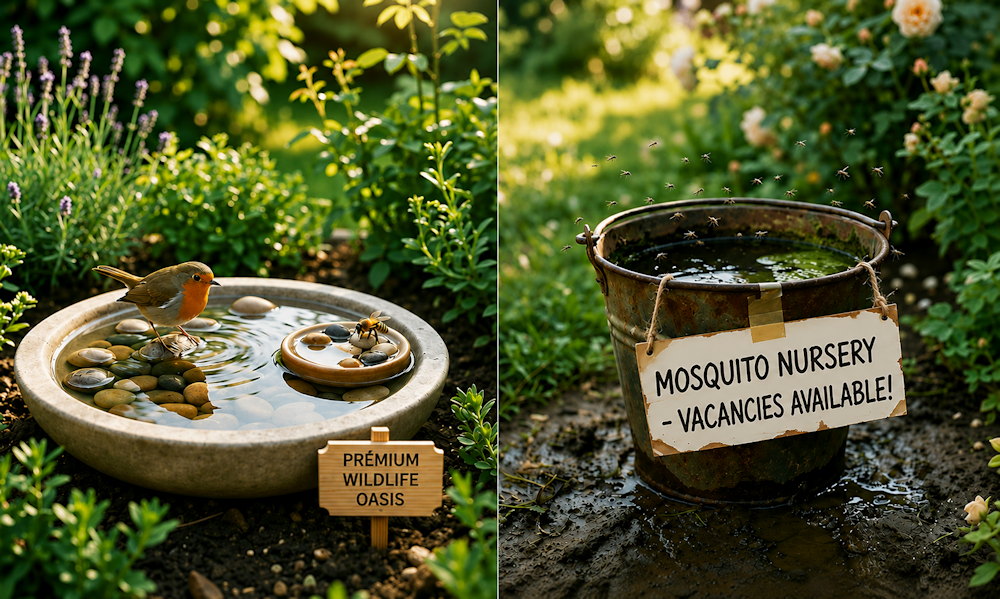
Adding a bird bath, insect watering station, or small water feature is one of the easiest ways to support local wildlife. However, there’s one important catch: if you don’t maintain it properly, your wildlife oasis can quickly become the perfect breeding ground for mosquitoes.
Fresh water is good—stagnant water is not
Water brings life to any garden, but warm, stagnant water is exactly what mosquitoes are looking for. Female mosquitoes lay their eggs in still water, and it doesn’t take much. A forgotten bucket, a flowerpot saucer, or even an unattended bird bath can provide enough space for larvae to develop.
The solution isn’t to avoid providing water—it’s to do it wisely.
A bird bath should be shallow and clean
Birds don’t need deep pools. A shallow, stable bird bath or dish is much safer and more inviting.
Adding a few pebbles or flat stones creates different water depths while giving smaller birds secure places to stand. Position the bird bath where birds have a clear view of their surroundings, ideally near shrubs that offer a quick escape from predators without completely hiding the area.
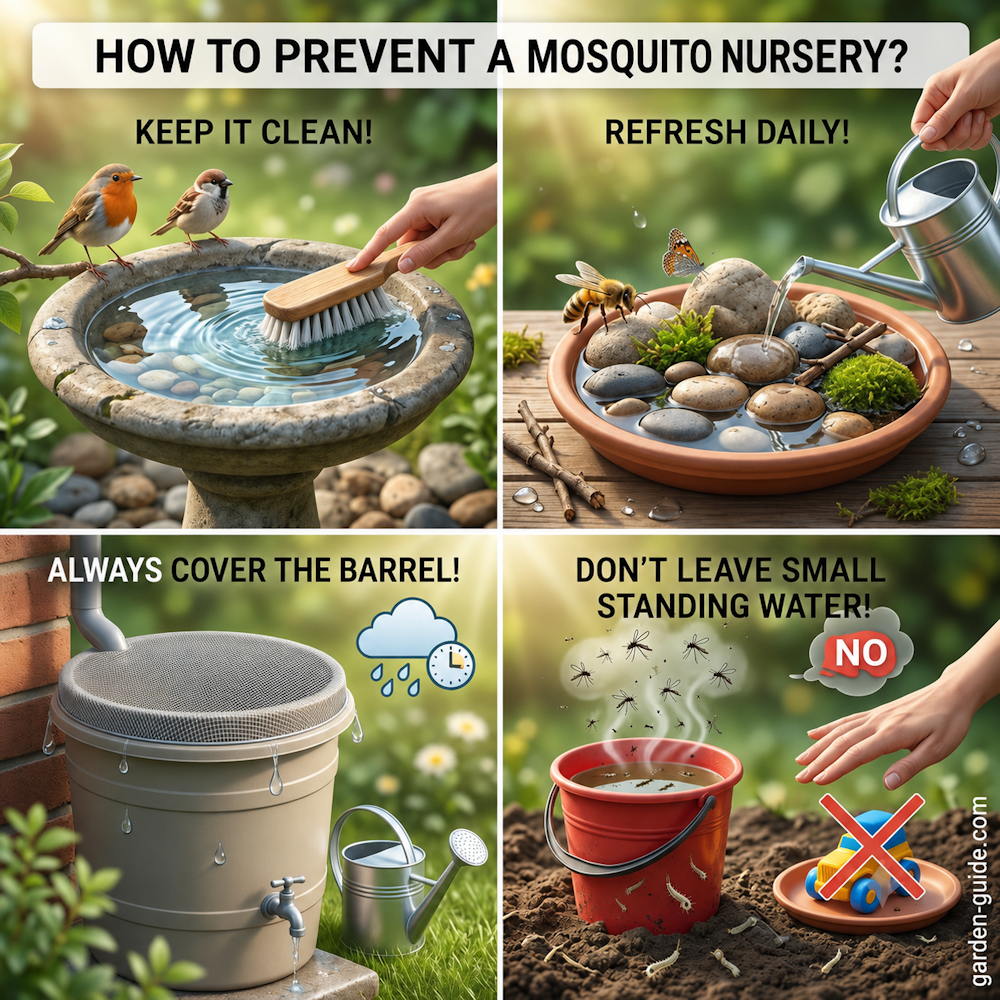
During hot weather, refresh the water frequently and scrub the container regularly rather than simply topping it up.
Insects need a different kind of watering station
Bees, butterflies, and other beneficial insects can’t safely drink from open, deep water. They need landing spots.
A simple saucer filled with pebbles, small stones, moss, or pieces of wood works perfectly. Add just enough water so the tops of the stones remain above the surface, allowing insects to land safely while reaching the water without the risk of drowning.
It’s one of the simplest wildlife-friendly projects you can make—and one of the most appreciated during summer.
Mosquitoes love neglected water
Mosquitoes don’t need ponds or lakes. Even a small amount of standing water can be enough for them to reproduce.
Bird baths, plant saucers, watering cans, children’s toys, rain barrels, or decorative containers should all be checked regularly. In warm weather, replace the water every day or every other day whenever possible, and clean the container before refilling it.
Simply adding fresh water on top isn’t enough if mosquito larvae are already present.
Garden ponds follow different rules
A healthy, well-balanced garden pond is not automatically a mosquito problem. Water movement, aquatic plants, and a thriving ecosystem often help keep mosquito populations under control, especially when natural predators such as dragonfly larvae, aquatic insects, frogs, or fish are present.
The real concern is neglected, oxygen-poor pools of stagnant water.
If you have a garden pond, monitor water quality, avoid excessive algae growth, and make sure wildlife can safely enter and leave the water. Gently sloping edges, shallow shelves, rocks, or a simple escape ramp can prevent frogs, hedgehogs, and other small animals from becoming trapped.
Cover rain barrels
Collecting rainwater is an excellent way to conserve water, but uncovered barrels can quickly become mosquito breeding sites.
Use a tight-fitting lid or fine mesh to prevent mosquitoes from reaching the water surface. Buckets, watering cans, and other containers that collect rainwater should either be emptied regularly or stored upside down when not in use.
Quite often, the biggest mosquito problem isn’t the ornamental pond—it’s the forgotten half-filled bucket tucked away behind the shed.
Where should you place a wildlife watering station?
Choose a shady or partially shaded location to help keep the water cooler and fresher for longer.
Avoid placing bird baths where cats can easily ambush visiting birds. For insect watering stations, position them close to flowering plants while keeping them stable, shallow, and easy to clean.
Location matters almost as much as the water itself.
A little maintenance goes a long way
Providing water for wildlife is a wonderful way to make your garden more nature-friendly—but only if you commit to maintaining it.
Clean containers, fresh water, shallow designs, stable placement, and safe escape routes all help create a watering station that benefits wildlife without encouraging mosquitoes.
With just a few minutes of care every couple of days, you can support birds, pollinators, and other garden visitors while making sure mosquitoes don’t become your most successful summer guests.