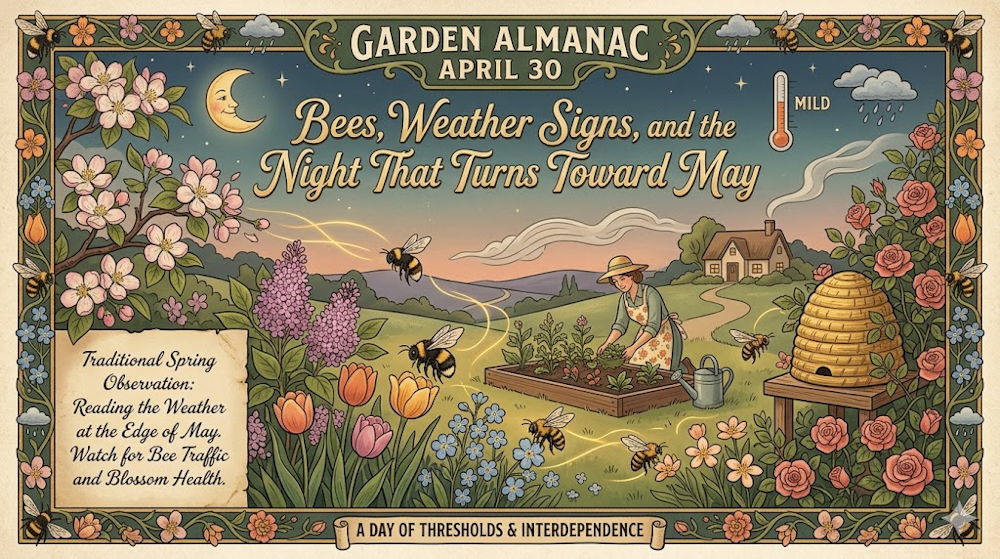

April 30 is one of those late-spring dates that seems to gather several kinds of attention at once. It invites the gardener to look upward at the weather, downward at the planted ground, and outward toward the living movement of pollinators. In the Garden Almanac, it becomes a day of thresholds: between April and May, between blossom and fruit, and between hope and uncertainty.
This is the kind of date when older weather lore makes instinctive sense. By now, the season is advanced enough that a stretch of warmth, rain, cold, or instability can genuinely shape what follows. Late April no longer feels experimental. It feels consequential.
Reading the Weather at the Edge of May
Traditional spring observation often treated the last days of April as revealing. A fair, bright day suggested confidence for growth; a cold, wet, or unsettled one warned of a more difficult stretch ahead. Whether taken literally or not, the instinct is sound. This is a point in the season when pattern matters.
Gardeners begin to ask larger questions now. Is warmth settling in? Is moisture becoming dependable or erratic? Will flowering move cleanly into fruiting, or will the season hesitate?
Bees and the Visible Work of Fertility
April 30 also lends itself beautifully to the subject of bees. By this stage of spring, pollination is no longer a hidden process. It can be seen and heard in orchards, borders, herbs, flowering shrubs, and early productive planting. The garden is becoming a place not only of bloom, but of exchange.
This is what makes bees such an important almanac presence on this day. They remind us that abundance is never created by weather alone. It also depends on living relationships: blossom to insect, insect to fruit, habitat to harvest.
The Garden Beyond Ornament
A flowering garden at the end of April may look generous, but its deeper truth lies in whether that beauty is being used. Are bees visiting? Is the space rich enough to feed them? Are there overlapping flowers, sheltered corners, and enough ecological texture to support movement through the season?
This shifts the meaning of bloom. Flowers are not only decorative now. They are working.
The Night Before May
The night of April 30 has long carried a charged place in European seasonal imagination. In many traditions it marks a turning, a passage, even a testing point between spring and the fuller strength of May. For the gardener, this atmosphere feels recognizable. A single night can still matter enormously.
A late frost, a soaking rain, a soft mildness, a drying wind – any of these can alter how the season enters May. That is why this date holds such tension. It is hopeful, but not careless.
What This Day Suggests in Practice
April 30 is a good day to watch pollinator activity, notice weather pattern rather than weather alone, and pay attention to whether the garden is merely flowering or actually functioning. Look for bee traffic, fruit set, blossom health, and the kind of atmospheric steadiness that helps the season move forward well.
In the Garden Almanac, this date belongs to interdependence. The sky matters. The bees matter. The garden depends on both.