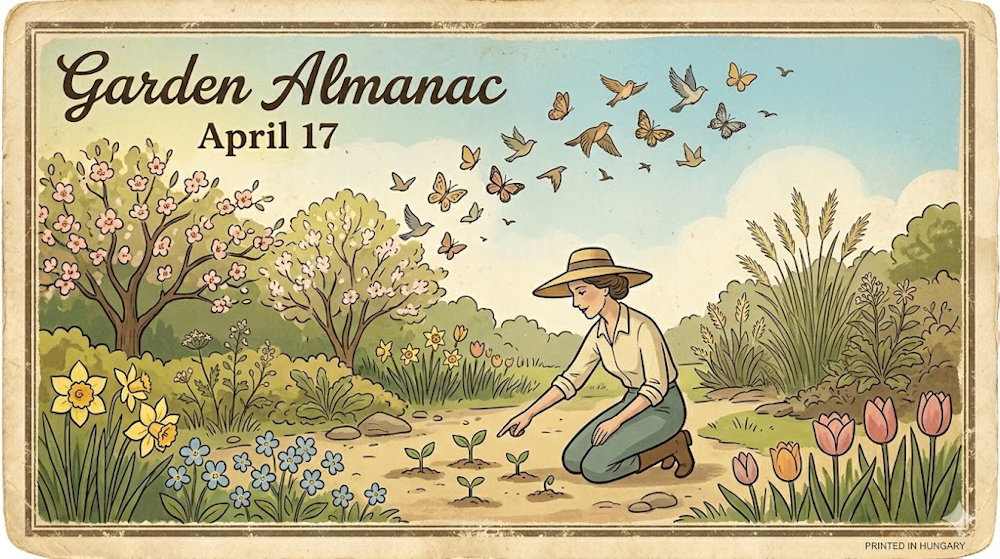

A Date About Noticing in Time. April 17 is a particularly meaningful almanac date because it brings together an old seasonal lesson and a modern one: what we recognise early, we can care for better. In gardening, this may mean seeing stress before damage spreads, noticing pattern before it becomes crisis, or reading a landscape before it declares itself loudly. In human life, the same wisdom appears in medicine, ecology, and memory.
That makes April 17 a day of recognition rather than spectacle. It is about the importance of noticing what is beginning.
World Hemophilia Day and the First Step Toward Care
April 17 is World Hemophilia Day. The World Federation of Hemophilia states that the 2026 theme is “Diagnosis: First step to care,” emphasizing that proper recognition is the necessary beginning of treatment and support. This is medical in its direct meaning, but its structure belongs naturally in an almanac.
Spring works by early signs. A season is rarely understood all at once. It reveals itself through hints, symptoms, and small shifts that only later become obvious. In the garden, timing often depends on attention before certainty.
That is why this modern observance fits unexpectedly well here. Recognition is one of the oldest forms of care.
Saint Kateri Tekakwitha and Care for Creation
April 17 is also associated in Canada with Saint Kateri Tekakwitha, who is remembered in contemporary Christian ecological tradition as a patron of traditional ecology, Indigenous peoples, and care for creation. Her presence gives the day a second kind of depth: not only recognition of illness or need, but recognition of the living world as worthy of reverence.
This belongs beautifully in a garden almanac. A gardener does not simply manage life. A gardener learns to attend to it respectfully. Care begins in how we notice.
Karen Blixen and the Landscape as Memory
April 17 is the birthday of Karen Blixen, whose writing carries a strong sense of landscape, atmosphere, memory, and the shaping power of place. Her presence on this date adds an imaginative dimension to the almanac.
Land is never only physical. It is also remembered, interpreted, and storied. A garden, too, becomes meaningful through repeated noticing. What happened here last spring? Which border dries first? Where does morning arrive earliest? Knowledge accumulates through lived attention.
That is why literary landscape belongs naturally beside practical cultivation.
The Wider World and the Need for Readable Signs
Historical events associated with April 17 — from the opening of the 1958 Brussels World’s Fair to other cultural and political thresholds — reinforce the same idea in a different register: humans constantly build systems, symbols, and gatherings to make the world more legible. We want signs we can read, structures we can interpret, and patterns we can trust.
In the garden, this desire becomes immediate. Reading the world is not abstract there. It determines whether we water, wait, thin, protect, or intervene.
What To Notice In The Garden Today
April 17 is especially good for noticing what is only just beginning to become visible.
- Which plant is giving a small but important warning?
- Where is vigour real, and where is it only apparent?
- What sign in one part of the garden helps explain another?
- Which change deserves attention now, not later?
- What in the garden is asking to be recognised before it becomes obvious?
- A true almanac date sharpens timing as much as knowledge.
The Meaning Of April 17
April 17 gathers together recognition, care, ecology, memory, and the discipline of early attention. Through World Hemophilia Day, Saint Kateri Tekakwitha, Karen Blixen, and the broader human urge to interpret the world, the day becomes a meditation on what it means to notice well.
That is one of spring’s deepest lessons. Care often begins before certainty.