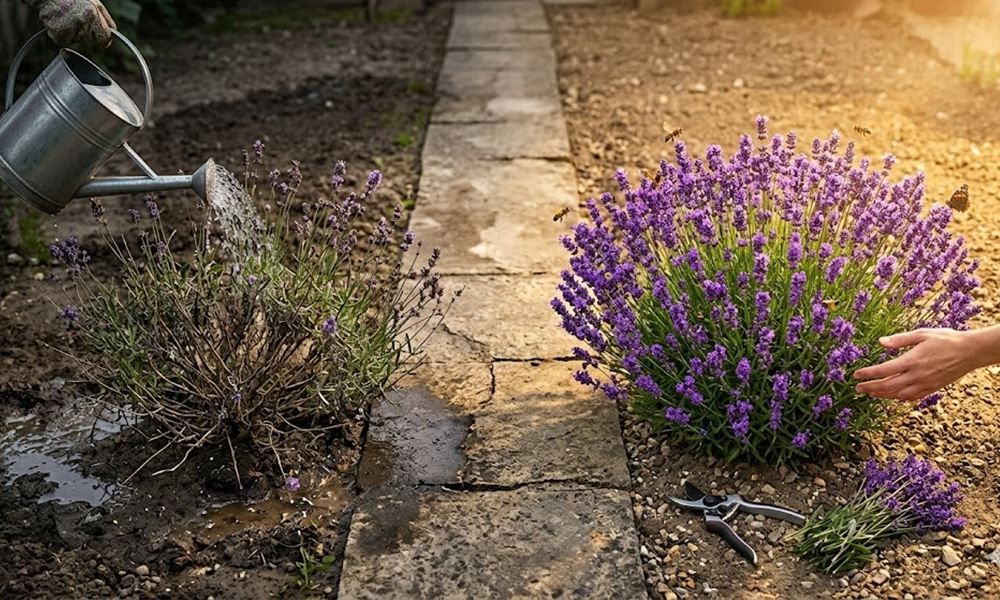

Lavender has a special talent for looking like both an elegant Mediterranean showpiece and a completely unfussy garden survivor at the same time. There it is in the border, all purple haze and bees, calm and self-assured, quietly suggesting that gardening could in fact be this stylish. Meanwhile the gardener is usually hovering nearby with a watering can, pruning shears, and far too much good intention.
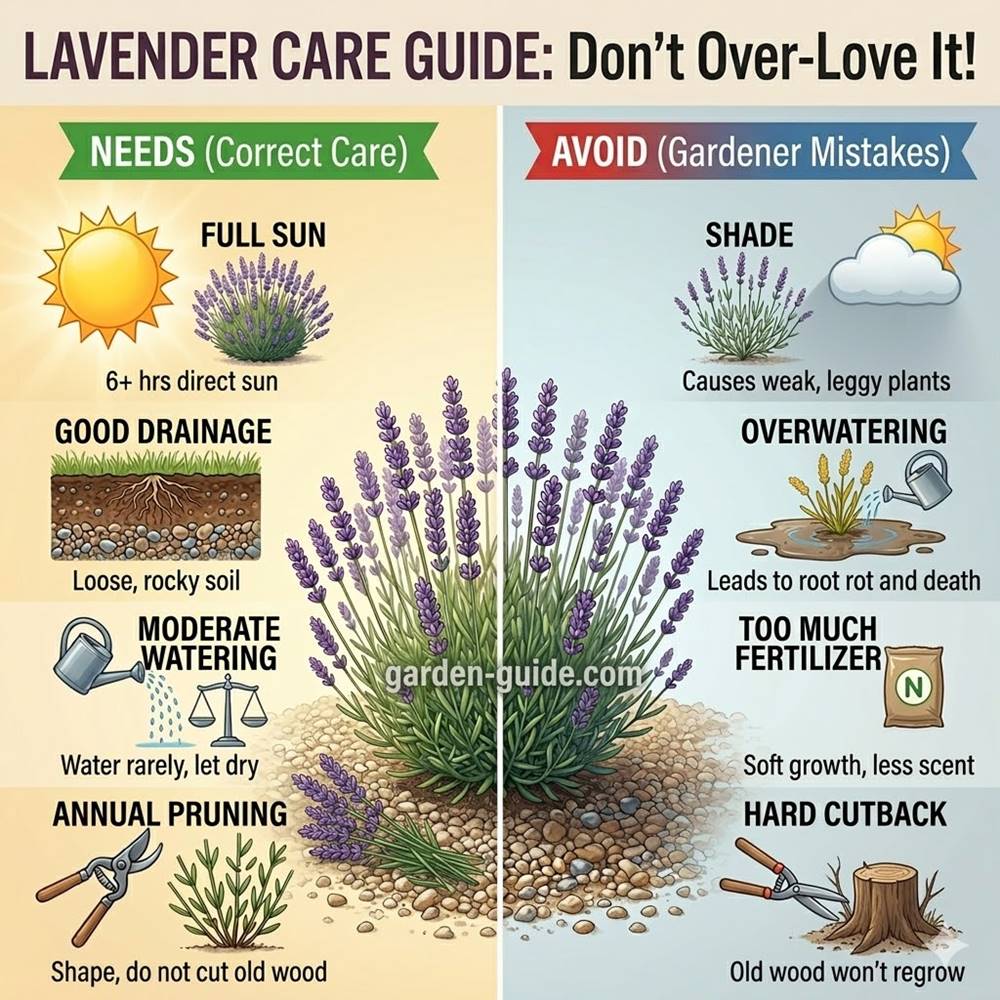
For a long time, lavender was one of those plants I kept trying to help a little too much. A bit more water, a bit more feeding, a bit more careful attention in the noble name of plant care. And then, of course, you learn the central truth of lavender: it does not thrive because you give it everything. It thrives because you finally leave it alone in a sunny place with sharp drainage and stop trying to turn it into a marsh plant.
That is part of what makes it so useful. Lavender is ornamental, aromatic, pollinator-friendly, and surprisingly practical in mixed planting. But it is not an endlessly forgiving floral cushion that will tolerate anything. Lavender is very consistent. If you understand what it needs, it can look fantastic for years. If not, it gradually gets woody, bare in the middle, or turns into the sort of disappointed shrub you keep trying to cheer up every spring.
Why do gardeners love lavender so much?
Because it is beautiful, fragrant, and far more versatile than it first appears. In bloom, it is one of summer’s great garden performers, and at the same time it draws in pollinators. Bees, butterflies, and hoverflies all visit it regularly, so it is not only working for our eyes. It is contributing to the ecological life of the garden as well.
Lavender flowers and foliage have also long been valued for their essential oils and aroma. They turn up in sachets, pillows, herbal teas, bath blends, and sometimes even in cooking. That does not mean every lavender bush must immediately become a household product line, but it is good to remember that this is more than a decorative plant.
Lavender also suits gardens that aim for a sunnier, more natural, lower-maintenance feel instead of a heavily managed, overworked look. In other words, it can be graceful without demanding weekly emotional support.
Lavender’s biggest need is simple: sun, sun, and then some more sun
If there is one thing worth remembering about lavender, it is this: without strong light, it will never really become itself. Lavender wants full sun. The more direct light it gets, the more compact it stays, the better it flowers, and the less likely it is to become lanky, sparse, or prematurely elderly in appearance.
In part shade it may survive, but it will not become the dense, bloom-heavy plant people imagine. In a shady, damp, airless corner, lavender feels a bit like a human standing in wet socks at a cold bus stop. Technically alive, yes. Living the dream, no.
Without good drainage, lavender suffers politely
Lavender comes from Mediterranean conditions, so it does not appreciate standing water, heavy airless soil, or prolonged dampness around the roots. Often it is not winter cold that kills it, but wetness in the root zone, especially during cold weather.
That is why drainage matters so much. Lavender generally performs better in sandy, gravelly, open-textured soil than in dense clay. If your soil is heavy, it is worth improving the structure before planting by adding coarse material, raising the planting area slightly, or choosing a site that sheds water more easily.
Lavender is not the kind of plant that complains dramatically. It simply thins out, browns, opens up in the middle, and leaves everyone wondering what went wrong. Quite often the answer is: we watered it.
Yes, it needs watering — just not like a thirsty geranium
Freshly planted lavender does need help while it establishes, so regular but restrained watering is sensible early on. Once settled, though, it copes with dry spells much better than with chronic overwatering.
One of the most common mistakes is that gardeners water everything in hot weather with the same enthusiasm. Lavender does not always thank you for that. It is happier with less frequent, more thoughtful watering and with enough time between drinks for the soil to dry a bit.
Lavender in containers is a different matter, because a small volume of compost dries out faster. But in the ground, one of the kindest things you can do is not assume it is desperate for water just because you are warm when you look at it.
Pruning is essential — otherwise lavender turns into a woody memorial
One of lavender’s real secrets is regular pruning. It does not need brutal punishment, just consistent yearly shaping. After flowering, most varieties benefit from having spent flower stalks removed along with part of the fresh green growth, which helps keep the plant dense and tidy.
What lavender really dislikes is being cut back hard into old woody stems. Once those older, leafless parts dominate, the plant often struggles to regrow from them, or refuses entirely. That is why steady annual maintenance matters. Lavender does not respond well to years of neglect followed by one dramatic attempt at justice.
It does not need rich feeding either
Lavender is not a greedy plant. In fact, in soil that is too rich or too nitrogen-heavy, it can become loose, floppy, and less aromatic. This is one of gardening’s charming contradictions: what would make many other plants surge ahead can make lavender look a bit overfed and underdisciplined.
If the soil is extremely poor, a little compost or modest feeding may help, but heavy fertilizing is rarely the key. Lavender is not a tomato. No one needs to force championship production out of it in a single season.
It brings in pollinators, and that improves the whole garden
When lavender is in flower, the plant feels alive in every sense. Bees especially love it, but many other insects visit too. That is good news on its own, but it also matters because a pollinator-friendly garden is usually a more balanced, lively, and resilient ecosystem overall.
Planting lavender does not just create something fragrant for humans. It also opens a small, well-run airport for beneficial insects. And that is one kind of traffic most gardeners are genuinely happy to host.
It is interesting in companion planting too — but not magical
People often plant lavender near roses, perennials, or herbs, and for good reason. It looks excellent with roses, echinacea, yarrow, sage, rosemary, and other sun-loving plants that prefer sharp drainage.
There is also a popular story that lavender drives away every troublesome insect in the garden. Reality is a bit more nuanced. Its scent may discourage some pests, and diverse mixed planting is helpful in itself, but lavender is not a purple-caped superhero guarding the entire border alone.
Still, it fits beautifully into dry, sunny perennial plantings, edging, gravel gardens, and Mediterranean-style areas where it can offer both beauty and function.
Sachets, tea, fragrance, cooking — but with moderation and proper identification
Dried lavender flowers can be used in sachets, potpourri, bath blends, herbal mixes, and sometimes desserts. The key word is moderation, because the flavour and aroma can easily become overwhelming, and not every kind of lavender is equally suitable for culinary use.
If someone wants to use it in food or drink, correct identification matters, and so does knowing the plant has not been treated with chemicals. The path from garden to cake tin is charming, but it is better when it is botanically sound as well.
In winter, cold is not always the biggest enemy
Many people assume hard frost is what most threatens lavender. In reality, winter wet is often the bigger problem. Waterlogged roots and poorly aerated soil do far more damage than cold alone in many gardens. That is why site choice matters so much. A sunny slope or a place that drains quickly usually suits lavender better than a low, damp, slow-drying patch. So lavender does not always freeze to death. Sometimes it simply drowns with dignity.
What is the real secret to success with lavender?
It is not trying to make the plant into something it is not. Lavender is not a shade plant, not a moisture lover, not a heavy feeder, and not a shrub that enjoys being hacked back into old wood. But if it gets sun, sharp drainage, moderate care, and thoughtful yearly pruning, it can remain one of the most reliable and attractive performers in the garden for years.
Very few plants manage to be this ornamental, this useful, and this unapologetically themselves at the same time. Lavender, in its own quiet way, keeps giving gardeners the same advice: less panic, more sunshine.
And honestly, that is not bad advice for the humans either.